
Technology
Ultra Active Technology Limited: The Hong Kong AV/IT Specialist Behind Modern Digital Workspaces

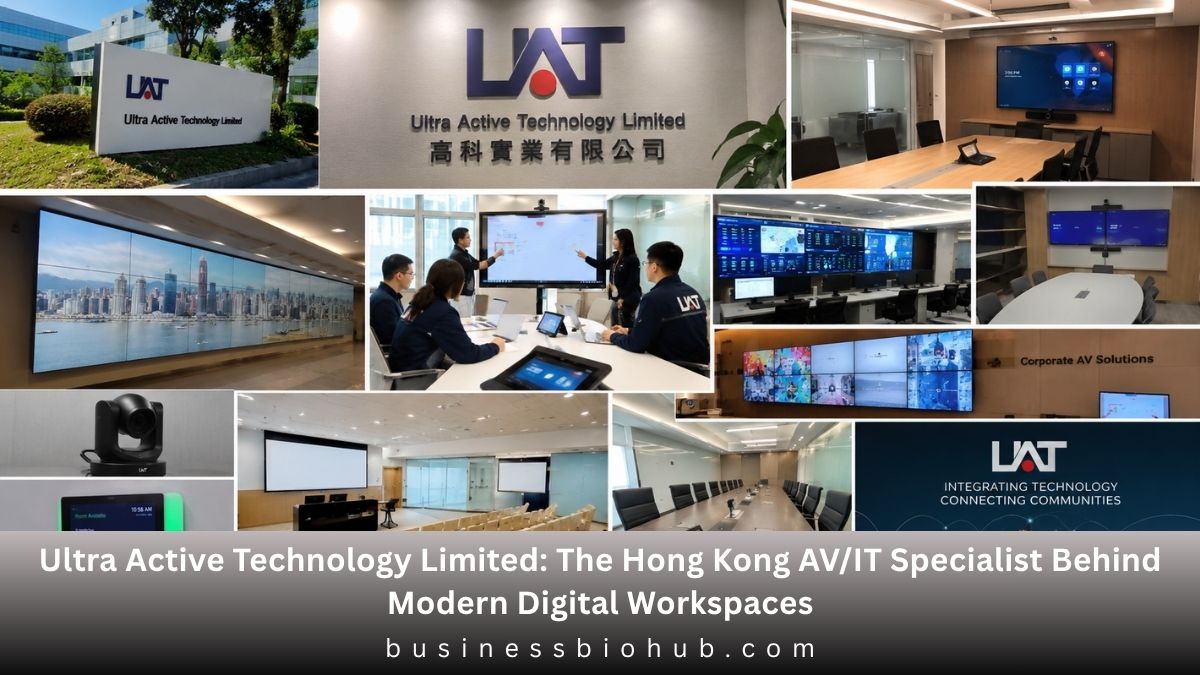
Ultra Active Technology Limited, commonly referred to as UAT, is a Hong Kong-based technology company specializing in professional audiovisual systems, workplace collaboration technology, and systems integration. Rather than targeting ordinary consumers, the company works largely behind the scenes, helping organizations build meeting rooms, lecture theatres, control spaces, videoconferencing environments and other technology-intensive facilities.
Its significance comes less from public visibility than from longevity. UAT traces its current corporate identity to 1997, giving it almost three decades of experience across several major shifts in workplace technology. From dedicated videoconferencing hardware to intelligent meeting rooms and AI-assisted communication, the company’s history reflects how enterprise collaboration itself has evolved.
What Does Ultra Active Technology Limited Do?
UAT operates primarily as an AV/IT systems integrator.
That description covers considerably more than supplying televisions, cameras, or conference-room equipment. A systems integrator brings several technologies together so they operate as one reliable environment.
A modern corporate meeting room, for example, may require microphones, cameras, displays, speakers, networking equipment, room-booking software, lighting controls, videoconferencing applications and automated control systems.
UAT’s role can include designing that environment, selecting compatible technology, installing the equipment, programming its controls and providing subsequent technical support.
Its publicly described capabilities include:
- Professional audiovisual installations
- Video conferencing and unified communications
- Meeting-room technology
- Large LED and LCD systems
- Digital signage
- Central control systems
- Room scheduling and booking technology
- Audio and video distribution
- System programming
- Installation and project management
- Maintenance and technical support
This places UAT in a specialized segment of the technology industry where engineering expertise, software compatibility and physical installation all intersect.
A Business With Roots in the Late 1980s
Although Ultra Active Technology Limited dates its present form to 1997, its corporate history begins earlier.
According to the company’s published history, founder Dr. Tony Cheung established Oasis Systems Limited in 1989 alongside software architect Sultan Rehman.
Oasis initially concentrated on business-process software and technology consulting. UAT’s historical materials state that the company secured a consulting and implementation assignment in 1990 involving the organization now known as the Hong Kong Institute of Certified Public Accountants.
The more recognizable UAT business emerged several years later.
In 1997, the restructuring and combination of two businesses led to the formation of Ultra Active Technology Limited. Rather than remaining focused primarily on traditional computer products and business software, the company moved increasingly into professional communications technology.
Videoconferencing became one of its early specialties.
Entering Videoconferencing Before It Became Everyday Technology
UAT’s early move into videoconferencing is key to understanding the company.
During the late 1990s, a video meeting was far more technically demanding than opening Zoom or Microsoft Teams on a laptop today.
Enterprise systems often required dedicated cameras, codecs, displays, network connections and specialist installation. As a result, high-quality video collaboration concentrated among corporations and institutions willing to make substantial infrastructure investments.
UAT states that it introduced TeleVu videoconferencing technology in 1998 and became associated with Polycom distribution in 1999.
Its expansion during that period eventually led to a move to premises at the Hong Kong Convention and Exhibition Center in 2000.
These milestones positioned the company within a market that would eventually become central to ordinary business communication.
The technology changed dramatically. The underlying requirement did not change: organizations still needed reliable ways for people in different locations to communicate.
From Video Meetings to Complete Digital Workplaces
Companies built around one generation of technology can struggle when the market changes.
UAT’s development suggests a different path.
Rather than remaining exclusively a videoconferencing supplier, the business expanded into broader audiovisual and workplace integration.
Today’s professional collaboration environment is arguably more complex than the dedicated video rooms of the 1990s.
Businesses increasingly expect meeting spaces to support:
- wireless presentations;
- automated cameras;
- high-quality microphones;
- remote participants;
- multiple conferencing platforms;
- interactive displays;
- room reservation systems;
- network-based audiovisual distribution;
- centralized control;
- digital signage.
As a result, an integrator’s value increasingly lies in enabling technology from different manufacturers to work together without making it unnecessarily difficult for employees to use.
That broader requirement appears to have shaped UAT’s modern service model.
Leadership and the Role of Tony Cheung
UAT identifies Dr. Tony Cheung as its founder and Chief Executive Officer.
According to the company’s published leadership profile, Cheung’s professional background combines technology entrepreneurship with financial management experience.
Before establishing his businesses, he reportedly held financial-control and director-level positions. UAT also lists professional qualifications and affiliations related to accounting, business administration, project management, and professional audiovisual technology.
Because much of this biographical information comes directly from company materials, it is best understood as corporate disclosure rather than an independently reconstructed personal biography.
Still, Cheung’s long-term involvement provides continuity in UAT’s story. The company has remained associated with the same founding leadership while repeatedly adapting its technical focus.
Another important executive named in UAT’s leadership information is Pui Kai Yu, Head of Business & Project.
The company states that Yu studied Computer and Control Systems at Coventry University and brought prior information technology experience to UAT. His responsibilities have reportedly included business development, partner management, research and development, and project delivery.
The Kind of Projects UAT Handles
UAT’s portfolio helps illustrate its position in the professional technology market.
Its published case studies describe work involving corporate offices, financial-sector environments, training facilities and logistics-related workplaces.
Some projects involve multiple floors of meeting spaces. Others combine conferencing, displays, room controls, audio systems and collaborative technology.
This is also an area where responsible interpretation matters.
Several UAT’s case studies describe customers generically rather than publicly identifying them. References to an international bank, a major property company, or a global logistics organization may reflect genuine client confidentiality, but they make independent verification of those particular projects more difficult.
For that reason, unnamed case studies help explain the type and technical scale of work the company claims to perform. Still, they should not automatically be treated as independently confirmed client endorsements.
Evidence Beyond UAT’s Own Website
One of the stronger aspects of UAT’s public profile is that records outside its own marketing material support its existence and professional activity.
Hong Kong’s Electrical and Mechanical Services Department has included Ultra Active Technology Limited in official contractor-related documentation, supporting the company’s participation in the city’s established technical-services ecosystem.
The professional audiovisual association AVIXA has also maintained a profile for the business and associated it with industry credentials.
Such evidence matters because corporate websites naturally present businesses in their most favorable light. Independent institutional records provide an additional layer of credibility.
UAT also appears in professional and public programs related to quality, employment development, and corporate responsibility.
Industry Recognition and Quality Credentials
Over the years, UAT has publicized numerous certifications and professional qualifications relating to audiovisual technology, workplace systems, and management standards.
Its accreditation materials have referenced areas including:
- ISO management standards
- AVIXA professional recognition
- Crestron technologies
- Cisco solutions
- Zoom-related capabilities
- Q-SYS
- Dante networking
Certification statuses can change, so check individual credentials with the relevant issuing organization if a current qualification is critical to a procurement decision.
UAT also received recognition through the Hong Kong Management Association Quality Award program, including an SME-related award in 2017.
That recognition further indicates that the company’s public standing extends beyond manufacturer partnerships.
Workforce Development and Corporate Responsibility
UAT’s public footprint also includes participation in programs not directly connected with selling technology.
The Hong Kong Employee Retraining Board has listed Ultra Active Technology Limited under its Manpower Developer program within the engineering sector.
In 2025, the Equal Opportunities Commission included UAT among SMEs participating in its Racial Diversity & Inclusion Charter for Employers.
The company has also appeared in Hong Kong’s Caring Company Scheme and environmental award programs.
These recognitions do not reveal the company’s revenue or commercial scale. Still, they show a business that has consistently participated in established institutional programs on employment practices, sustainability, and corporate responsibility.
Sustainability as Part of the Company’s Public Identity
Environmental performance has become increasingly relevant to technology procurement, particularly for businesses and government organizations.
Professional AV installations can involve significant electricity consumption, electronic hardware and eventual equipment replacement. Integrators therefore face pressure not only to deliver effective systems but also to address energy efficiency, procurement practices and waste.
UAT has participated in Hong Kong environmental programs for several years.
Its record in such initiatives suggests that sustainability has become part of how the company positions itself institutionally, rather than merely a recent marketing theme.
However, publicly available information cannot quantify the exact environmental impact of its operations. Public recognition should therefore be distinguished from independently audited company-wide carbon or sustainability data.
UAT’s Move Toward Artificial Intelligence
Perhaps the most interesting development in UAT’s recent strategy appeared in May 2026.
The company announced it had entered into a memorandum of understanding with a Hong Kong research organization to develop an AI-powered real-time interpretation system.
The proposed technology is intended for environments where people who speak different languages need to communicate, potentially including universities, government institutions, and corporations.
This direction is strategically logical.
Real-time interpretation combines several fields UAT already understands: microphones, audio processing, conferencing, room technology, and enterprise communications.
Artificial intelligence potentially adds another layer.
Instead of merely installing communication equipment from other manufacturers, participation in AI development could enable UAT to become more involved in creating its own software or intellectual property.
However, an important distinction remains between ambition and commercial deployment.
A memorandum of understanding confirms an intention to collaborate. It does not prove that a finished commercial product exists, nor does it provide evidence about accuracy, customer adoption or revenue.
Until additional results are publicly documented, the AI project should therefore be regarded as an emerging strategic initiative rather than a proven new business division.
Revenue, Valuation and Ownership
Financial information about Ultra Active Technology Limited is comparatively limited.
The company is privately held, and the publicly available sources do not provide the extensive financial disclosure expected of a listed corporation.
The materials reviewed do not publicly disclose verified annual revenue, profit, company valuation, or detailed shareholder percentages.
That makes speculative online estimates particularly unreliable.
There is likewise insufficient reliable public evidence to assign the business a credible “net worth.”
Any article presenting an exact valuation without audited financial statements, official company disclosures, or other authoritative sources would risk creating a misleading impression of certainty.
How Large Is Ultra Active Technology Limited?
UAT clearly operates at a meaningful professional level, but it should not be portrayed as a technology giant.
Publicly accessible evidence points instead toward a specialist business serving corporate, institutional and engineering-oriented clients.
Employee estimates in business databases can vary and often rely on self-reported profiles or automated calculations rather than audited employment records.
Consequently, treat precise headcount figures cautiously unless the company confirms them.
What can be said with greater confidence is that UAT has operated for decades, maintained relationships with recognized technology manufacturers and industry bodies, and developed sufficient institutional presence to appear repeatedly in Hong Kong’s professional and government-linked programs.
Why Ultra Active Technology Limited Matters
The most revealing thing about UAT may be how little ordinary consumers encounter its name.
Infrastructure businesses often work that way.
When a boardroom camera automatically follows a speaker, a university lecture connects with participants overseas, or a control room presents information across multiple displays, attention usually goes to the experience rather than to the integrator who assembled the underlying system.
Companies such as UAT operate inside that invisible layer.
Its history also mirrors a broader transformation in communication technology.
The company began operating in an era when professional videoconferencing required expensive dedicated equipment. It later moved through high-definition AV, networked collaboration, smart meeting rooms and hybrid working environments.
Now it is exploring artificial intelligence.
That sequence explains UAT better than any single product or partnership.
The Bottom Line
Ultra Active Technology Limited is best understood as a long-established Hong Kong professional AV and IT systems integrator, not as a consumer-facing technology brand.
Its current corporate identity dates to 1997, while its historical roots extend further back to the technology businesses founded by founder Tony Cheung in the late 1980s.
Over time, UAT moved from specialist videoconferencing to full workplace technology integration, encompassing professional displays, collaboration platforms, control systems, digital signage, and enterprise audiovisual infrastructure.
Independent records from professional bodies, Hong Kong institutions, and government-related programs support its continued presence within the city’s technology and engineering ecosystem.
There are also limits to what the public record establishes. Reliable figures for revenue, profit, valuation, and ownership remain unavailable, and some client projects are intentionally anonymous.
That uncertainty should not be filled with estimates.
What the available evidence does show is a company that has survived repeated technological transitions by broadening its expertise rather than abandoning its original purpose.
From videoconferencing rooms in the 1990s to AI-assisted multilingual communication in 2026, UAT’s underlying business has remained surprisingly consistent: building technology systems that help organizations communicate, collaborate, and operate more effectively.

Pasonet Explained: Why This Digital Name Is More Complicated Than It First Appears

1upHealth Revenue Cycle Automation Partnerships: What’s Real, What’s Emerging, and Why 2027 Changes the Stakes

Kögel Trailer GmbH Manufacturing or Wholesale? The Business Model Behind the German Trailer Company

Paul Smalley Studied at University: The Education Behind His Global Football Career

Fawn Radmanich Marketing Strategy Experience: Why Her 25-Year A/E/C Career Centers on Winning Complex Work

Emily Seitz Pawlak at TriHealth: The Revenue Cycle Executive Who Pushed Automation Beyond Billing

Jadene Elden, AI Automation and RCM at Southcoast Health: What the Public Record Actually Shows

Tina Esposito Advocate Health Bio: The Data Executive Shaping Analytics, AI and Patient Care

Michael Roe Operating Partner NexPhase: The Verified Record Behind the Name — and the michaelroe.net Question

Briana Biagi Banner Health Fallon NV Staff Directory: What Current Records Actually Show

Astrid Hannah: The Inspiring Story of John Hannah’s Daughter and Her Life Beyond Competitive Swimming

Best Pasticho Venezuelan Lasagna Near Me: A Complete Guide to Finding This Rich Latin Comfort Food
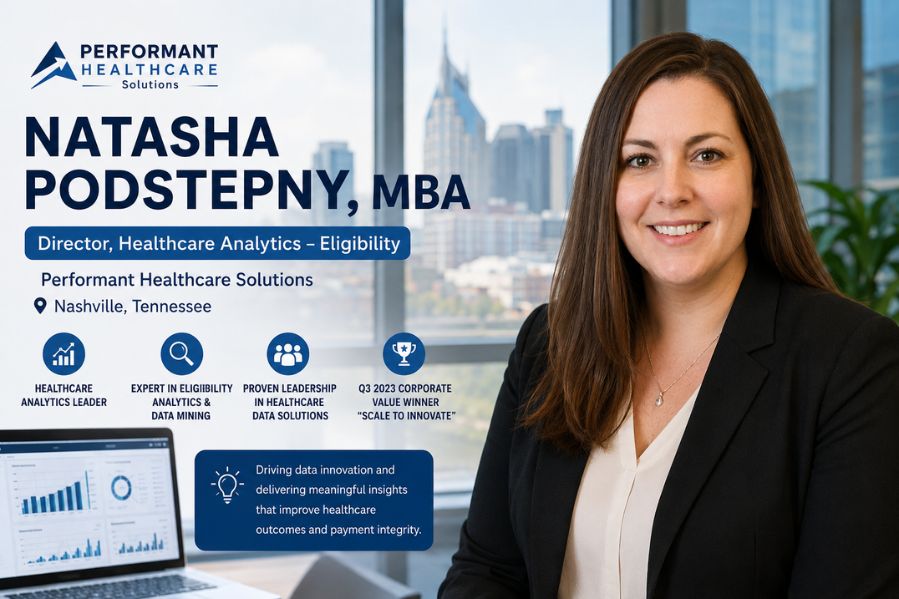
Natasha Podstepny LinkedIn Performant Healthcare Nashville: Inside Her Professional Journey

John Minoli: The Private Life and Career of Sheena Easton’s Fourth Husband
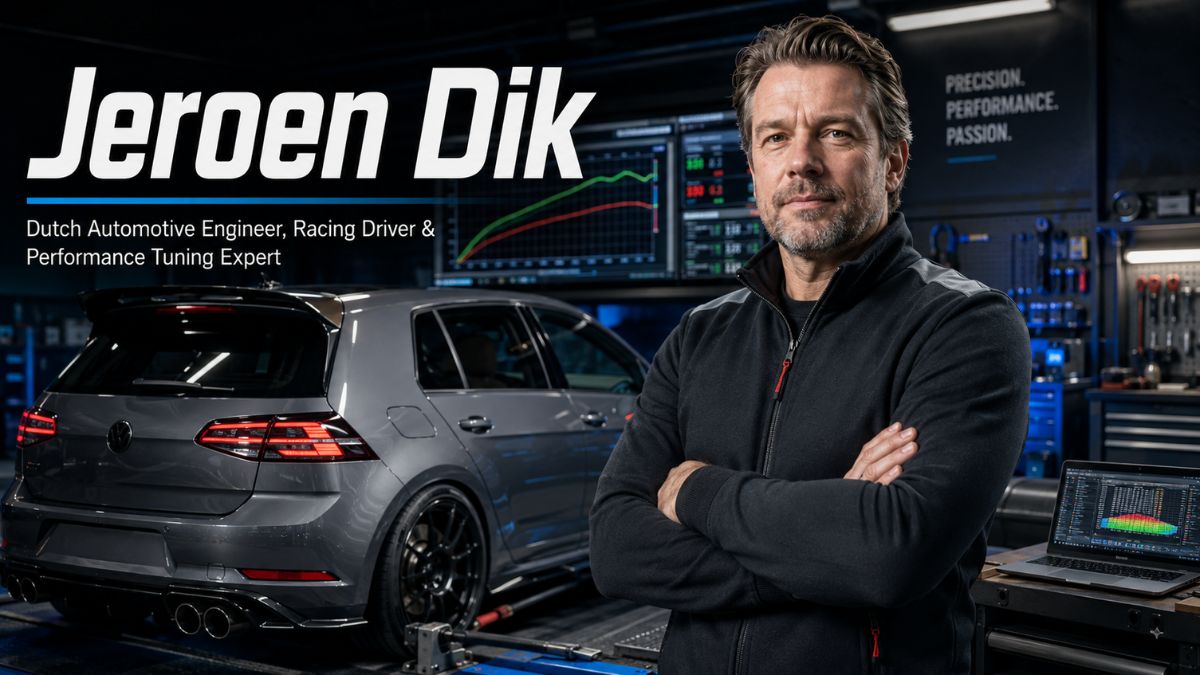
Jeroen Dik: How He Built a Powerful Legacy in Performance Tuning and Motorsport

Lihnk Explained: The Mysterious Search Term, Possible Meanings, and What Users Should Know
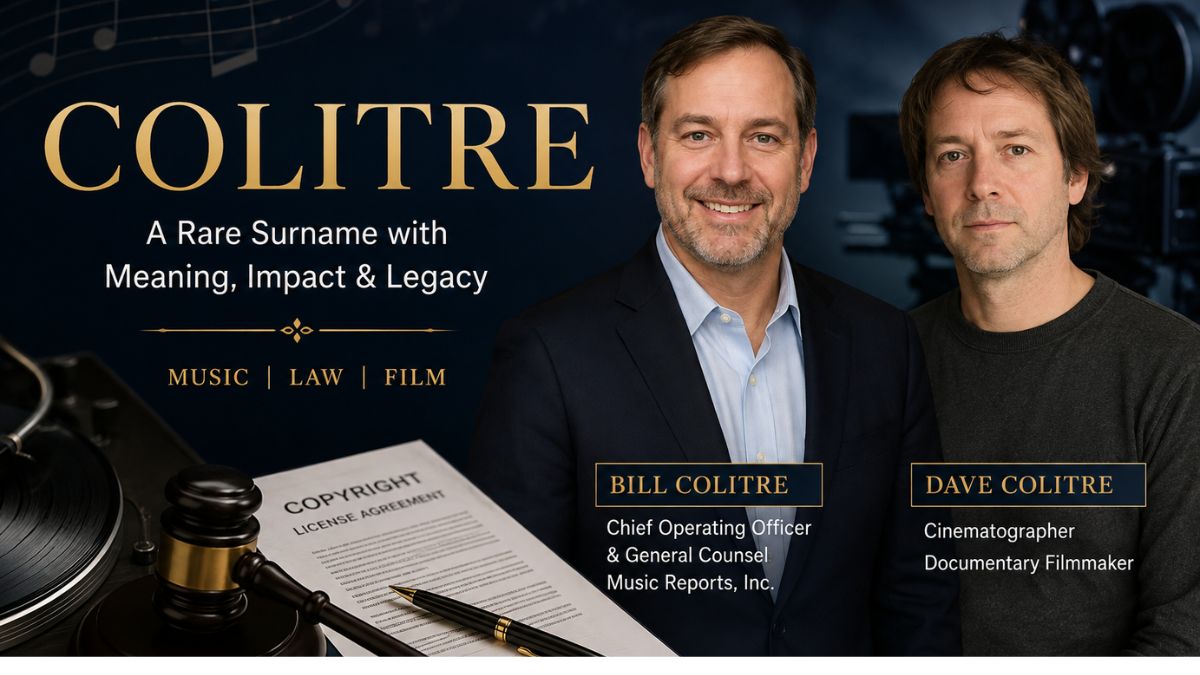
Colitre Explained: The Powerful Story Behind a Rare Name and Its Modern Identity

Nigora Whitehorn: The Inspiring Life, Marriage, and Story Behind Duncan Bannatyne’s Wife
Kemberly Blackledge LinkedIn Nashville General Hospital Chief Revenue Officer: How She Built a Powerful Healthcare Finance Career

Elegant Florals Emily Davis Business Description: A Refined Look at Floral Art, Event Design, and Botanical Creativity
Pasonet Explained: Why This Digital Name Is More Complicated Than It First Appears
1upHealth Revenue Cycle Automation Partnerships: What’s Real, What’s Emerging, and Why 2027 Changes the Stakes
Kögel Trailer GmbH Manufacturing or Wholesale? The Business Model Behind the German Trailer Company
Paul Smalley Studied at University: The Education Behind His Global Football Career
Fawn Radmanich Marketing Strategy Experience: Why Her 25-Year A/E/C Career Centers on Winning Complex Work
Emily Seitz Pawlak at TriHealth: The Revenue Cycle Executive Who Pushed Automation Beyond Billing
Jadene Elden, AI Automation and RCM at Southcoast Health: What the Public Record Actually Shows
Tina Esposito Advocate Health Bio: The Data Executive Shaping Analytics, AI and Patient Care
Michael Roe Operating Partner NexPhase: The Verified Record Behind the Name — and the michaelroe.net Question
Briana Biagi Banner Health Fallon NV Staff Directory: What Current Records Actually Show
-
 Celebrity4 months ago
Michael Scott Ryan: The Private Writer Known for His Connection to Jennifer Ehle
-
 Celebrity4 months ago
Daniel Guerard, The Private French Salon Owner Behind Lorraine Bracco’s Early Life Story
-
 Celebrity5 months ago
Caroline Hickman: The Private Life and Public Attention Around Steve Coogan’s Former Wife
-
 Celebrity3 months ago
Benn George, The Private British Businessman Behind a Powerful Chapter in Tiffany Darwish’s Life