
Technology
How portable chargers Are Redefining Personal Energy Management in a Connected World in 2026

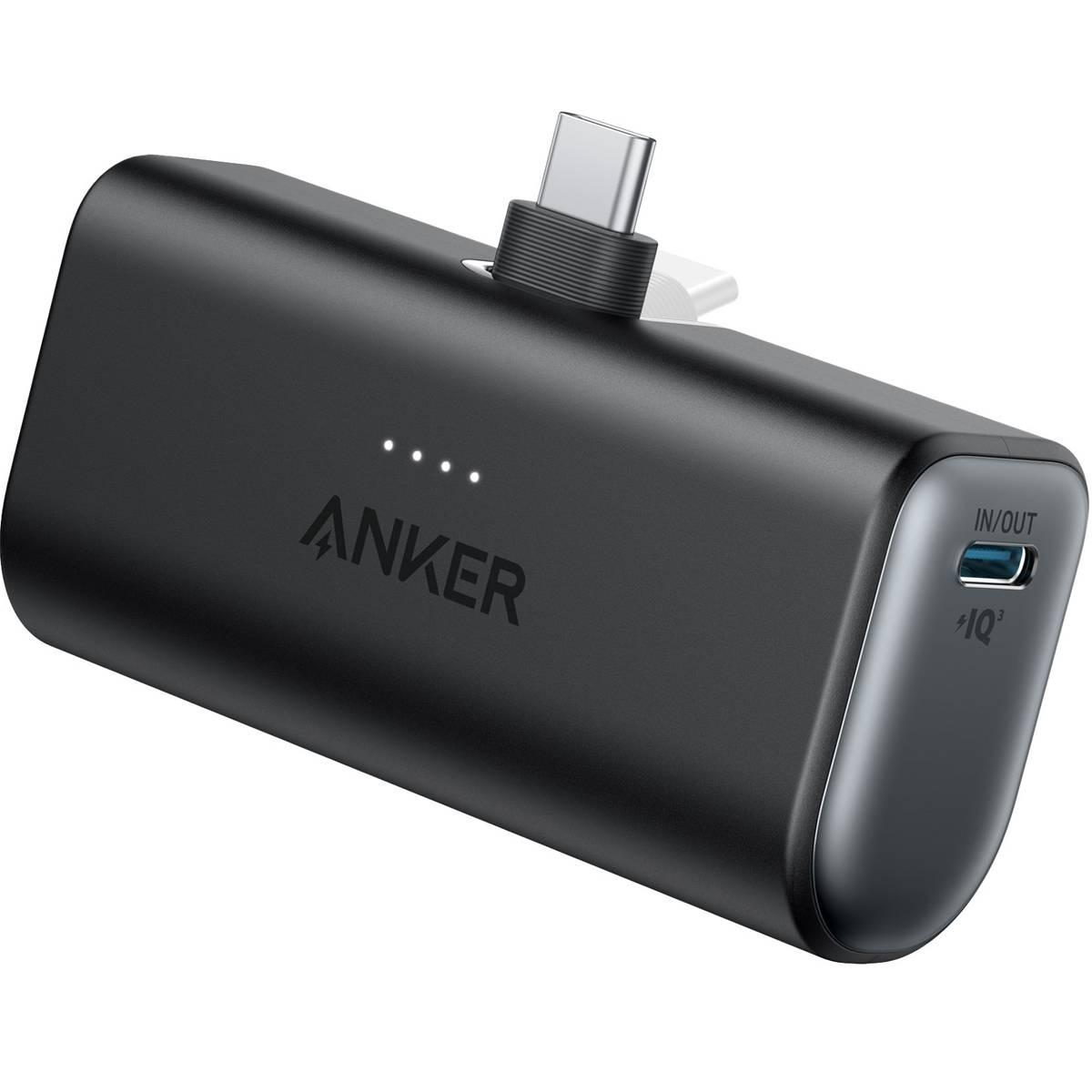
Modern technology has made everyday life more convenient, but it has also created a growing dependence on reliable electricity. Smartphones manage communication, laptops support professional work, tablets provide entertainment, and wireless accessories keep daily routines connected. The challenge is that these devices rarely share the same battery capacity, charging requirements, or usage patterns. When people move between home, offices, public transport, and unfamiliar locations, access to a dependable power source becomes an important part of staying productive.
This is where portable chargers have become more than occasional backup accessories. They allow users to carry stored electricity and decide when and where their devices receive power. Instead of planning every activity around available wall outlets, people can build a more flexible charging routine that supports different devices and environments. The technology has also evolved beyond basic emergency charging, with modern designs offering faster output, multiple connections, built-in cables, and compact forms.
However, choosing the right charging solution requires more than looking at its advertised capacity or appearance. A useful setup should account for energy requirements, device compatibility, charging speed, portability, and the number of devices that need power throughout the day. Understanding these factors makes it easier to distinguish between a simple backup accessory and a practical power system designed around real-world use.
The Shift From Finding Power Outlets to Carrying Energy
For many years, charging depended on access to a fixed electrical connection. People carried phone adapters, searched for available sockets, and adjusted their routines when battery levels became low. This approach worked reasonably well when smartphones were the main portable electronic devices, but modern lifestyles involve a much wider collection of technology.
A professional may carry a smartphone, laptop, wireless headphones, smartwatch, and tablet. A traveller might add a camera, portable hotspot, or handheld gaming device. Each product consumes energy differently, and depending on several separate wall chargers can become inconvenient.
Portable energy storage changes this relationship. Instead of carrying only the equipment needed to connect to electricity, users can carry a rechargeable source that stores energy in advance. It can then supply power when a suitable outlet is unavailable.
This shift is particularly useful for people with unpredictable schedules. A long meeting, delayed flight, extended commute, or unexpected work assignment can keep someone away from a charging point for several additional hours. Having stored energy available creates more control over these situations.
The important difference is that users are no longer limited to charging when an opportunity appears. They can decide when to recharge their devices according to their priorities.
Why Capacity Should Be Matched to Actual Usage
Battery capacity is one of the first specifications people notice when comparing charging products. It is generally expressed in milliamp-hours, commonly abbreviated as mAh. Although this measurement helps compare battery sizes, a higher number does not automatically make one product the best choice for every user.
A compact battery with a capacity below 10,000mAh may be sufficient for someone who primarily needs an additional smartphone charge during the day. A 10,000mAh option can provide a more substantial reserve for regular commuting or extended outings. Larger batteries, including models above 20,000mAh, may be more appropriate for people who need to support several devices or recharge larger electronics.
Actual usable energy depends on more than the advertised capacity. Internal voltage, conversion efficiency, charging losses, cable quality, and the power requirements of the connected device all influence the amount of energy delivered.
For example, a battery pack rated at 20,000mAh will not necessarily provide four complete charges to a smartphone with a 5,000mAh battery. Energy conversion and voltage differences mean that some stored energy is lost during the transfer process.
A better buying approach begins with an honest assessment of daily consumption. Someone who mainly uses messaging, browsing, and navigation has different requirements from a person who records high-resolution video, edits files, or works from a laptop throughout the day.
Charging Speed Is About the Complete Power Path
A high-capacity battery is useful only when it can deliver energy at a suitable rate. Charging speed depends on the power source, the connected device, the cable, and the supported charging protocol.
USB Power Delivery, or USB-PD, is one of the important technologies used in modern charging. It allows compatible devices and adapters to communicate and establish an appropriate power level. A power bank supporting USB-PD can offer different output levels depending on its design and the device connected to it.
Wattage provides a useful way to understand charging capability. It represents the rate at which electrical power is delivered. However, the maximum output printed on a charging product is not necessarily the amount every connected device will receive.
A smartphone may support a lower maximum input than a laptop. When both are connected to the same high-output battery, each device will draw power according to its supported specifications and operating conditions.
The cable also matters. A cable with unsuitable specifications or poor construction may limit charging performance. For higher-power applications, users should check whether the cable supports the required current and charging standard.
This is why a complete charging system should be evaluated together. A powerful battery pack connected through an unsuitable cable may fail to provide the expected experience.
The Role of a Portable Power Bank in Everyday Planning
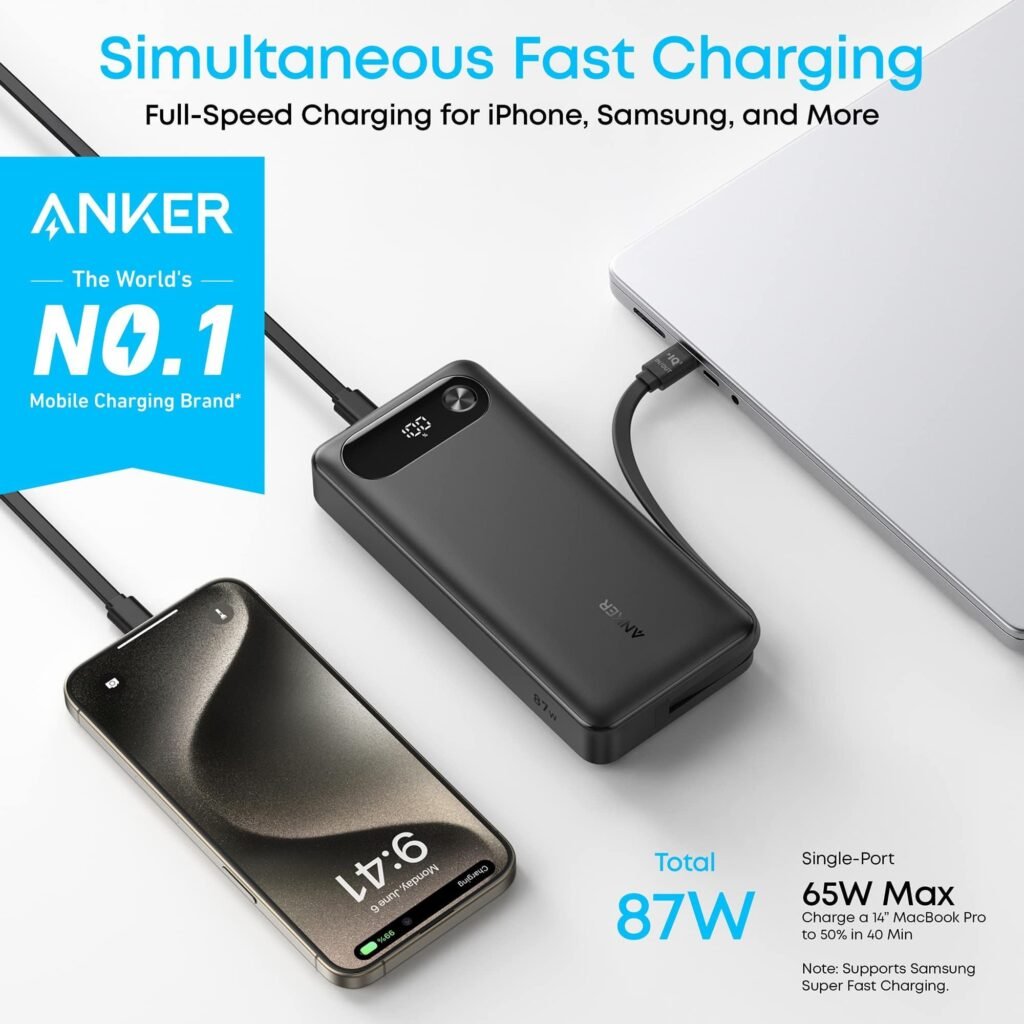
Carrying backup energy becomes particularly valuable when daily activities involve several locations. A student may begin the morning at home, attend classes, visit a library, and spend the evening travelling. A freelancer may move between a home office, client meetings, and cafés. In both situations, the availability of electricity can be unpredictable.
A portable power bank provides a rechargeable energy reserve that can support these routines without requiring a permanent connection to a wall outlet. Depending on its capacity and output, it may charge a smartphone, tablet, laptop, or multiple smaller accessories.
The practical advantage is not limited to preventing a completely drained battery. It also allows people to maintain a comfortable battery level throughout the day. Someone who relies on a phone for navigation or professional communication may prefer to recharge before reaching a critically low percentage.
A suitable power bank can also reduce the need to borrow chargers or depend on public charging stations. This is useful in airports, hotels, conference venues, and shared workspaces where sockets may be limited or inconveniently located.
For people who travel frequently, this independence can make device management easier. They can carry a reliable energy reserve instead of depending entirely on the availability of charging facilities.
How Portable Charging Supports Modern Travel
Travel creates a different relationship with battery power. At home, charging is usually predictable because outlets are available in familiar locations. During a journey, however, access to electricity can depend on airport facilities, transport schedules, accommodation, and the duration of outdoor activities.
A smartphone may be needed for digital boarding passes, hotel reservations, navigation, translation, ride bookings, and emergency communication. Losing battery power at the wrong moment can create unnecessary complications.
A portable charging solution allows travellers to keep essential devices operational between destinations. Compact models are convenient for short journeys, while higher-capacity options can support longer trips and multiple devices.
Air travel also requires attention to battery regulations. Most airlines require spare lithium-ion batteries and power banks to be carried in cabin baggage rather than checked luggage. Capacity limits and approval requirements vary, so travellers should review their airline’s current rules before departure. The watt-hour rating is particularly important because airline policies commonly use Wh to determine whether a battery can be carried.
For frequent travellers, a charging accessory should be selected with both everyday convenience and transportation requirements in mind.
Why Multiple Output Ports Make a Difference
The number of available ports can influence how useful a power bank becomes in a multi-device environment. A single-port model may be sufficient for someone who only charges one smartphone, but users with several devices may benefit from additional connections.
For example, a traveller might need to recharge a phone while also powering wireless earbuds. A professional may need to keep a tablet and smartphone available during a long working session. Multiple ports can make these situations easier to manage.
However, port quantity should not be confused with total charging capacity. A power bank with three output ports does not necessarily deliver its maximum advertised wattage through all three simultaneously.
Some models distribute power dynamically depending on which ports are in use. Others provide fixed output limits for individual connections. Reading the technical specifications helps users understand what happens when several devices are connected together.
A practical multi-device power bank should offer the right balance between port availability, total output, capacity, and physical size.
Heat Management and Battery Safety
Portable charging involves transferring electrical energy between batteries and connected devices. This process naturally produces some heat, particularly when higher power levels are involved. Although moderate warmth can be normal, excessive temperature should never be ignored.
Heat can be influenced by several factors, including charging speed, ambient temperature, battery condition, and the number of connected devices. Using a power bank in direct sunlight or leaving it inside a hot vehicle can create unfavourable conditions.
Modern charging products may include protection systems designed to manage overcurrent, overvoltage, short circuits, and temperature. These safeguards are important because a portable battery needs to operate safely in different environments.
Users should avoid covering a power bank with thick materials while it is operating. It should also be protected from water, impact, and excessive pressure. Damaged or swollen batteries should not continue to be used.
Another important consideration is product quality. Choosing a reputable manufacturer with clear specifications and appropriate safety information is generally more sensible than selecting an unknown product based solely on a low price or impressive capacity claim.
Understanding Watt-Hours When Comparing Portable Batteries
Milliamp-hours are useful for comparing battery capacity, but watt-hours provide another important measurement. Watt-hours express the amount of energy stored and are particularly relevant when evaluating larger portable batteries and checking airline restrictions.
The relationship between these measurements depends on voltage. The calculation is:
Watt-hours = (mAh × Voltage) ÷ 1,000
For example, a battery rated at 10,000mAh with a nominal voltage of 3.7V contains approximately 37Wh of stored energy. This figure helps explain why two batteries with similar mAh ratings may have different energy specifications if their nominal voltages differ.
Watt-hours are also useful when comparing products designed for laptops and other higher-power equipment. They offer a clearer picture of stored energy than mAh alone, especially when battery configurations are different.
Users do not need to calculate these values for every purchase, but understanding the distinction makes technical specifications easier to interpret.
Creating a Charging Setup That Matches Your Lifestyle
A good portable charging arrangement should support the way someone actually uses technology. Carrying a large battery every day may be unnecessary for a person who spends most of the day near a desk. On the other hand, a frequent traveller may find a small emergency battery insufficient for long journeys.
For everyday commuting, a compact power bank with suitable smartphone output can be a sensible option. People who regularly work outside traditional offices may benefit from a higher-capacity model that supports laptops and multiple connections.
A family can also benefit from a shared charging solution during road trips and holidays. Instead of carrying separate low-capacity batteries for every person, a suitable multiport model may provide a central backup source.
The key is to consider how often devices need charging, how much energy they consume, and how much weight is practical to carry. A balanced choice can reduce unnecessary accessories while ensuring that essential devices remain available.
What to Consider Before Buying a Portable Charger in 2026
The growing range of charging products makes comparison more important than ever. Buyers should look beyond marketing descriptions and focus on specifications that directly affect everyday performance.
Capacity should match the number of charging sessions required. Output wattage should support the devices being carried. USB-C and USB-PD compatibility can improve flexibility, while additional ports may be valuable for multi-device users.
Physical design matters as well. Built-in cables can reduce clutter, digital displays can make remaining battery levels easier to understand, and compact dimensions can improve portability. However, extra features should not distract from essential requirements such as reliable construction and suitable electrical protection.
It is also worth checking the power bank’s own recharging speed. A large battery may provide substantial backup energy, but it can become inconvenient if it takes too long to recharge between trips. Some models support higher input power, allowing them to replenish their stored energy more quickly when connected to a compatible adapter.
Ultimately, the most useful product is the one that performs consistently under the conditions in which it will actually be used.
Conclusion
Portable charging has become an important part of modern digital life because people increasingly depend on several electronic devices throughout the day. The ability to carry stored energy reduces dependence on fixed outlets and makes everyday routines more flexible, whether someone is commuting, working remotely, travelling, or spending time outdoors.
Choosing the right solution requires looking beyond battery capacity. Output power, charging protocols, cable compatibility, safety features, port availability, and physical design all influence the overall experience. A suitable power bank can provide dependable backup energy, while a broader portable charging setup can support several devices without unnecessary complexity.
In 2026, the value of portable power is not simply measured by how many times it can recharge a phone. Its real advantage is the freedom to keep essential technology available wherever daily life takes you.
Frequently Asked Questions
What is the difference between a portable charger and a power bank?
The terms are often used interchangeably. Both generally refer to rechargeable battery-based accessories that store energy and provide power to electronic devices. Individual products may differ in design, capacity, output, and supported charging features.
How much capacity should a portable charger have?
A compact 5,000mAh to 10,000mAh model may suit everyday smartphone backup. People who travel frequently or charge multiple devices may prefer 20,000mAh or more, depending on their requirements and transportation needs.
Can a portable power bank charge a laptop?
Yes, provided the power bank supports the laptop’s required charging input, typically through a compatible USB-C Power Delivery connection. Users should check both the power bank’s output wattage and the laptop’s charging requirements.
Is a higher-wattage portable charger always better?
Not necessarily. A higher output can be useful for compatible laptops and smartphones, but the connected device determines how much power it accepts. Capacity, portability, compatibility, and safety should also influence the decision.
Can I carry a power bank on an aeroplane?
Airline rules generally require spare lithium-ion batteries and power banks to be carried in cabin baggage. Permitted watt-hour limits and approval requirements can vary, so passengers should check their airline’s latest battery policy before travelling.

How portable chargers Are Redefining Personal Energy Management in a Connected World in 2026

What Is Hard Water? Understanding Water Hardness in the UAE and GCC

Improve PC Maintenance with Cleaning, Uninstalling, and Stress Testing

Telehealth Psychiatric & Mental Health Care: Accessible Support for a Healthier Mind

West Palm Beach Detox: A Safe and Supportive Start to Lasting Recovery

Drug & Alcohol Rehab in West Palm Beach, FL: Start Your Journey to a Healthier Life

Drug & Alcohol Detox in South Carolina: A Complete Guide to Safe Recovery

Drug and Alcohol Detox Kentucky: Your Guide to Safe Recovery at Paducah Detox Center

Addiction Treatment in Plymouth: Understanding Addiction & Mental Health Treatment

Ohio Center for Adolescent Wellness: Your Guide to Teen Mental Health Services in Ohio

Massachusetts Center for Adolescent Wellness: Your Guide to Teen Mental Health & Addiction Treatment in MA
Ohio Center for Adolescent Wellness: Your Guide to Teen Mental Health Services in Ohio
Drug and Alcohol Detox Kentucky: Your Guide to Safe Recovery at Paducah Detox Center
Addiction Treatment in Plymouth: Understanding Addiction & Mental Health Treatment
Drug & Alcohol Rehab in West Palm Beach, FL: Start Your Journey to a Healthier Life
Telehealth Psychiatric & Mental Health Care: Accessible Support for a Healthier Mind
West Palm Beach Detox: A Safe and Supportive Start to Lasting Recovery
Drug & Alcohol Detox in South Carolina: A Complete Guide to Safe Recovery
Improve PC Maintenance with Cleaning, Uninstalling, and Stress Testing
What Is Hard Water? Understanding Water Hardness in the UAE and GCC
How portable chargers Are Redefining Personal Energy Management in a Connected World in 2026
What Is Hard Water? Understanding Water Hardness in the UAE and GCC
Improve PC Maintenance with Cleaning, Uninstalling, and Stress Testing
Telehealth Psychiatric & Mental Health Care: Accessible Support for a Healthier Mind
West Palm Beach Detox: A Safe and Supportive Start to Lasting Recovery
Drug & Alcohol Rehab in West Palm Beach, FL: Start Your Journey to a Healthier Life
Drug & Alcohol Detox in South Carolina: A Complete Guide to Safe Recovery
Drug and Alcohol Detox Kentucky: Your Guide to Safe Recovery at Paducah Detox Center
Addiction Treatment in Plymouth: Understanding Addiction & Mental Health Treatment
Ohio Center for Adolescent Wellness: Your Guide to Teen Mental Health Services in Ohio
-
 Celebrity5 months ago
Michael Scott Ryan: The Private Writer Known for His Connection to Jennifer Ehle
-
 Celebrity5 months ago
Benn George, The Private British Businessman Behind a Powerful Chapter in Tiffany Darwish’s Life
-
 Celebrity6 months ago
Daniel Guerard, The Private French Salon Owner Behind Lorraine Bracco’s Early Life Story
-
 Celebrity7 months ago
Caroline Hickman: The Private Life and Public Attention Around Steve Coogan’s Former Wife