
Business
Alexander Plunket Greene: The Visionary Entrepreneur Who Helped Build Mary Quant’s Fashion Empire

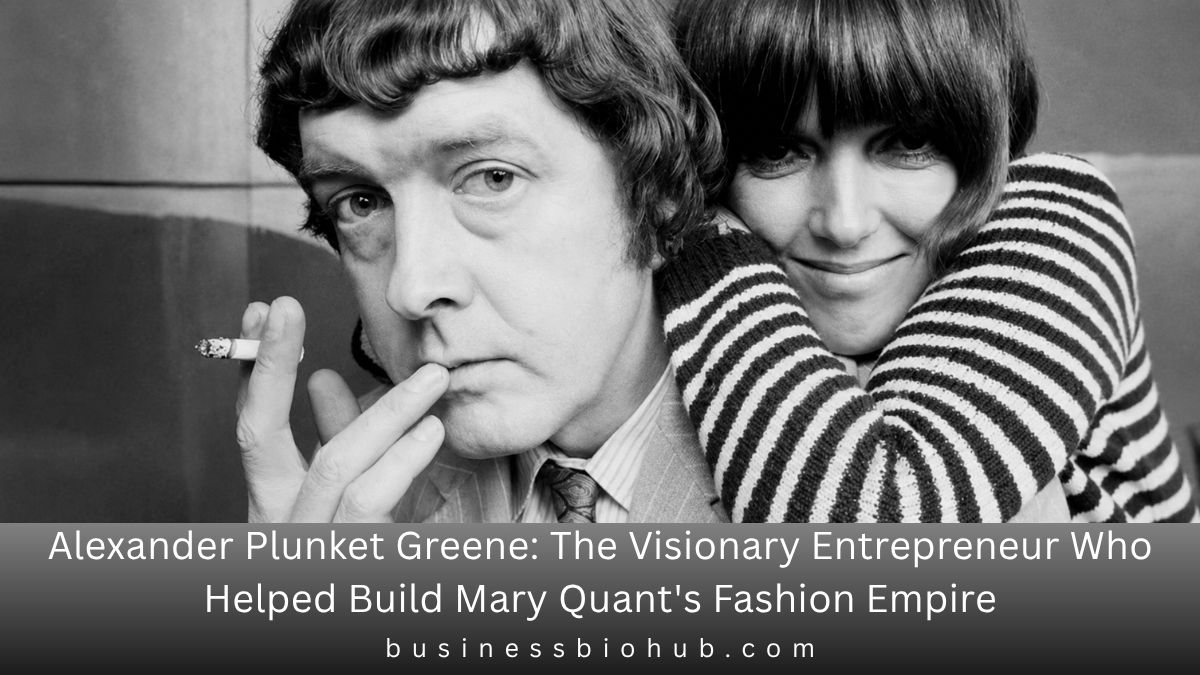
Alexander Plunket Greene was a British fashion entrepreneur whose name became closely connected with one of the most transformative periods in modern British style. Born in 1932 and remembered particularly for his marriage and professional partnership with legendary fashion designer Mary Quant, he played an important role in turning creative fashion ideas into a commercially successful business. While Quant became internationally celebrated for her designs and influence on youth fashion, Plunket Greene contributed entrepreneurial energy, commercial thinking, promotion, and business development to their shared enterprise.
He was more than simply the husband of a famous designer. As a business owner, strategist, risk-taker, and creative collaborator, Alexander Plunket Greene helped establish the environment in which Quant’s innovative fashion could reach a much wider audience. Their famous Bazaar boutique on King’s Road became associated with the youthful energy of 1950s and 1960s London and later with the cultural phenomenon widely known as Swinging London.
Who Was Alexander Plunket Greene?
Alexander Plunket Greene was born in Britain in 1932. His adult life became strongly connected with art, fashion, entrepreneurship, and London’s emerging youth culture. He met Mary Quant while they were students at Goldsmiths’ College of Art, where they became part of a creative generation interested in challenging older cultural traditions.
Their relationship developed personally and professionally. The couple married in 1957, beginning a partnership that would continue throughout much of their lives. Their personalities complemented each other: Quant possessed a distinctive design vision, while Plunket Greene had the confidence, entrepreneurial mindset, and commercial instincts needed to develop opportunities around that creativity.
Alexander Plunket Greene and Mary Quant
The partnership between Alexander Plunket Greene and Mary Quant became one of the most recognizable relationships in British fashion history. Their success came from combining business innovation with design innovation.
Quant understood what younger consumers wanted to wear, while Plunket Greene recognized the commercial potential of building a fashion business that felt distinct from traditional British retail. Their approach was informal, energetic, modern, and closely connected with the changing attitudes of younger generations.
A Creative and Commercial Partnership
Plunket Greene was not competing with Quant for attention as a designer. Instead, he helped create a business structure in which her creativity could develop commercially. In modern terminology, his role could be compared with that of a corporate entrepreneur or business manager working alongside a highly creative founder.
Their partnership demonstrated that fashion success depended not only on designing attractive clothing but also on business strategy, branding, marketing, market expansion, and customer understanding.
The Creation of Bazaar Boutique
One of the defining achievements of Alexander Plunket Greene’s career was his involvement in establishing Bazaar, the boutique that became closely associated with Mary Quant’s rise.
Bazaar opened on King’s Road in Chelsea in November 1955. Plunket Greene, Quant, and their business associate Archie McNair developed the venture during a period when Chelsea was becoming increasingly attractive to younger artists, designers, musicians, and culturally adventurous consumers.
The boutique was significantly different from traditional clothing shops. Rather than creating a formal shopping environment, Bazaar reflected a new generation’s desire for excitement, individuality, and experimentation.
A Risk-Taker in British Fashion
Opening an unconventional boutique required the mindset of a genuine risk-taker and business creator. Plunket Greene and his partners were entering a market dominated by established businesses and traditional expectations.
Their decision represented an early example of disruptive retail thinking. Although the word disruptor is commonly associated with modern technology businesses, the philosophy was similar: identify what established companies were failing to provide and create something appealing to an underserved audience.
Young consumers increasingly wanted clothing that reflected their own identity rather than simply copying the style of older generations. Bazaar responded directly to that cultural shift.
Turning Creativity Into Commercial Success
Mary Quant initially selected merchandise for the boutique before increasingly producing her own designs. As customer demand grew, her creative work became the foundation of a much larger business opportunity.
Alexander Plunket Greene helped support this transformation from a fashionable London boutique into an established business with international potential.
Alexander Plunket Greene’s Business Strategy
The success surrounding Mary Quant’s brand required more than fashion talent. It also depended upon effective business growth, market expansion, commercial operations, licensing, branding, and leadership.
Plunket Greene became closely associated with the business side of the operation, helping to develop opportunities that enabled the Quant name to reach consumers beyond the original Chelsea boutique.
Expansion Through the Ginger Group
A significant development came with the launch of the Ginger Group in 1963. The label helped make Quant-inspired fashion available to a broader market rather than limiting the company’s products to a small group of boutique customers.
This reflected an important entrepreneurial principle: successful business development often depends upon finding ways to scale a desirable product.
Plunket Greene understood that the cultural popularity surrounding Quant could become the foundation for wider commercial success. Expanding production and distribution therefore became an important part of their overall business strategy.
International Market Expansion
As Mary Quant became internationally recognized, the business expanded beyond Britain. Licensing arrangements helped bring the brand into foreign markets, including the United States.
Such expansion transformed the operation from a fashionable London enterprise into a commercially significant international brand.
Plunket Greene’s contribution can therefore be understood through the language of market participation, commercial strategy, risk management, and brand expansion. Rather than remaining a traditional businessman operating a single boutique, he helped grow a lifestyle-focused fashion enterprise.
Beyond Clothing
The Mary Quant name eventually appeared across a wider range of products. Fashion, cosmetics, accessories, and other consumer categories contributed to the development of an increasingly recognizable international brand.
This diversification demonstrated the value of combining a strong creative identity with intelligent commercial management.
Role in the Swinging London Era
The influence of Alexander Plunket Greene and Mary Quant extended beyond ordinary retail.
During the 1960s, London developed an international reputation as a center of music, fashion, art, youth culture, and experimentation. King’s Road became one of the locations associated with this transformation.
Quant’s designs represented freedom, youthfulness, and modernity, while Bazaar provided a physical space where this new cultural identity could be experienced.
Plunket Greene therefore became part of a wider movement that changed how British creativity was marketed to the world.
A Pioneer of Youth-Focused Retail
His entrepreneurial approach helped demonstrate the commercial importance of young consumers. Modern companies routinely target customers based on lifestyle, identity, and cultural interests, but this approach was far less established in the 1950s.
In this respect, Plunket Greene can reasonably be viewed as a pioneer of youth-focused fashion business.
Personal Life and Family
Behind the international fashion story was also a long personal relationship.
Alexander Plunket Greene and Mary Quant married in 1957 after meeting during their student years. Their marriage was closely intertwined with their professional lives, making them both family partners and business collaborators.
The couple had one son, Orlando Plunket Greene, who was born in 1970.
Their relationship lasted until Alexander Plunket Greene died in 1990, when he was 57 years old.
Alexander Plunket Greene’s Legacy
Alexander Plunket Greene’s legacy is inseparable from the extraordinary success of Mary Quant and the cultural revolution surrounding British fashion in the 1960s.
He did not become famous primarily as a designer. His importance instead came from his ability to contribute entrepreneurial thinking, leadership, commercial development, and strategic expansion to a creative business.
The partnership demonstrated how a visionary designer and commercially minded entrepreneur can build something more powerful together than either might create independently.
His story is also a reminder that major creative brands are often built by teams. Designers may provide the visible artistic identity, but successful enterprises additionally require people capable of handling promotion, business strategy, market expansion, commercial relationships, and long-term development.
Conclusion
Alexander Plunket Greene deserves recognition as an influential figure in the business story behind one of Britain’s greatest fashion revolutions. Through Bazaar, the expansion of Mary Quant’s business, the Ginger Group, and international licensing, he helped connect groundbreaking design with commercial opportunity.
His combination of entrepreneurial mindset, risk-taking, business leadership, and creative collaboration contributed to an enterprise that became symbolic of Swinging London. Although Mary Quant understandably remains the most celebrated name associated with the brand, Alexander Plunket Greene played an important supporting and strategic role in transforming their original boutique concept into an internationally recognized fashion business.
(FAQs)
Who was Alexander Plunket Greene?
Alexander Plunket Greene was a British fashion entrepreneur and businessman best known for his marriage and professional partnership with fashion designer Mary Quant. He helped develop the commercial side of their fashion ventures.
What was Alexander Plunket Greene famous for?
He was particularly known for helping to establish Bazaar, the influential King’s Road boutique associated with Mary Quant and the development of London’s youth fashion culture.
When did Alexander Plunket Greene marry Mary Quant?
Alexander Plunket Greene and Mary Quant married in 1957 after meeting while studying at Goldsmiths’ College of Art in London.
Did Alexander Plunket Greene and Mary Quant have children?
Yes. The couple had one son, Orlando Plunket Greene, who was born in 1970.
What role did Alexander Plunket Greene play in Mary Quant’s business?
He contributed to the commercial, strategic, promotional, and expansion side of the business, helping transform their boutique venture into a broader international fashion enterprise.
When did Alexander Plunket Greene die?
Alexander Plunket Greene died in 1990 at the age of 57. His contribution to the British fashion business remains closely connected with the enduring legacy of Mary Quant and the Swinging London era.

Telehealth Psychiatric & Mental Health Care: Accessible Support for a Healthier Mind

West Palm Beach Detox: A Safe and Supportive Start to Lasting Recovery

Drug & Alcohol Rehab in West Palm Beach, FL: Start Your Journey to a Healthier Life

Drug & Alcohol Detox in South Carolina: A Complete Guide to Safe Recovery

Drug and Alcohol Detox Kentucky: Your Guide to Safe Recovery at Paducah Detox Center

Addiction Treatment in Plymouth: Understanding Addiction & Mental Health Treatment

Ohio Center for Adolescent Wellness: Your Guide to Teen Mental Health Services in Ohio

Massachusetts Center for Adolescent Wellness: Your Guide to Teen Mental Health & Addiction Treatment in MA

Foundation Diploma Singapore: A Practical Route Towards Higher Education

How to Stay Safe and Private While Using Public Wi-Fi

Paul Smalley Studied at University: The Education Behind His Global Football Career

Diamo Jewels Under the Lens: What Buyers Should Know Before Ordering in 2026

Billie Henry: Inside the Private Life Dawn French Fought to Keep Out of the Spotlight

Tina Esposito Advocate Health Bio: The Data Executive Shaping Analytics, AI and Patient Care

Kögel Trailer GmbH Manufacturing or Wholesale? The Business Model Behind the German Trailer Company

iPhone 17 Pro Max Phone Case: Best Protection Choices That Actually Matter in 2026

Pasonet Explained: Why This Digital Name Is More Complicated Than It First Appears

1upHealth Revenue Cycle Automation Partnerships: What’s Real, What’s Emerging, and Why 2027 Changes the Stakes

Industrial Entrepreneurs Memorandum: The 2026 IEM Rules Every Large Manufacturer Should Understand

EliseAI Head of Partnerships 2024–2026: The Leadership Shift Behind Its Expanding AI Partner Network
Telehealth Psychiatric & Mental Health Care: Accessible Support for a Healthier Mind
West Palm Beach Detox: A Safe and Supportive Start to Lasting Recovery
Drug & Alcohol Rehab in West Palm Beach, FL: Start Your Journey to a Healthier Life
Drug & Alcohol Detox in South Carolina: A Complete Guide to Safe Recovery
Drug and Alcohol Detox Kentucky: Your Guide to Safe Recovery at Paducah Detox Center
Addiction Treatment in Plymouth: Understanding Addiction & Mental Health Treatment
Ohio Center for Adolescent Wellness: Your Guide to Teen Mental Health Services in Ohio
Massachusetts Center for Adolescent Wellness: Your Guide to Teen Mental Health & Addiction Treatment in MA
Foundation Diploma Singapore: A Practical Route Towards Higher Education
How to Stay Safe and Private While Using Public Wi-Fi
-
 Celebrity4 months ago
Michael Scott Ryan: The Private Writer Known for His Connection to Jennifer Ehle
-
 Celebrity4 months ago
Benn George, The Private British Businessman Behind a Powerful Chapter in Tiffany Darwish’s Life
-
 Celebrity5 months ago
Daniel Guerard, The Private French Salon Owner Behind Lorraine Bracco’s Early Life Story
-
 Celebrity6 months ago
Caroline Hickman: The Private Life and Public Attention Around Steve Coogan’s Former Wife