
Technology & Tools
Bumetro: The Smart Urban Travel Platform Bringing City Transport Into One Connected Journey

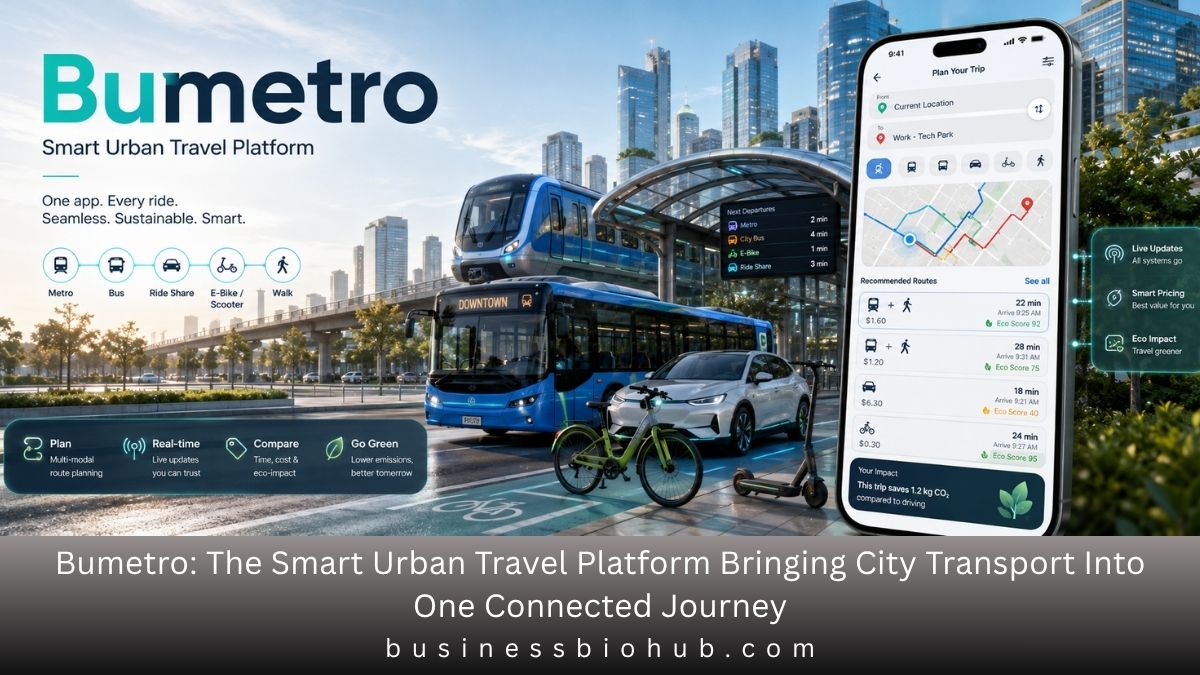
Modern city travel has become increasingly complicated as commuters rely on multiple modes of transportation in a single journey. A person may begin with a bus, transfer to a metro line, use a ride-sharing service for the final few kilometers, or choose an e-bike when traffic becomes too heavy. Bumetro is designed around the idea that these separate transport services can be brought together into a single connected digital environment. Instead of forcing travelers to switch among multiple applications, schedules, maps, payment tools, and service providers, the platform is positioned as an integrated smart travel solution grounded ingrounded in the broader concept of Mobility as a Service (MaaS). Its purpose is to make daily movement easier to understand by combining route planning, live transport information, estimated pricing, and environmental data into a more unified travel experience. The concept reflects a wider shift in urban Mobility, where technology is increasingly being used to connect existing transport networks rather than replacing them entirely.
What Is Bumetro?
Bumetro is a smart mobility platform that brings together various city transportation options through a single operational interface. In a traditional commuting environment, public buses, underground rail systems, private ride-hailing companies, bicycle-sharing networks, and other transport providers often operate through separate digital systems. This can make even a relatively short journey unnecessarily complicated, particularly when travelers are unfamiliar with the city or when disruptions affect the normal timetable. Bumetro aims to reduce that fragmentation by creating a digital layer that helps users compare transport options for a single trip. The platform does not necessarily represent a new physical transportation network. Instead, its value comes from connecting information from existing operators and presenting it in a more practical way for passengers. This approach is closely associated with Mobility as a Service, where transportation is viewed as a connected service ecosystem rather than a collection of isolated vehicles and routes.
How Multi-Modal Route Planning Works
One of the most important ideas behind Bumetro is multi-modal route planning. Many urban journeys cannot be completed efficiently using just one type of transportation. A commuter may take a local bus to a railway station, travel across the city by metro, and then walk, cycle, or use a ride-sharing vehicle to reach the final destination. Normally, each stage may require a different app or timetable. Bumetro brings those separate journey segments together so travelers can see the trip as a single, continuous itinerary. This makes route comparison easier, as passengers can consider factors such as total travel time, number of transfers, transport type, price, and convenience before beginning their journey. A connected planning system can also help people discover alternatives they may not have considered, such as combining public transport with micro-mobility services. The broader goal is not simply to show the fastest route, but to help users understand the different ways a city can be crossed using the transport services already available.
Real-Time Travel Information and Service Updates
Urban transportation depends heavily on changing conditions. A bus may be delayed by traffic, a metro line may experience an unexpected service interruption, or a route may temporarily change because of construction or a public event. For this reason, real-time data integration is central to the Bumetro concept. By receiving updated information from transport operators, a smart mobility platform can warn users when their planned journey is no longer the most practical option. Instead of arriving at a station and discovering a delay, travelers may receive information early enough to consider an alternative route. Real-time information can also improve confidence in public transportation because uncertainty is often a major frustration for commuters. However, the quality of real-time information depends heavily on the data supplied by individual transport providers. If a local operator does not provide accurate or up-to-date information, the platform cannot independently produce perfect live data. This makes transport API integration and cooperation with local authorities essential to the service’s overall reliability.
Understanding the Cost of a Journey Before Traveling
Price is another major factor in how people choose to get around a city. A route that appears faster may become less attractive if it requires an expensive ride-sharing segment, while a slightly longer journey using public transportation could offer better value. Bumetro provides an upfront cost breakdown, allowing travelers to compare the estimated costs of different transport combinations before choosing a route. This can be especially useful when a journey includes services with different pricing structures. Public transport may use fixed fares or travel zones, while private mobility services may calculate prices based on distance, demand, availability, or time of day. Bringing these costs together in a single interface can give users a clearer picture of the financial differences among available options. Although exact pricing may vary depending on local transport systems and commercial agreements, greater price visibility can help passengers make more informed decisions based on both convenience and budget.
Eco-Impact Scoring and Sustainable Travel Choices
Another distinctive element associated with Bumetro is eco-impact scoring. Cities worldwide are increasingly encouraging residents to consider the environmental consequences of daily transportation. Private vehicles may offer convenience, but high levels of car dependency can contribute to congestion, fuel consumption, and urban emissions. Public transport, cycling, walking, and shared Mobility can sometimes provide lower-impact alternatives. By comparing the estimated environmental profile of different routes, Bumetro can help travelers see how their transport choices may affect their carbon footprint. This does not mean that every commuter will always choose the most environmentally friendly route, because time, accessibility, safety, cost, and personal circumstances also matter. However, presenting environmental information alongside traditional factors such as price and journey duration gives sustainability a more visible role in everyday travel decisions. Over time, this type of information could encourage more people to consider lower-emission transport options when practical.
Bumetro and the Mobility as a Service Model
The wider concept behind Bumetro is strongly connected to Mobility as a Service, or MaaS. MaaS is based on the idea that transportation can be organizedorganized around the needs of the traveler rather than around individual transport companies. Rather than thinking separately about buses, trains, taxis, rental bicycles, and other services, a MaaS system attempts to integrate them into a single digital travel experience. In theory, users should be able to plan, compare, and potentially pay for multiple transport services without dealing with every provider separately. Bumetro fits within this model by acting as an integration layer between commuters and existing transport infrastructure. The success of such a system depends on collaboration, as no single application can control an entire city’s transportation network. Municipal authorities, transit agencies, private companies, mapping providers, payment processors, and mobility operators may all need to share information for the platform to function effectively.
The Technology and Infrastructure Behind Bumetro
A platform like Bumetro depends on more than an attractive user interface. Behind the scenes, it requires access to transport data, scheduling systems, mapping technology, pricing information, service alerts, and potentially digital payment infrastructure. Each city may present a very different technical environment. Some transport authorities offer modern APIs containing detailed live arrival data, while others may provide only basic timetable information. Private ride-sharing and micro-mobility companies may also control how their data can be accessed. As a result, Bumetro’s capabilities can vary depending on local partnerships and technical integration. Features such as digital ticket purchasing, wallet payments, live vehicle tracking, and combined booking may be available only when the relevant transport operator supports them. This distinction matters because a smart travel platform is only as connected as the surrounding transport ecosystem.
Why Integrated Travel Platforms Can Help Daily Commuters
Bumetro’s practical appeal lies in its simplicity. Urban travellers often deal with too much fragmented information. One app may provide bus schedules, another may handle train tickets, and a third may show bicycle availability. During disruptions, passengers may need to search multiple services to understand how to reach their destination. A unified platform can reduce this digital clutter by providing users with a central place to compare transport options. This can be particularly valuable for tourists, new residents, students, business travelers, and commuters visiting unfamiliar parts of a city. By making connections between different modes easier to understand, the platform can potentially reduce planning time and improve confidence when using public or shared transportation.
Potential Limitations and Challenges
Although the Bumetro model offers clear advantages, its effectiveness depends on several factors outside the platform’s direct control. The first is data availability. Without reliable information from transportation providers, real-time planning may become less accurate. The second challenge is ticketing integration because cities often use different fare systems, payment technologies, and regulations. Privacy and data protection are also important considerations when an application processes journey information, payment details, or location-related data. Another challenge is geographic consistency. A user may experience a highly integrated version of the service in one metropolitan area but find fewer features in another city where transport operators provide limited digital access. For this reason, a MaaS platform’s strength is closely tied to local infrastructure, partnerships, and public-private cooperation.
The Future Potential of Bumetro
As cities continue to invest in smart infrastructure, platforms such as Bumetro could become increasingly relevant to how people organize their daily travel. The future of urban Mobility is likely to involve a mix of public transportation, shared vehicles, bicycles, electric micro-mobility, walking, and on-demand services, rather than relying on a single mode of transportation. A platform that brings those choices together may become more useful as transportation networks grow more complex. Improvements in live data, digital payments, predictive routing, and city-wide transport integration could further strengthen the MaaS model. However, long-term success will depend on whether travellers find the service reliable, easy to use, transparent, and genuinely more convenient than managing transport options separately.
Conclusion
Bumetro represents a more connected and intelligent urban travel experience. By bringing buses, metro services, ride-sharing, micro-mobility, pricing information, live updates, and environmental comparisons into a unified system, the platform aims to reduce the complexity of traveling through modern cities. Its strongest potential lies in helping users view an entire journey rather than treating each transport segment as a separate problem. Features such as multi-modal planning, real-time information, upfront cost comparison, and eco-impact scoring can give commuters more control over how they travel. At the same time, the platform’s real-world performance depends heavily on the quality of local transport data, operator partnerships, payment integration, and municipal infrastructure. Bumetro therefore reflects both the opportunities and challenges of the growing Mobility as a Service movement, in which digital technology is increasingly used to make existing transportation networks work together more effectively.

Telehealth Psychiatric & Mental Health Care: Accessible Support for a Healthier Mind

West Palm Beach Detox: A Safe and Supportive Start to Lasting Recovery

Drug & Alcohol Rehab in West Palm Beach, FL: Start Your Journey to a Healthier Life

Drug & Alcohol Detox in South Carolina: A Complete Guide to Safe Recovery

Drug and Alcohol Detox Kentucky: Your Guide to Safe Recovery at Paducah Detox Center

Addiction Treatment in Plymouth: Understanding Addiction & Mental Health Treatment

Ohio Center for Adolescent Wellness: Your Guide to Teen Mental Health Services in Ohio

Massachusetts Center for Adolescent Wellness: Your Guide to Teen Mental Health & Addiction Treatment in MA

Foundation Diploma Singapore: A Practical Route Towards Higher Education

How to Stay Safe and Private While Using Public Wi-Fi

Paul Smalley Studied at University: The Education Behind His Global Football Career

Diamo Jewels Under the Lens: What Buyers Should Know Before Ordering in 2026

Billie Henry: Inside the Private Life Dawn French Fought to Keep Out of the Spotlight

Tina Esposito Advocate Health Bio: The Data Executive Shaping Analytics, AI and Patient Care

Kögel Trailer GmbH Manufacturing or Wholesale? The Business Model Behind the German Trailer Company

iPhone 17 Pro Max Phone Case: Best Protection Choices That Actually Matter in 2026

Pasonet Explained: Why This Digital Name Is More Complicated Than It First Appears

1upHealth Revenue Cycle Automation Partnerships: What’s Real, What’s Emerging, and Why 2027 Changes the Stakes

Industrial Entrepreneurs Memorandum: The 2026 IEM Rules Every Large Manufacturer Should Understand

EliseAI Head of Partnerships 2024–2026: The Leadership Shift Behind Its Expanding AI Partner Network
Telehealth Psychiatric & Mental Health Care: Accessible Support for a Healthier Mind
West Palm Beach Detox: A Safe and Supportive Start to Lasting Recovery
Drug & Alcohol Rehab in West Palm Beach, FL: Start Your Journey to a Healthier Life
Drug & Alcohol Detox in South Carolina: A Complete Guide to Safe Recovery
Drug and Alcohol Detox Kentucky: Your Guide to Safe Recovery at Paducah Detox Center
Addiction Treatment in Plymouth: Understanding Addiction & Mental Health Treatment
Ohio Center for Adolescent Wellness: Your Guide to Teen Mental Health Services in Ohio
Massachusetts Center for Adolescent Wellness: Your Guide to Teen Mental Health & Addiction Treatment in MA
Foundation Diploma Singapore: A Practical Route Towards Higher Education
How to Stay Safe and Private While Using Public Wi-Fi
-
 Celebrity4 months ago
Michael Scott Ryan: The Private Writer Known for His Connection to Jennifer Ehle
-
 Celebrity4 months ago
Benn George, The Private British Businessman Behind a Powerful Chapter in Tiffany Darwish’s Life
-
 Celebrity5 months ago
Daniel Guerard, The Private French Salon Owner Behind Lorraine Bracco’s Early Life Story
-
 Celebrity6 months ago
Caroline Hickman: The Private Life and Public Attention Around Steve Coogan’s Former Wife