
Technology
iPhone 17 Pro Max Phone Case: Best Protection Choices That Actually Matter in 2026

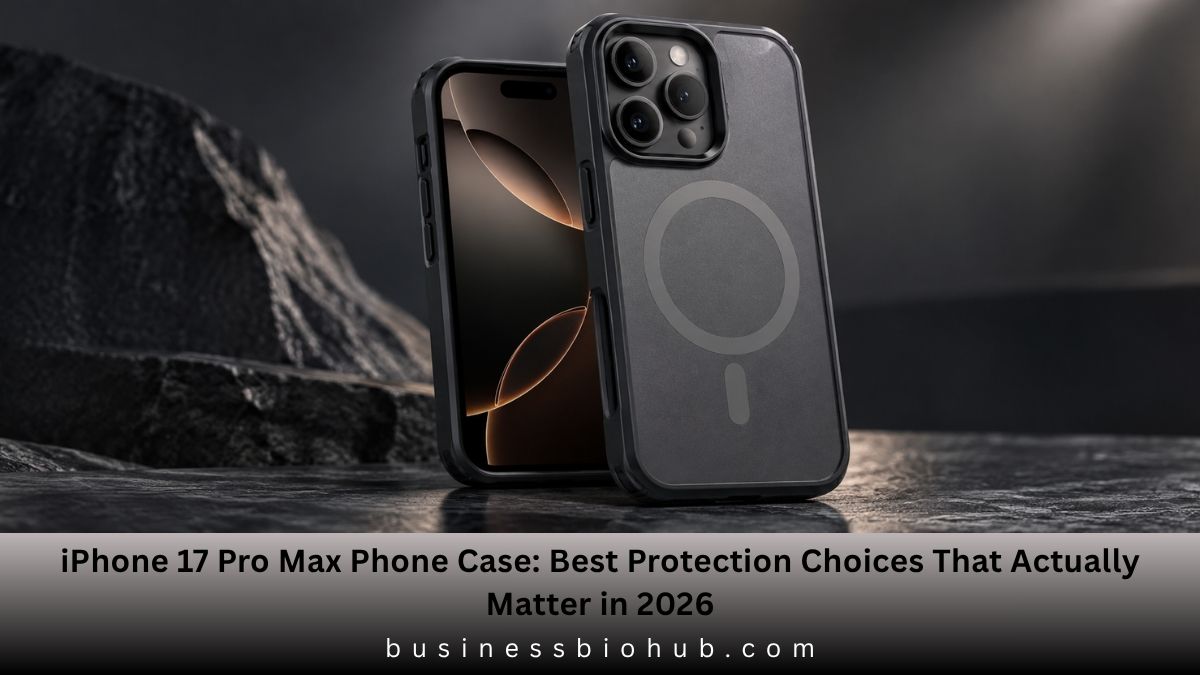
An iPhone 17 Pro Max phone case can look like a simple purchase until you consider what it has to protect. Apple’s Pro Max model measures 6.43 inches tall, 3.07 inches wide and 0.34 inch deep, weighs 233 grams, and carries a 6.9-inch display. That is a substantial device to catch if it slips from one hand.
The hardware also makes case design more demanding. The iPhone 17 Pro Max combines an aluminum unibody, Ceramic Shield 2 on the front, Ceramic Shield on the back, a prominent rear camera area, Camera Control, an Action button and an integrated magnetic system for MagSafe accessories. A badly designed case can therefore create problems even when it technically covers the phone.
That is why shoppers should look beyond color and branding. Exact model compatibility, camera-area protection, button access, grip, MagSafe alignment and material thickness are now the details that separate a useful case from an irritating one.
BLUF: The best iPhone 17 Pro Max phone case is one specifically engineered for the 17 Pro Max, with raised edge protection, reliable grip, unobstructed Camera Control, accurate button placement and properly aligned MagSafe magnets. Material choice matters, but precise fit and feature compatibility should come first.
The iPhone 17 Pro Max Makes Case Fit More Important Than Ever
Apple lists the iPhone 17 Pro Max at 163.4 mm × 78.0 mm × 8.75 mm, with a weight of 233 grams. It also uses a 6.9-inch Super Retina XDR OLED display. Those measurements alone are a good reason not to buy a case based on vague labels such as “Pro Max compatible.” The case should explicitly identify iPhone 17 Pro Max compatibility.
The phone’s external controls also influence case construction. Apple identifies volume controls, the Action button, Side button and Camera Control on the chassis. Camera Control can handle functions including exposure, depth, zoom, camera selection, photographic styles and tone. A case that interferes with this interface can make one of the phone’s core camera features less convenient to use.
Apple’s own Clear and Silicone cases demonstrate how specifically this interaction can be engineered. Both use a sapphire crystal coupled to a conductive layer to transmit finger movements to Camera Control rather than simply leaving an oversized opening around it.
The rear design deserves attention as well. Apple introduced the 17 Pro generation with a redesigned aluminum unibody and a raised rear plateau that creates additional internal space. Case makers consequently need accurate molding around the cameras and surrounding structure rather than reusing dimensions from a previous Pro Max generation.
MagSafe Compatibility Is More Than a Magnet on the Back
MagSafe has become one of the most important reasons to choose a properly engineered case.
The iPhone 17 Pro Max supports MagSafe wireless charging at up to 25W and Qi2 wireless charging at up to 25W. Apple also lists a magnet array, alignment magnet, accessory-identification NFC and magnetometer as part of the phone’s MagSafe system.
A case advertised as MagSafe compatible should therefore do more than stick loosely to a charger. Good magnetic alignment helps chargers, stands, wallets and grips sit where they are supposed to.
Apple states that its official Clear, Silicone and TechWoven cases contain built-in magnets aligned with the iPhone 17 Pro Max and can remain installed during MagSafe, Qi2 or Qi wireless charging.
For anyone who regularly uses magnetic car mounts, wallets, desktop stands or charging docks, this should be a priority rather than an optional extra.
A premium phone case should protect the device without forcing its owner to give up the hardware features that made the phone worth buying.
Clear, Silicone or Woven? The Material Changes the Experience
There is no single case material that is automatically best for everybody. Different materials solve different problems.
A clear case suits people who want the phone’s original finish to remain visible. Apple’s official version combines optically clear polycarbonate with flexible materials and has scratch-resistant coatings on both its interior and exterior. Apple also says its materials and coatings are optimized to resist yellowing over time.
A silicone case emphasizes grip and a softer feel. Apple’s Silicone Case contains 45 percent recycled silicone material, uses a soft-touch exterior and includes a microfiber lining inside. The softer exterior can be appealing on a large phone because additional grip helps when picking it up, taking photos or using it one-handed.
The TechWoven Case offers another approach. Apple describes it as a technical woven fabric made from 100 percent recycled polyester, with multiple yarn colors woven on a Jacquard loom. Its sides use lightly textured TPU for additional grip, while its buttons are made from anodized aluminum.
Material is therefore not just an appearance decision. It changes grip, texture, cleaning requirements, bulk and how visible the original phone remains.
Apple Case Options at a Glance
| Case type | Main material/details | MagSafe | Camera Control information | U.S. Apple price checked |
|---|---|---|---|---|
| Clear Case | Clear polycarbonate and flexible materials | Yes | Sapphire crystal and conductive layer | $49 |
| Silicone Case | Soft-touch silicone with microfiber lining | Yes | Sapphire crystal and conductive layer | $49 |
| TechWoven Case | Recycled polyester woven fabric with textured TPU sides | Yes | Check current product specifications | $59 |
Prices and product details above reflect Apple’s U.S. online store information checked in September 2026 and can change without notice.
Protection Should Focus on the Places That Hit the Ground First
Buyers often look for the thickest case and assume thickness equals protection. Real-world case design is more complicated.
The vulnerable zones are usually the corners, screen perimeter, camera area and exposed controls. Raised edges around the display can reduce direct surface contact when the phone is laid face-down, while a properly designed camera surround helps prevent the lenses and surrounding area from becoming the first contact point on a table.
Corner structure is particularly important because an impact concentrated into a small area can be more troublesome than a flat contact across the rear shell. Materials capable of flexing or dispersing some impact energy can therefore be useful without making the entire case extremely bulky.
Apple says its own cases undergo thousands of hours of testing during design and manufacturing and are designed to provide protection from scratches and drops. That claim does not mean any case can make a phone damage-proof, but it highlights why structural testing matters more than appearance alone.
The phone itself already brings substantial durability improvements. Apple says Ceramic Shield 2 on the front offers three times better scratch resistance than the previous generation’s front protection, while Ceramic Shield on the rear provides four times better resistance to cracks than the previous rear-glass design. A case should be viewed as additional risk reduction, not as proof that damage is impossible.
Five Details Worth Checking Before You Pay
The fastest way to judge an iPhone 17 Pro Max phone case is to ignore the marketing language for a moment and examine its functional design.
First, confirm that the product specifically says iPhone 17 Pro Max, not merely iPhone 17 Pro or “17 series.” Apple itself separates compatibility by model in its accessory listings.
Second, inspect Camera Control implementation. A carefully designed control surface can provide a smoother experience than a poorly positioned cutout.
Third, look at the camera surround. It should protect the rear area without intruding into the cameras or flash.
Fourth, determine whether genuine magnetic functionality matters to you. If you use MagSafe charging or accessories, buying a case with properly positioned integrated magnets is generally preferable to relying on a thick non-magnetic shell.
Finally, consider the combined weight. The phone already weighs 233 grams before a case is installed. A heavy-duty shell may be appropriate for demanding environments, but someone primarily using the phone at a desk may prefer a slimmer option with sufficient edge protection.
A Slim Case and a Rugged Case Solve Different Problems
A slim case is usually best for people whose biggest concerns are scratches, grip and minor everyday bumps. It keeps the phone relatively close to its original dimensions and fits more comfortably into pockets.
A rugged case makes more sense for construction sites, outdoor activities, frequent travel or users who regularly drop their phones. Such designs can add reinforced corners and thicker edges, but the trade-off is additional width and weight.
Neither approach is universally superior. The useful question is: What kind of accident are you actually trying to protect against?
For many owners, the practical middle ground is a case with reasonable corner reinforcement, a raised display edge, camera-area protection, dependable grip and built-in MagSafe support without excessive bulk.
The Case You Notice Least May Be the One You Chose Best
The strongest iPhone 17 Pro Max phone case is not necessarily the thickest, most expensive or most heavily advertised option. A good case becomes part of the phone: the buttons remain natural, Camera Control remains usable, MagSafe accessories connect reliably, the camera area stays protected and the device feels more secure in the hand.
For the iPhone 17 Pro Max in particular, precise fit matters because Apple combined a large 6.9-inch body with a redesigned rear structure, dedicated Camera Control and a sophisticated magnetic charging system.
Choose the protection level around how you actually use the phone. Exact compatibility first, functional protection second, material and appearance third is a far more useful buying order than choosing a case simply because it looks good in a product photo.
FAQs
What case fits the iPhone 17 Pro Max?
An iPhone 17 Pro Max case is a case specifically molded for the 163.4 × 78.0 × 8.75 mm iPhone 17 Pro Max chassis, including its rear camera structure and external controls. Buyers should choose a product explicitly listing iPhone 17 Pro Max compatibility rather than assuming another Pro Max generation will fit correctly.
Does the iPhone 17 Pro Max need a MagSafe case?
A MagSafe case is most useful for owners who use magnetic chargers, wallets, grips, mounts or stands. The iPhone 17 Pro Max supports MagSafe charging up to 25W. A case with correctly aligned integrated magnets helps accessories attach directly through the case without requiring removal before normal magnetic charging.
Does an iPhone 17 Pro Max case affect Camera Control?
An iPhone 17 Pro Max case can affect Camera Control when its design obstructs or poorly exposes the control area. Apple’s Clear and Silicone cases use sapphire crystal with a conductive layer designed to transmit finger movements to Camera Control, demonstrating that case design can directly influence how the feature is accessed.
Is a clear or silicone case better for the iPhone 17 Pro Max?
A clear case is better for displaying the phone’s original finish, while a silicone case prioritizes soft-touch grip and interior cushioning. Apple’s Clear Case uses transparent polycarbonate and flexible materials; its Silicone Case combines a soft-touch silicone exterior with a microfiber lining. The better option depends on grip, appearance and texture preferences.
Can the iPhone 17 Pro Max charge wirelessly with a case on?
An iPhone 17 Pro Max can charge wirelessly through a compatible case. Apple’s MagSafe cases are specifically designed to remain on the device while it is attached to a MagSafe charger or placed on compatible Qi2 and Qi chargers. Apple rates the phone itself for MagSafe and Qi2 wireless charging up to 25W under supported conditions.
Is an expensive iPhone 17 Pro Max case automatically safer?
An expensive case is not automatically a more protective case. Price can reflect materials, branding, magnets, manufacturing quality or additional features. Protection should instead be judged by exact fit, corner construction, screen and camera clearance, grip, control accessibility and credible testing information. No ordinary case can guarantee that a dropped phone will never be damaged.
The Case You Notice Least May Be the One You Chose Best
The strongest iPhone 17 Pro Max phone case is not necessarily the thickest, most expensive or most heavily advertised option. A good case becomes part of the phone: the buttons remain natural, Camera Control remains usable, MagSafe accessories connect reliably, the camera area stays protected and the device feels more secure in the hand.
For the iPhone 17 Pro Max in particular, precise fit matters because Apple combined a large 6.9-inch body with a redesigned rear structure, dedicated Camera Control and a sophisticated magnetic charging system.
Choose the protection level around how you actually use the phone. Exact compatibility first, functional protection second, material and appearance third is a far more useful buying order than choosing a case simply because it looks good in a product photo.
Editorial Disclaimer
Product specifications and official compatibility information were checked against Apple sources available in September 2026. Accessory prices, colors, availability and product lineups can change by country and over time. Statements about general case protection describe practical design considerations and should not be interpreted as guarantees against scratches, cracks, water damage or impact damage.

Pasonet Explained: Why This Digital Name Is More Complicated Than It First Appears

1upHealth Revenue Cycle Automation Partnerships: What’s Real, What’s Emerging, and Why 2027 Changes the Stakes

Kögel Trailer GmbH Manufacturing or Wholesale? The Business Model Behind the German Trailer Company

Paul Smalley Studied at University: The Education Behind His Global Football Career

Fawn Radmanich Marketing Strategy Experience: Why Her 25-Year A/E/C Career Centers on Winning Complex Work

Emily Seitz Pawlak at TriHealth: The Revenue Cycle Executive Who Pushed Automation Beyond Billing

Jadene Elden, AI Automation and RCM at Southcoast Health: What the Public Record Actually Shows

Tina Esposito Advocate Health Bio: The Data Executive Shaping Analytics, AI and Patient Care

Michael Roe Operating Partner NexPhase: The Verified Record Behind the Name — and the michaelroe.net Question

Briana Biagi Banner Health Fallon NV Staff Directory: What Current Records Actually Show

Astrid Hannah: The Inspiring Story of John Hannah’s Daughter and Her Life Beyond Competitive Swimming

Best Pasticho Venezuelan Lasagna Near Me: A Complete Guide to Finding This Rich Latin Comfort Food

Natasha Podstepny LinkedIn Performant Healthcare Nashville: Inside Her Professional Journey

John Minoli: The Private Life and Career of Sheena Easton’s Fourth Husband

Jeroen Dik: How He Built a Powerful Legacy in Performance Tuning and Motorsport

Lihnk Explained: The Mysterious Search Term, Possible Meanings, and What Users Should Know

Colitre Explained: The Powerful Story Behind a Rare Name and Its Modern Identity

Nigora Whitehorn: The Inspiring Life, Marriage, and Story Behind Duncan Bannatyne’s Wife

Kemberly Blackledge LinkedIn Nashville General Hospital Chief Revenue Officer: How She Built a Powerful Healthcare Finance Career

Elegant Florals Emily Davis Business Description: A Refined Look at Floral Art, Event Design, and Botanical Creativity
Pasonet Explained: Why This Digital Name Is More Complicated Than It First Appears
1upHealth Revenue Cycle Automation Partnerships: What’s Real, What’s Emerging, and Why 2027 Changes the Stakes
Kögel Trailer GmbH Manufacturing or Wholesale? The Business Model Behind the German Trailer Company
Paul Smalley Studied at University: The Education Behind His Global Football Career
Fawn Radmanich Marketing Strategy Experience: Why Her 25-Year A/E/C Career Centers on Winning Complex Work
Emily Seitz Pawlak at TriHealth: The Revenue Cycle Executive Who Pushed Automation Beyond Billing
Jadene Elden, AI Automation and RCM at Southcoast Health: What the Public Record Actually Shows
Tina Esposito Advocate Health Bio: The Data Executive Shaping Analytics, AI and Patient Care
Michael Roe Operating Partner NexPhase: The Verified Record Behind the Name — and the michaelroe.net Question
Briana Biagi Banner Health Fallon NV Staff Directory: What Current Records Actually Show
-
 Celebrity4 months ago
Michael Scott Ryan: The Private Writer Known for His Connection to Jennifer Ehle
-
 Celebrity4 months ago
Daniel Guerard, The Private French Salon Owner Behind Lorraine Bracco’s Early Life Story
-
 Celebrity5 months ago
Caroline Hickman: The Private Life and Public Attention Around Steve Coogan’s Former Wife
-
 Celebrity3 months ago
Benn George, The Private British Businessman Behind a Powerful Chapter in Tiffany Darwish’s Life