
Foods
Rainbow Roll Explained: Why This Colorful Sushi Favorite Is More Complex Than It Looks

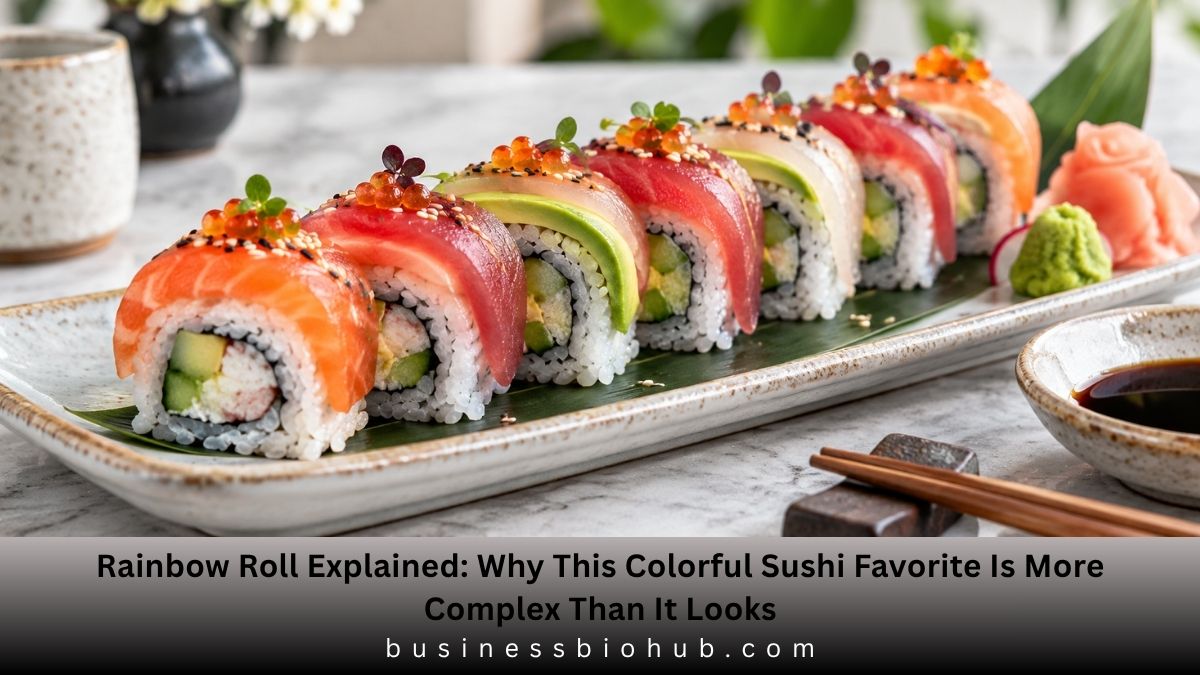
A rainbow roll is easy to recognize. Bright slices of salmon, tuna, avocado, yellowtail, shrimp, or other seafood are arranged across the top of an inside-out sushi roll, creating the striped appearance that gives the dish its name. Yet the familiar presentation can hide an important detail: there is no single universal rainbow roll recipe.
That matters when ordering one. A restaurant may use raw tuna and salmon, another may add cooked shrimp, and another may substitute or expand the seafood selection. Even the filling can change between crab, imitation crab or surimi, cucumber, avocado, mayonnaise-based crab mixtures, or combinations of those ingredients. Current restaurant menus demonstrate that variation clearly. FujiSan, for example, describes cucumber, avocado, and surimi inside its version, topped with tuna, shrimp, salmon, and avocado.
The raw seafood is also more than a culinary detail. The U.S. Food and Drug Administration advises that raw or undercooked seafood carries a higher foodborne-illness risk than thoroughly cooked seafood, making ingredient identification particularly important for pregnant people and other higher-risk diners.
BLUF: A rainbow roll is an inside-out sushi roll typically built around a California-roll-style filling of crab or surimi, cucumber, and avocado, then topped with alternating slices of fish, seafood, and avocado. Tuna and salmon are especially common, but the exact recipe varies significantly between restaurants.
The Colorful Anatomy Behind a Rainbow Roll
The defining feature of a rainbow roll is not one specific species of fish. It is the layered construction and multicolored topping.
Most recognizable versions belong to the uramaki, or inside-out roll, family. Instead of placing nori seaweed on the outside, the chef positions rice around the exterior while the nori surrounds the central filling. The finished roll is then covered with thin slices of seafood and avocado before being cut into individual pieces.
FujiSan’s current rainbow roll illustrates a widely recognized formula: sushi rice, cucumber, avocado, surimi, tuna, salmon, shrimp, seaweed, and related accompaniments. Its published ingredient information also shows why diners with allergies should not assume that a visually simple sushi roll contains only fish, rice, and vegetables; that product contains or incorporates ingredients associated with egg, fish, shellfish, soy, and wheat.
RA Sushi presents another clear version. Its Rainbow Roll is described as a California Roll topped with tuna, yellowtail, shrimp, salmon, and avocado.
Those examples explain the name better than any rigid recipe could. Orange salmon, deep-red tuna, pale seafood, green avocado, and additional toppings can create a changing sequence of colors across each piece.
What Usually Goes Inside?
A common rainbow roll begins with ingredients closely associated with a California roll:
- Seasoned sushi rice
- Nori seaweed
- Crab, imitation crab, or surimi
- Avocado
- Cucumber
NOAA’s California-roll recipe, for comparison, uses surimi, Japanese short-grain rice, rice-wine vinegar, avocado, nori, and optional sesame seeds, reinforcing the structural connection between California-style rolls and many rainbow-roll preparations.
Restaurants can modify the interior significantly. Some use a creamy crab mixture, some omit cucumber, and specialty interpretations may add tempura, cream cheese, spicy mayonnaise, or sauces. Those variations should be treated as restaurant-specific creations rather than mandatory rainbow-roll ingredients.
What Creates the “Rainbow” on Top?
The exterior is where the roll gets its visual identity.
Common toppings include tuna, salmon, yellowtail, shrimp, avocado, and other available fish. The ingredients are normally sliced thin enough to conform to the roll before it is portioned.
The seafood combination is not fixed. Sumo in Pakistan, for example, describes its eight-piece Rainbow Roll as avocado and crab topped with a colorful mix of seafood, while Zen Restaurant lists crab, avocado, and cucumber rolled with salmon, tuna, and avocado.
That variation is one reason diners should read the actual menu rather than assuming every rainbow roll contains precisely the same fish.
Rainbow Roll Ingredient Grid: What Is Standard and What Can Change?
| Component | Common Role | Frequently Seen Ingredient | Can It Vary? |
|---|---|---|---|
| Exterior | Holds the roll together | Seasoned sushi rice | Yes |
| Inner wrapper | Separates rice and filling | Nori | Yes |
| Core seafood | California-style base | Crab or surimi | Yes |
| Core vegetable | Creaminess | Avocado | Yes |
| Core vegetable | Fresh crunch | Cucumber | Yes |
| Top layer | Color and seafood flavor | Tuna | Yes |
| Top layer | Color and richness | Salmon | Yes |
| Top layer | Additional contrast | Yellowtail or shrimp | Yes |
| Finishing element | Visual contrast | Avocado | Yes |
| Condiments | Served beside or added to roll | Soy sauce, wasabi, ginger | Yes |
The best definition, therefore, focuses on structure rather than an inflexible ingredient list. A recognizable rainbow roll combines an inside-out sushi base with a varied, colorful layer of seafood or avocado across its surface.
Why It Is Closely Connected to the California Roll
The rainbow roll is best understood as part of the North American tradition of elaborate inside-out sushi rolls.
California-style sushi made rice-on-the-outside construction familiar to many diners. The rainbow roll takes that format and adds sliced seafood across the exterior. Sushi references commonly describe the rainbow roll as a California-style roll topped with multiple kinds of fish and avocado.
That does not, however, establish a universally accepted inventor or exact creation date for the rainbow roll.
Published histories disagree on parts of the origin story surrounding California rolls and related North American sushi styles. Some accounts associate later decorative rolls with Los Angeles, while other claims connect specific innovations with chefs elsewhere. Because the documentation is not definitive enough to settle every competing claim, stating that a single person unquestionably invented the rainbow roll would go beyond the available evidence.
What can be said safely is that it became strongly associated with North American-style uramaki sushi, in which familiar ingredients were combined with increasingly decorative toppings.
A Rainbow Roll Is Not Automatically a Cooked Sushi Roll
One of the most useful things to know before ordering is that the attractive topping frequently includes raw fish.
A version topped with raw salmon and raw tuna should not be confused with fully cooked sushi simply because its filling contains cooked crab, imitation crab, or cooked shrimp.
FujiSan lists tuna and salmon alongside cooked shrimp and surimi in its Rainbow Roll ingredient information. RA Sushi marks its Rainbow Roll in a way indicating raw or undercooked ingredients and describes toppings including tuna, yellowtail, shrimp, and salmon.
Why Freezing and Proper Handling Matter
FDA guidance says some fish species may contain parasites and notes that freezing can destroy parasites when appropriate procedures are followed. Freezing, however, does not eliminate every harmful germ, which is why the FDA identifies thoroughly cooked seafood as the safest option.
The FDA Food Code also establishes parasite-destruction controls for many fish intended to be consumed raw, although exemptions and specific regulatory conditions exist for certain species and production methods.
For the customer, the practical lesson is straightforward: order raw-fish sushi from establishments using appropriate sourcing, temperature control, sanitation, and seafood-handling procedures rather than attempting to judge safety from appearance alone.
What the Combination Actually Tastes Like
Despite its dramatic presentation, a classic rainbow roll is generally built around contrast rather than intense seasoning.
Seasoned sushi rice contributes mild acidity and sweetness. Avocado introduces a creamy texture, while cucumber provides firmness and freshness. Crab or surimi gives the center a slightly sweet seafood character.
The toppings then change the flavor from piece to piece. Salmon tends to contribute a richer mouthfeel, while leaner fish such as tuna can provide a firmer, cleaner contrast. Shrimp introduces yet another texture when included.
This changing topping sequence is part of the appeal: one roll can offer several seafood experiences without requiring separate orders of multiple kinds of nigiri or sashimi.
Sauces can alter that balance dramatically. A rainbow roll covered in spicy mayonnaise, eel sauce, or sweet chili sauce may taste very different from a version served with minimal seasoning. Those sauces are variations, not defining requirements.
Allergies and Dietary Questions Deserve a Closer Look
A rainbow roll can contain more allergens than its name suggests.
Fish is obvious, but shellfish, egg, soy, wheat, and sesame may also be present depending on the crab substitute, sauces, soy sauce, mayonnaise, seasoning, and preparation environment. FujiSan’s published Rainbow Roll ingredient disclosure, for instance, identifies multiple fish and shellfish ingredients as well as egg, soy, and wheat.
Surimi is particularly worth checking. NOAA describes surimi-based products as being produced primarily from processed fish muscle, with formulations potentially containing additional ingredients such as starch, sugar, salt, and seasonings.
That means terms such as “crab,” “krab,” “crab mix,” and “imitation crab” should not automatically be treated as interchangeable when allergies or dietary restrictions matter.
Anyone with a serious food allergy should rely on the restaurant’s current allergen information and direct staff confirmation rather than a generic rainbow-roll recipe.
Who Should Be More Careful With Raw-Fish Versions?
The FDA identifies several groups as being at greater risk of serious foodborne illness, including pregnant women, children, older adults, and people with weakened immune systems. Its seafood guidance recommends that higher-risk groups avoid raw or undercooked fish and shellfish.
Pregnancy introduces an additional consideration: seafood choices also differ in mercury content. FDA guidance specifically advises pregnant people to avoid certain high-mercury species while still encouraging appropriate amounts of lower-mercury fish as part of the diet.
A diner who needs a fully cooked option should therefore ask specifically whether every seafood topping is cooked, rather than simply ordering a rainbow roll and assuming that the shrimp or crab filling makes the entire dish cooked.
The Real Appeal Is Variety on a Single Plate
The rainbow roll succeeds because its appearance reflects the way it eats: no single topping has to dominate every bite. A California-style core creates continuity, while alternating seafood and avocado introduce subtle changes in flavor, texture, and color from one piece to the next.
Its popularity has also produced countless interpretations, making flexibility part of the dish’s identity. The safest definition is therefore not “a roll containing exactly these five ingredients.” It is an inside-out sushi roll crowned with a colorful assortment of seafood and other toppings, commonly built on a crab, avocado, and cucumber base.
That flexibility is precisely why checking the menu matters. The name may remain the same, but the fish, allergens, sauces, preparation method, and raw-versus-cooked balance can change considerably from one sushi counter to another.
FAQs
What is a rainbow roll?
A rainbow roll is an inside-out sushi roll topped with several colorful slices of seafood and often avocado. The center commonly resembles a California roll, using crab or surimi, avocado, and cucumber. Tuna and salmon are frequent toppings, but restaurants can use different fish and seafood combinations.
Is rainbow roll sushi raw?
A traditional restaurant-style rainbow roll commonly contains raw fish, particularly tuna or salmon, although some toppings such as shrimp may be cooked. Recipes vary, so a rainbow roll is not automatically raw or fully cooked. Anyone avoiding raw seafood should confirm the exact ingredients before ordering.
What fish is normally used in a rainbow roll?
Tuna and salmon are among the most commonly used rainbow-roll fish, with yellowtail and shrimp also appearing frequently. RA Sushi, for example, lists tuna, yellowtail, shrimp, salmon, and avocado over its California-roll base, while other restaurants use different combinations.
Is a rainbow roll the same as a California roll?
A rainbow roll is not exactly the same as a California roll, although the two are closely related. A rainbow roll frequently uses a California-style crab, avocado, and cucumber core but adds sliced fish, seafood, and avocado across the top, producing its distinctive multicolored appearance.
Does a rainbow roll contain real crab?
A rainbow roll may contain real crab, imitation crab, or surimi, depending on the restaurant. FujiSan explicitly uses surimi, while other menus describe their filling simply as crab or crabstick. Customers with allergies or specific dietary requirements should verify the ingredient instead of relying on the roll’s name.
Is a rainbow roll healthy?
A rainbow roll can contain fish, rice, avocado, cucumber, and other nutrient-containing ingredients, but there is no single nutritional profile for every rainbow roll. Portion size, fish selection, mayonnaise, sauces, fried additions, and the amount of rice can substantially change calories, sodium, fat, and other nutritional values.
Editorial Disclaimer
This article describes the rainbow roll as a general sushi style rather than one standardized recipe. Ingredients, allergens, raw seafood, portion sizes, sauces, nutritional values, and preparation practices vary by restaurant and manufacturer. Historical claims without sufficiently authoritative documentation have not been presented as established fact.

Pasonet Explained: Why This Digital Name Is More Complicated Than It First Appears

1upHealth Revenue Cycle Automation Partnerships: What’s Real, What’s Emerging, and Why 2027 Changes the Stakes

Kögel Trailer GmbH Manufacturing or Wholesale? The Business Model Behind the German Trailer Company

Paul Smalley Studied at University: The Education Behind His Global Football Career

Fawn Radmanich Marketing Strategy Experience: Why Her 25-Year A/E/C Career Centers on Winning Complex Work

Emily Seitz Pawlak at TriHealth: The Revenue Cycle Executive Who Pushed Automation Beyond Billing

Jadene Elden, AI Automation and RCM at Southcoast Health: What the Public Record Actually Shows

Tina Esposito Advocate Health Bio: The Data Executive Shaping Analytics, AI and Patient Care

Michael Roe Operating Partner NexPhase: The Verified Record Behind the Name — and the michaelroe.net Question

Briana Biagi Banner Health Fallon NV Staff Directory: What Current Records Actually Show

Astrid Hannah: The Inspiring Story of John Hannah’s Daughter and Her Life Beyond Competitive Swimming

Best Pasticho Venezuelan Lasagna Near Me: A Complete Guide to Finding This Rich Latin Comfort Food

Natasha Podstepny LinkedIn Performant Healthcare Nashville: Inside Her Professional Journey

John Minoli: The Private Life and Career of Sheena Easton’s Fourth Husband

Jeroen Dik: How He Built a Powerful Legacy in Performance Tuning and Motorsport

Lihnk Explained: The Mysterious Search Term, Possible Meanings, and What Users Should Know

Colitre Explained: The Powerful Story Behind a Rare Name and Its Modern Identity

Nigora Whitehorn: The Inspiring Life, Marriage, and Story Behind Duncan Bannatyne’s Wife

Kemberly Blackledge LinkedIn Nashville General Hospital Chief Revenue Officer: How She Built a Powerful Healthcare Finance Career

Elegant Florals Emily Davis Business Description: A Refined Look at Floral Art, Event Design, and Botanical Creativity
Pasonet Explained: Why This Digital Name Is More Complicated Than It First Appears
1upHealth Revenue Cycle Automation Partnerships: What’s Real, What’s Emerging, and Why 2027 Changes the Stakes
Kögel Trailer GmbH Manufacturing or Wholesale? The Business Model Behind the German Trailer Company
Paul Smalley Studied at University: The Education Behind His Global Football Career
Fawn Radmanich Marketing Strategy Experience: Why Her 25-Year A/E/C Career Centers on Winning Complex Work
Emily Seitz Pawlak at TriHealth: The Revenue Cycle Executive Who Pushed Automation Beyond Billing
Jadene Elden, AI Automation and RCM at Southcoast Health: What the Public Record Actually Shows
Tina Esposito Advocate Health Bio: The Data Executive Shaping Analytics, AI and Patient Care
Michael Roe Operating Partner NexPhase: The Verified Record Behind the Name — and the michaelroe.net Question
Briana Biagi Banner Health Fallon NV Staff Directory: What Current Records Actually Show
-
 Celebrity4 months ago
Michael Scott Ryan: The Private Writer Known for His Connection to Jennifer Ehle
-
 Celebrity4 months ago
Daniel Guerard, The Private French Salon Owner Behind Lorraine Bracco’s Early Life Story
-
 Celebrity5 months ago
Caroline Hickman: The Private Life and Public Attention Around Steve Coogan’s Former Wife
-
 Celebrity3 months ago
Benn George, The Private British Businessman Behind a Powerful Chapter in Tiffany Darwish’s Life