Category: Biographies
Ronnie Sassoon: The Remarkable Art Historian, Designer and Creative Force Behind a Modernist Legacy

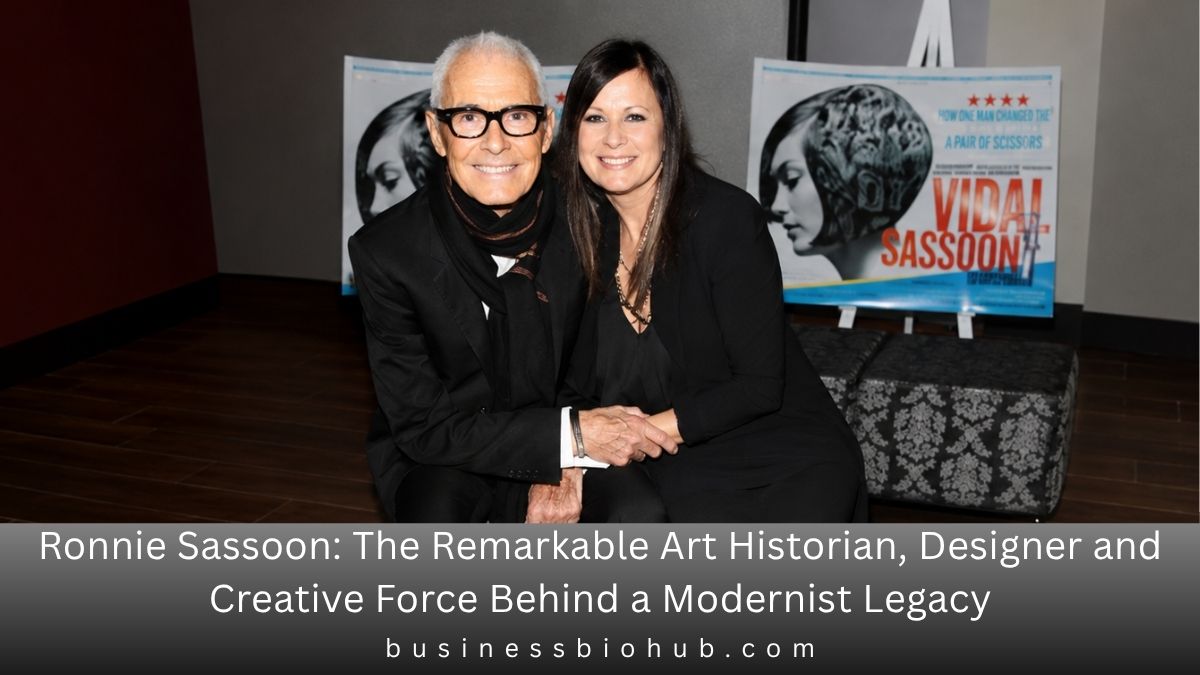
Ronnie Sassoon is an art historian, designer, collector, and creative figure whose life has been closely connected with fashion, art, architecture, and one of the most recognizable names in modern hairstyling. Born Rhonda Sassoon, she became widely known as the wife of legendary hairstylist and businessman Vidal Sassoon, whom she married in 1992. Their marriage lasted until Vidal Sassoon died in 2012.
Although her association with Vidal brought her considerable public recognition, Ronnie Sassoon developed an identity that extended well beyond being the spouse of a famous entrepreneur. Her professional background in fashion design and advertising, involvement in the Sassoon brand, passion for post-war art, and commitment to restoring important modernist houses have all contributed to her distinctive reputation.
Her story brings together commercial creativity and cultural preservation. From international branding projects to the collection of influential works of art, Ronnie Sassoon has spent much of her life surrounded by ideas about form, visual identity, design, and lasting artistic value.
Who Is Ronnie Sassoon?
Ronnie Sassoon, originally known as Rhonda Sassoon, is best recognized as an art historian, designer, collector, and the widow of Vidal Sassoon. She developed professional experience in creative industries before becoming closely involved with her husband’s international business interests.
Rather than remaining solely associated with the beauty industry, Ronnie gradually became particularly recognized within circles connected with art, architecture, and design. Her appreciation of important artistic movements and modernist buildings reflects a broader interest in twentieth-century creativity.
Ronnie Sassoon’s Early Career
Before her partnership with Vidal Sassoon became a major part of her professional life, Ronnie Sassoon worked in fashion design and advertising. Both industries require an understanding of visual presentation, consumer behavior, branding, and cultural trends.
This background would later prove relevant to her work alongside Vidal. The Sassoon name had already become internationally associated with revolutionary hairstyling techniques and a sophisticated modern image. Maintaining such a global identity required more than technical expertise in hairdressing. Advertising, packaging, marketing, product presentation, and creative direction were also important components of the business.
Experience in Fashion and Advertising
Ronnie Sassoon’s early involvement in fashion and advertising placed her in environments where image and communication were central. Fashion design encouraged attention to proportion, form, texture, and visual balance, while advertising demanded an understanding of how creative concepts could communicate with a broad audience.
These experiences created a natural connection between her professional interests and the design philosophy associated with Vidal Sassoon.
Ronnie Sassoon and Vidal Sassoon
Ronnie Sassoon married Vidal Sassoon in 1992. Vidal had already established himself as one of the most influential hairstylists of the twentieth century. His geometric cutting techniques helped transform modern hairdressing and made his name internationally recognizable.
Their relationship developed into more than a personal partnership. Ronnie worked closely with Vidal on different aspects of his global brand and business activities.
A Creative and Business Partnership
Ronnie Sassoon participated in areas including global marketing, advertising, product development, fragrance, and brand promotion. Her fashion and advertising background provided experience that complemented the commercial expansion of the Sassoon identity.
Vidal Sassoon had built a brand that represented modernity, precision, simplicity, and innovation. Protecting that identity across products and markets required careful creative management.
Ronnie’s involvement demonstrated how branding often depends upon numerous interconnected disciplines. Hairdressing remained central to Vidal Sassoon‘s reputation, but advertising campaigns, fragrances, consumer products, visual design, and international promotion helped turn his personal name into a global commercial identity.
Life Until Vidal Sassoon’s Death
Ronnie and Vidal Sassoon remained married for approximately two decades, from 1992 until Vidal died in 2012. Their years together included professional collaboration as well as a shared appreciation for art, architecture, and design.
Following Vidal’s death, Ronnie remained associated with the artistic and cultural interests that had been an important part of their life together.
Ronnie Sassoon’s Passion for Art
Art collecting is one of the most important aspects of Ronnie Sassoon’s public profile. She has developed a particular interest in art from the 1960s and 1970s and has been connected with significant artistic movements including Zero and Arte Povera.
These movements challenged conventional ideas about materials, space, light, objects, and artistic expression.
Interest in Zero and Arte Povera
The Zero movement emerged in post-war Europe and became associated with artists seeking new forms of artistic expression. Light, movement, simplicity, space, and experimental materials frequently played important roles.
Arte Povera developed primarily in Italy and became known for the use of unconventional or seemingly ordinary materials. Artists connected with the movement questioned traditional assumptions about artistic value and established cultural systems.
Ronnie Sassoon’s interest in these movements reflects an appreciation for experimentation and modern thinking rather than purely decorative collecting.
Contribution to the Art Community
Her involvement with art has extended beyond building a private collection. Ronnie Sassoon has served on international museum boards, demonstrating an active interest in supporting cultural institutions and preserving artistic heritage.
Museum involvement can help strengthen relationships between collectors, historians, artists, institutions, and the wider public. It also reflects the responsibility that often accompanies serious collecting.
Ronnie Sassoon and Modernist Architecture
Another defining part of Ronnie Sassoon’s life is her passion for architecture, particularly modernist residential design. She has become known for restoring architecturally important homes while maintaining respect for their original character.
Restoring Important Modernist Houses
Among the properties associated with Ronnie Sassoon’s restoration interests are houses designed by important architects such as Hal Levitt and Richard Neutra.
She has been associated with the restoration of Hal Levitt’s Beverly Hills residence and multiple Richard Neutra properties. Neutra is regarded as an important figure in twentieth-century modernist architecture, particularly in Southern California.
The Singleton House in Bel Air
One notable property connected with Ronnie Sassoon is the Singleton House in Bel Air, designed by Richard Neutra and completed in 1958.
Restoring a historically significant modernist property requires considerable sensitivity. Original architectural ideas must be respected while practical improvements may be necessary to make the property suitable for contemporary living.
Ronnie Sassoon’s approach to restoration has helped establish her reputation as someone interested not simply in owning remarkable architecture, but in protecting the design principles that make such buildings culturally important.
Her Approach to Design and Preservation
A common theme runs through Ronnie Sassoon’s career in fashion, advertising, art collecting, and architecture: an appreciation for thoughtful design.
Whether considering a fashion concept, an international brand identity, experimental artwork, or a modernist house, she has consistently worked in areas where visual decisions carry meaning.
Her architectural restoration projects are particularly significant because modernist buildings can easily lose their historical integrity through insensitive renovation. Preservation requires understanding the architect’s intentions, materials, proportions, and relationship between indoor and outdoor spaces.
Ronnie Sassoon’s Cultural Legacy
Ronnie Sassoon remains closely connected with the extraordinary legacy of Vidal Sassoon, but her own career demonstrates a wider creative identity.
Her professional experience has spanned fashion, advertising, branding, art history, collecting, museum involvement, and architectural preservation. These interests show a consistent fascination with the way creativity can shape everyday life.
Vidal Sassoon transformed hairstyling through precision and modern design. Ronnie Sassoon’s interests in modern art and architecture reveal a similarly strong appreciation for simplicity, structure, innovation, and enduring visual ideas.
Conclusion
Ronnie Sassoon is much more than a familiar name connected with Vidal Sassoon. She is an art historian, designer, collector, and advocate for significant modernist architecture, whose career has spanned several influential creative fields.
Her early experience in fashion and advertising prepared her for an important collaborative role in the global Sassoon brand, where she worked across marketing, product development, fragrance, advertising, and promotion. At the same time, her growing passion for twentieth-century art established her as a serious collector with particular interest in movements such as Zero and Arte Povera.
Her dedication to restoring architecturally important homes, including properties designed by Hal Levitt and Richard Neutra, further demonstrates her commitment to preserving modern design.
Through business, art, design, and architecture, Ronnie Sassoon has maintained a distinctive connection with creativity. Her life illustrates how commercial vision and cultural appreciation can coexist, creating a legacy built not simply on a famous surname but on a genuine respect for art, architecture, and thoughtful design.


Telehealth Psychiatric & Mental Health Care: Accessible Support for a Healthier Mind

West Palm Beach Detox: A Safe and Supportive Start to Lasting Recovery

Drug & Alcohol Rehab in West Palm Beach, FL: Start Your Journey to a Healthier Life

Drug & Alcohol Detox in South Carolina: A Complete Guide to Safe Recovery

Drug and Alcohol Detox Kentucky: Your Guide to Safe Recovery at Paducah Detox Center

Addiction Treatment in Plymouth: Understanding Addiction & Mental Health Treatment

Ohio Center for Adolescent Wellness: Your Guide to Teen Mental Health Services in Ohio

Massachusetts Center for Adolescent Wellness: Your Guide to Teen Mental Health & Addiction Treatment in MA

Foundation Diploma Singapore: A Practical Route Towards Higher Education

How to Stay Safe and Private While Using Public Wi-Fi

Paul Smalley Studied at University: The Education Behind His Global Football Career

Diamo Jewels Under the Lens: What Buyers Should Know Before Ordering in 2026

Billie Henry: Inside the Private Life Dawn French Fought to Keep Out of the Spotlight

Tina Esposito Advocate Health Bio: The Data Executive Shaping Analytics, AI and Patient Care

Kögel Trailer GmbH Manufacturing or Wholesale? The Business Model Behind the German Trailer Company

iPhone 17 Pro Max Phone Case: Best Protection Choices That Actually Matter in 2026

Pasonet Explained: Why This Digital Name Is More Complicated Than It First Appears

1upHealth Revenue Cycle Automation Partnerships: What’s Real, What’s Emerging, and Why 2027 Changes the Stakes

Industrial Entrepreneurs Memorandum: The 2026 IEM Rules Every Large Manufacturer Should Understand

EliseAI Head of Partnerships 2024–2026: The Leadership Shift Behind Its Expanding AI Partner Network
Telehealth Psychiatric & Mental Health Care: Accessible Support for a Healthier Mind
West Palm Beach Detox: A Safe and Supportive Start to Lasting Recovery
Drug & Alcohol Rehab in West Palm Beach, FL: Start Your Journey to a Healthier Life
Drug & Alcohol Detox in South Carolina: A Complete Guide to Safe Recovery
Drug and Alcohol Detox Kentucky: Your Guide to Safe Recovery at Paducah Detox Center
Addiction Treatment in Plymouth: Understanding Addiction & Mental Health Treatment
Ohio Center for Adolescent Wellness: Your Guide to Teen Mental Health Services in Ohio
Massachusetts Center for Adolescent Wellness: Your Guide to Teen Mental Health & Addiction Treatment in MA
Foundation Diploma Singapore: A Practical Route Towards Higher Education
How to Stay Safe and Private While Using Public Wi-Fi
-
 Celebrity4 months ago
Michael Scott Ryan: The Private Writer Known for His Connection to Jennifer Ehle
-
 Celebrity4 months ago
Benn George, The Private British Businessman Behind a Powerful Chapter in Tiffany Darwish’s Life
-
 Celebrity5 months ago
Daniel Guerard, The Private French Salon Owner Behind Lorraine Bracco’s Early Life Story
-
 Celebrity6 months ago
Caroline Hickman: The Private Life and Public Attention Around Steve Coogan’s Former Wife