
Travel
Sleeping on a Bike Sounds Simple—Until Fatigue, Weather and Safety Change the Ride

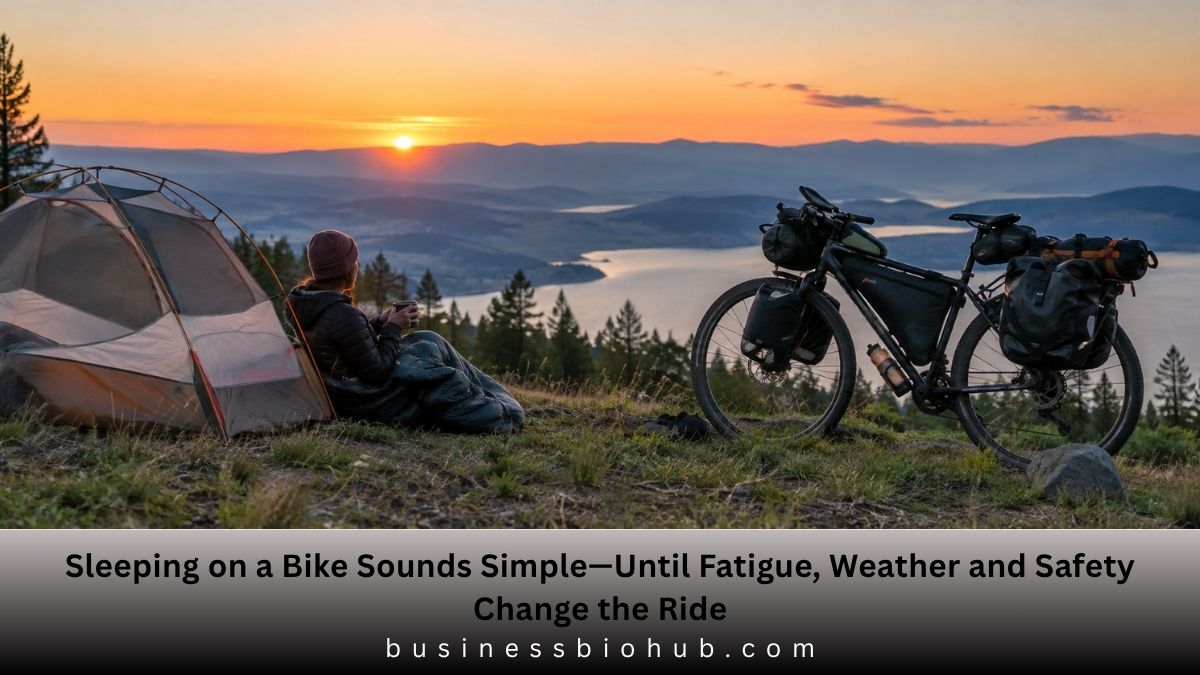
A long-distance ride can change quickly when daylight fades, temperatures drop, and tired legs become a tired brain. What looked like another easy 20 kilometres can become a poor decision if alertness starts disappearing. For cyclists carrying camping equipment, knowing when to stop riding and where to sleep is therefore part of route planning, not an afterthought.
The phrase sleeping on a bike can also be misleading. Experienced bicycle travellers generally do not sleep while balanced on the bicycle itself. They park the bike and use a tent, bivy, tarp, hammock, hostel, campground, or other lawful accommodation. REI’s bikepacking checklist treats shelter, a sleeping bag and a sleeping pad as core overnight equipment, while Adventure Cycling similarly frames camping as an ordinary part of multi-day bicycle travel.
There is a second, more serious interpretation: accidentally nodding off while cycling. Fatigue research from the U.S. Centers for Disease Control and Prevention shows that sleep loss can slow reactions, impair decisions and trigger involuntary microsleeps. Although much of that guidance concerns motor-vehicle driving, the underlying alertness problem is relevant to any road user who must continuously steer, balance and react to hazards.
BLUF: Sleeping on a bike should mean stopping the bicycle and setting up a safe, legal sleeping place—not attempting to sleep while riding or balancing on the bike. A touring cyclist who is repeatedly yawning, losing concentration, drifting, or fighting sleep should stop riding and obtain genuine rest before continuing.
What “Sleeping on a Bike” Actually Looks Like on a Real Tour
For most bikepackers, the bicycle is the transport system and luggage carrier; it is not the bed. Once the day’s riding finishes, bags containing shelter and sleep equipment come off the bike, or remain attached until camp is organised.
Adventure Cycling distinguishes bicycle touring from bikepacking largely by route and luggage style: traditional touring often uses panniers and paved roads, while bikepacking commonly uses tightly mounted frame, handlebar and seat bags on routes that may include more unpaved terrain. Both can involve camping overnight.
A cyclist might occasionally lean against a loaded bike during a short roadside break, but trying to obtain meaningful sleep while seated on a normal bicycle creates obvious problems. The bike is unstable when unsupported, the rider cannot maintain safe balance while unconscious, and the riding position does not provide the flat, insulated sleeping surface required for comfortable outdoor rest.
The Dangerous Moment Comes Before Camp: When Tiredness Becomes Impairment
Cyclists sometimes focus heavily on mechanical risks—punctures, broken chains, poor brakes—while overlooking fatigue. Yet a functioning bicycle cannot compensate for a rider whose attention is failing.
CDC/NIOSH guidance identifies several effects of significant fatigue in drivers, including slower reactions, poor decisions, lane drifting, tunnel vision and microsleeps. The CDC describes microsleeps as involuntary sleep episodes that can last from a fraction of a second to as long as 30 seconds, and notes that a sleep-deprived person may not be able to control when they occur.
Those findings should not be converted into bicycle-specific crash statistics without appropriate cycling research. Still, the practical inference is straightforward: a cyclist who cannot reliably remain awake cannot safely continue operating a bicycle around traffic, intersections, descents, obstacles or technical trails.
Most adults generally need seven to nine hours of sleep per day, according to current CDC/NIOSH guidance. Individual requirements vary, but repeatedly replacing proper sleep with short roadside rests is not a sound endurance strategy.
If sleepiness is becoming difficult to resist, stop somewhere legally and physically safe. Move completely away from vehicle traffic and do not lie down on a roadway, cycle lane, narrow shoulder, blind bend or active trail.
The Sleep System Matters More Than the Weight on the Scale
A minimalist bicycle setup can be attractive because every kilogram must be moved under human power. But cutting the wrong equipment can make recovery considerably harder.
REI separates a bikepacking camping setup into shelter and sleep-system components. Shelter options include a tent, tarp, bivy or hammock, while the fundamental sleep system consists of a sleeping bag and sleeping pad.
The sleeping pad has two jobs: cushioning the rider from the ground and providing thermal insulation. REI’s updated 2026 sleeping-pad guidance specifically emphasises that insulation can be more important than many beginners expect.
| Sleep option | Major advantage | Main limitation | Best suited to |
|---|---|---|---|
| Lightweight tent | Strong weather and insect protection | More components and packed bulk | Multi-day tours and uncertain weather |
| Bivy | Compact and fast to deploy | Limited living space and ventilation | Minimalist bikepacking |
| Tarp | Very low-weight weather cover | Less enclosed protection | Experienced riders in suitable conditions |
| Hammock | Avoids uneven ground | Requires suitable anchors and may need insulation | Wooded routes where permitted |
| Indoor accommodation | Maximum weather protection | Availability and cost vary | Recovery nights and populated routes |
BikeRadar notes that bivy shelters are generally compact and quick to set up, while tents provide greater protection from weather and insects. It also recommends practising with a sleeping setup before beginning the actual trip.
That dry run can reveal surprisingly important problems: missing tent pegs, an uncomfortable pad, insufficient insulation, unfamiliar tarp knots or luggage that no longer fits once everything has been repacked.
A Campsite Can Look Perfect and Still Be the Wrong Place
Finding a flat patch of ground is only the beginning.
Adventure Cycling’s camping guidance recommends considering flat terrain, wind protection and flooding risk when selecting an overnight location. Riders should also pay attention to hygiene, wildlife precautions, food storage and local fire restrictions.
Access rules matter just as much. Wild camping, roadside camping and overnight stays on public or private land are regulated differently between countries, regions, parks and municipalities. There is no universal rule making an attractive piece of land automatically available for camping. Cyclists should verify the rules for the specific land they intend to use.
Leave No Trace recommends using established campsites or durable surfaces such as rock, gravel and dry grass, while protecting sensitive vegetation. Its general backcountry recommendation is to camp about 200 feet from lakes and streams, subject to local regulations.
“Good campsites are found, not made.” — Leave No Trace
Avoid obvious drainage channels, unstable slopes, exposed ridgelines during threatening weather, dead or unstable trees, restricted property and locations where your presence could obstruct other road or trail users.
Your Bicycle Needs an Overnight Plan Too
Once the sleeping area is selected, the bike becomes another piece of camp equipment that must be managed.
A touring bicycle may be carrying navigation electronics, repair tools, water, clothing and other essentials. Leaving bags scattered around a campsite makes both security and morning organisation harder. Keep equipment consolidated and protect items that should remain dry.
Where appropriate, secure the bicycle against theft using a suitable lock and a lawful fixed anchor. In remote camping situations where no anchor exists, riders commonly keep the bike immediately beside their shelter and arrange equipment so movement around it is noticeable. No method guarantees theft prevention, so higher-value equipment should not be casually left unattended.
Rain also matters. A bicycle normally tolerates ordinary outdoor conditions, but electronics, clothing, sleeping equipment and some bag contents may not. Waterproof bags, liners or dry bags can provide another layer of protection.
One useful principle is simple: your sleeping bag and dry insulating clothing should remain dry even if other equipment becomes wet.
The Better Morning Starts the Night Before
A successful bikepacking night is less about creating a luxurious campsite and more about removing problems before they become morning problems.
Adventure Cycling recommends practising camping before a major tour, and its bicycle-camping guidance encourages riders to carry warm layers, water, first-aid supplies, more than one light source and a way to communicate or signal for help.
An efficient evening routine might therefore follow this sequence:
- Finish riding before severe fatigue removes good judgment.
- Confirm that camping is permitted.
- Inspect the site for weather, drainage and environmental hazards.
- Secure the bicycle and organise essential gear.
- Change out of wet or heavily used riding clothing where practical.
- Eat, hydrate and prepare the next day’s essentials.
- Protect sleeping equipment from moisture.
- Obtain enough sleep to restore useful alertness before riding again.
The number of kilometres completed matters less than avoiding a preventable crash caused by pushing through exhaustion.
The Smartest Distance Is Sometimes the One You Do Not Ride
The strongest riders are not necessarily the ones who continue until they physically cannot pedal. Good bicycle travel also requires knowing when another hour in the saddle has become a bad trade.
For anyone researching sleeping on a bike, the practical answer is reassuringly simple: carry the sleep system that matches your route, stop before exhaustion controls the decision, choose a lawful and environmentally responsible campsite, secure the bicycle and sleep properly.
A kilometre can be ridden tomorrow. Alertness lost to serious fatigue cannot be recovered by determination alone.
FAQs
Can you actually sleep while sitting on a bicycle?
Sleeping while sitting unsupported on a normal bicycle is not a safe riding or camping method. Once genuine sleep begins, balance and active bicycle control cannot be reliably maintained. A cyclist wanting to rest overnight should park the bike and use a proper sleeping surface or indoor accommodation.
Is sleeping beside your bike normal when bikepacking?
Sleeping beside a parked bicycle is a normal form of bikepacking and bicycle touring. Cyclists commonly carry compact shelters such as tents, bivies, tarps or hammocks together with sleeping bags and pads. The exact setup depends on weather, terrain, trip duration, comfort requirements and local camping rules.
What should I do if I start falling asleep while cycling?
Fighting involuntary sleepiness is a reason to stop riding. CDC fatigue guidance shows that sleep deprivation can cause microsleeps and impaired reactions, and that people cannot necessarily control when microsleeps occur. Move completely away from traffic, reach a safe stopping location and obtain genuine rest before resuming the ride.
Do I really need a sleeping pad for bicycle camping?
A sleeping pad provides both cushioning and insulation from the ground. That second role is especially important in cooler conditions because the ground can draw heat away from the sleeper. REI therefore lists a sleeping bag and sleeping pad as the two core components of a bikepacking sleep system.
Is it legal to sleep anywhere while travelling by bicycle?
Bicycle travel does not create a universal right to camp wherever you stop. Camping rules depend on the country, land ownership, protected-area regulations and local restrictions. Check the rules for each intended overnight location, use designated campsites where required and never assume that apparently unused private land is available.
Is a bivy better than a tent for sleeping on a bike trip?
Neither shelter is universally better. A bivy normally packs smaller and can be faster to deploy, while a tent generally offers more enclosed living space and greater protection from insects and difficult weather. The best choice depends on climate, trip length, expected conditions and how much equipment the bicycle can comfortably carry.
Editorial Disclaimer
This feature provides general bicycle-touring, bikepacking and outdoor-safety information rather than medical, legal or location-specific advice. Camping laws, land-access rules, weather risks and trail restrictions vary by jurisdiction. Fatigue symptoms can also have medical causes; persistent or unusual daytime sleepiness should be discussed with an appropriate healthcare professional. No unverified accident statistics, legal permissions or product-performance claims have been presented as established facts.

Pasonet Explained: Why This Digital Name Is More Complicated Than It First Appears

1upHealth Revenue Cycle Automation Partnerships: What’s Real, What’s Emerging, and Why 2027 Changes the Stakes

Kögel Trailer GmbH Manufacturing or Wholesale? The Business Model Behind the German Trailer Company

Paul Smalley Studied at University: The Education Behind His Global Football Career

Fawn Radmanich Marketing Strategy Experience: Why Her 25-Year A/E/C Career Centers on Winning Complex Work

Emily Seitz Pawlak at TriHealth: The Revenue Cycle Executive Who Pushed Automation Beyond Billing

Jadene Elden, AI Automation and RCM at Southcoast Health: What the Public Record Actually Shows

Tina Esposito Advocate Health Bio: The Data Executive Shaping Analytics, AI and Patient Care

Michael Roe Operating Partner NexPhase: The Verified Record Behind the Name — and the michaelroe.net Question

Briana Biagi Banner Health Fallon NV Staff Directory: What Current Records Actually Show

Astrid Hannah: The Inspiring Story of John Hannah’s Daughter and Her Life Beyond Competitive Swimming

Best Pasticho Venezuelan Lasagna Near Me: A Complete Guide to Finding This Rich Latin Comfort Food

Natasha Podstepny LinkedIn Performant Healthcare Nashville: Inside Her Professional Journey
John Minoli: The Private Life and Career of Sheena Easton’s Fourth Husband

Jeroen Dik: How He Built a Powerful Legacy in Performance Tuning and Motorsport

Lihnk Explained: The Mysterious Search Term, Possible Meanings, and What Users Should Know

Colitre Explained: The Powerful Story Behind a Rare Name and Its Modern Identity

Nigora Whitehorn: The Inspiring Life, Marriage, and Story Behind Duncan Bannatyne’s Wife

Kemberly Blackledge LinkedIn Nashville General Hospital Chief Revenue Officer: How She Built a Powerful Healthcare Finance Career

Elegant Florals Emily Davis Business Description: A Refined Look at Floral Art, Event Design, and Botanical Creativity
Pasonet Explained: Why This Digital Name Is More Complicated Than It First Appears
1upHealth Revenue Cycle Automation Partnerships: What’s Real, What’s Emerging, and Why 2027 Changes the Stakes
Kögel Trailer GmbH Manufacturing or Wholesale? The Business Model Behind the German Trailer Company
Paul Smalley Studied at University: The Education Behind His Global Football Career
Fawn Radmanich Marketing Strategy Experience: Why Her 25-Year A/E/C Career Centers on Winning Complex Work
Emily Seitz Pawlak at TriHealth: The Revenue Cycle Executive Who Pushed Automation Beyond Billing
Jadene Elden, AI Automation and RCM at Southcoast Health: What the Public Record Actually Shows
Tina Esposito Advocate Health Bio: The Data Executive Shaping Analytics, AI and Patient Care
Michael Roe Operating Partner NexPhase: The Verified Record Behind the Name — and the michaelroe.net Question
Briana Biagi Banner Health Fallon NV Staff Directory: What Current Records Actually Show
-
 Celebrity4 months ago
Michael Scott Ryan: The Private Writer Known for His Connection to Jennifer Ehle
-
 Celebrity4 months ago
Daniel Guerard, The Private French Salon Owner Behind Lorraine Bracco’s Early Life Story
-
 Celebrity5 months ago
Caroline Hickman: The Private Life and Public Attention Around Steve Coogan’s Former Wife
-
 Celebrity3 months ago
Benn George, The Private British Businessman Behind a Powerful Chapter in Tiffany Darwish’s Life