
Biography
Tina Esposito Advocate Health Bio: The Data Executive Shaping Analytics, AI and Patient Care


Tina Esposito has spent decades working where healthcare operations, patient information and technology meet. That makes her professional profile especially relevant in 2026, when large health systems are trying to use artificial intelligence and increasingly complex datasets without losing sight of patient safety, governance or clinical usefulness.
Her role has also grown alongside Advocate itself. What began as a career at Advocate Health Care in Illinois now places Esposito inside Advocate Health, a national nonprofit system with 69 hospitals, more than 1,000 care locations and nearly 5.7 million unique patients.
The timing matters. HIMSS lists Esposito on its 2026 AI Advisory Group as Senior Vice President and Chief Data Officer of Advocate Health, putting her among healthcare executives helping shape discussions around responsible, scalable AI adoption.
BLUF: Tina Esposito is Senior Vice President and Chief Data Officer at Advocate Health, where her work centers on enterprise data strategy, analytics, measurement, governance and the responsible use of information to improve clinical and organizational performance. Her documented Advocate career dates to 1999 and includes senior roles in health information, analytics and technology innovation.
Tina Esposito at a Glance: Verified Professional Profile
| Profile detail | Verified information |
|---|---|
| Full name | Tina Esposito |
| Also identified as | Tina Stiris Esposito |
| Current organization | Advocate Health |
| Current role | Senior Vice President, Chief Data Officer |
| Professional focus | Enterprise data strategy, healthcare analytics, measurement, governance and information technology |
| Undergraduate education | B.S. in Health Information Management, University of Illinois Chicago |
| Graduation year | 1997 |
| Graduate education | MBA, DePaul University |
| Credentials publicly listed | RHIA, FACHE |
| Additional professional qualification | Certified Six Sigma Master Black Belt, according to published professional biographies |
| Advocate career start | 1999 |
| Early Advocate position | Statistical data analyst, Lutheran General Hospital |
| Federal service | Health Information Technology Advisory Committee member, 2018–2020 |
UIC identifies her as a 1997 health information management graduate and records the beginning of her Advocate career in 1999. The federal Health IT Advisory Committee profile lists her credentials as MBA, RHIA and FACHE.
Publicly available authoritative sources do not provide a verified date of birth, age, spouse, children or detailed private family information. Those details should therefore not be inferred or presented as established biography facts.
From Lutheran General Analyst to Enterprise Data Leadership
Esposito’s career did not begin with a C-suite-style title. According to the University of Illinois Chicago, she joined Advocate in 1999 as a statistical data analyst at Lutheran General Hospital. That starting point is important because it places her early professional experience directly inside healthcare measurement and data analysis rather than in a purely administrative or technology-sales role.
Her responsibilities expanded over the following decade. UIC reports that she became director of Advocate Health Care’s Center for Health Information Services in 2008 and was promoted to vice president in 2012.
Later professional profiles identify positions including manager of business analytics, manager of clinical decision support services, vice president of the Center for Health Information Services, and vice president of Information and Technology Innovation. Health Data Management reported that her work included a large-scale analytics platform interfacing with more than 50 data sources and an enterprise master patient identifier strategy.
By 2019 and 2020, published material identified Esposito as System Vice President and Chief Health Information Officer at Advocate Aurora Health. A peer-reviewed study published in BMC Medical Research Methodology in 2020 also identified her in that role.
Following the combination of Advocate Aurora Health and Atrium Health in December 2022, Esposito emerged in the combined Advocate Health organization as its senior vice president and chief data officer. Current 2026 HIMSS material continues to list her in that position.
Tina Esposito Career Timeline
| Year | Documented milestone |
|---|---|
| 1997 | Graduated from the University of Illinois Chicago in Health Information Management |
| 1999 | Joined Advocate as a statistical data analyst at Lutheran General Hospital |
| 2008 | Became director of the Center for Health Information Services |
| 2012 | Promoted to vice president |
| 2017–2018 era | Publicly identified as VP of Information and Technology Innovation |
| 2018–2020 | Served a term on the federal Health Information Technology Advisory Committee |
| 2019–2022 | Public sources identify her as System VP and Chief Health Information Officer at Advocate Aurora Health |
| 2023 onward | Public professional sources identify her as SVP and Chief Data Officer at Advocate Health |
| 2026 | Listed on the HIMSS Future of AI in Healthcare Advisory Group |
The timeline shows continuity rather than frequent movement between employers: her publicly documented career has been strongly associated with Advocate and its predecessor organizations.
Why Data Became Central to Esposito’s Healthcare Career
The meaning of “healthcare data” changed significantly during Esposito’s career. Early hospital analytics often focused heavily on reporting and historical performance. Modern health systems must integrate clinical records, claims, operational data, quality metrics and other datasets while making that information useful at the point of care.
Esposito was involved in that transition.
Advocate’s work with population health required combining information from multiple sources and using predictive models to identify patients who might benefit from intervention. Federal profile material credits her with overseeing population-health tools that combined data from multiple electronic health record systems to support improved efficiency and outcomes.
In 2019, Advocate Aurora’s predictive modeling platform was reported to use roughly 30 to 40 data sources, combining claims information with electronic health record data to identify patients at elevated risk of unnecessary hospitalization. Esposito emphasized that historical claims alone could arrive too late to guide timely intervention.
That distinction explains much of her professional focus: valuable healthcare data is not simply information stored in a warehouse. It needs to reach clinicians and operational teams at a time and in a format that can influence decisions.
Research Work Connected With Electronic Health Records
Esposito has also appeared in peer-reviewed research.
She was a co-author of a 2020 BMC Medical Research Methodology study examining the application of unsupervised deep learning to predictive models using electronic health record data. The study explored whether features generated by an autoencoder could contribute to healthcare predictive modeling.
In 2024, PubMed indexed her article “Powering Up Data in the Service of Operational Excellence” in Frontiers of Health Services Management. The publication identified her as Senior Vice President and Chief Data Officer at Advocate Health and focused on using data to support innovation, clinical outcomes, financial outcomes and organizational performance.
These publications reinforce an important part of her biography: Esposito’s professional identity is linked not merely to managing information systems, but to making data operationally and clinically useful.
The Advocate Health Merger Put Data Integration at a New Scale
Advocate Health was formed in December 2022 through the combination of Advocate Aurora Health and Atrium Health. Integration created a much larger data challenge because different organizations brought established systems, teams, definitions, workflows and technology environments together.
Esposito became a central executive voice on that issue.
In a 2024 discussion about post-merger data integration, she described the need to establish priorities for the first week, month and 90 days of integration while identifying stakeholders and preserving important legacy requirements.
Her comments elsewhere have emphasized data governance and responsible AI as part of the integration framework. That focus is significant because combining organizations is not merely a technical exercise. Two datasets can use different definitions, quality standards or ownership rules even when they appear to describe the same clinical or operational issue.
The scale is substantial. Advocate Health currently reports:
- 69 hospitals
- More than 1,000 sites of care
- Nearly 5.7 million unique patients
- More than 35,000 physicians, aligned physicians and medical staff
- Approximately 174,000 teammates
- More than $32 billion in annual revenue
For a chief data officer, those figures translate into a major governance problem: information must remain consistent enough to support decisions across multiple regions, facilities and clinical environments.
Responsible AI Is Now Part of the Tina Esposito Advocate Health Bio
Esposito’s work has increasingly intersected with artificial intelligence.
This is not completely new. Advocate teams had already been using predictive models and advanced analytics years before generative AI became a mainstream healthcare discussion. In 2020, she was publicly identified with research examining deep-learning methods applied to electronic health record data.
What has changed is the organizational scale and governance burden.
By 2024, Esposito was discussing responsible AI as part of Advocate Health’s data-governance framework. By 2026, HIMSS had selected her for its Future of AI in Healthcare Advisory Group, whose work is focused on areas including governance, security, compliance, data readiness, model lifecycle management and moving AI beyond isolated pilots into scalable healthcare use.
That role places her professional expertise at the intersection of three increasingly connected fields:
| Area | Why it matters in a health system |
|---|---|
| Data governance | Establishes ownership, definitions, quality and appropriate use of information |
| Analytics | Converts large datasets into measurable clinical and operational insights |
| Responsible AI | Adds oversight around safety, equity, reliability, privacy and deployment of AI systems |
| Interoperability | Helps information move meaningfully between systems and organizations |
| Clinical workflow integration | Determines whether an analytical result actually reaches people who can act on it |
The central challenge is not simply producing more algorithms. It is making sure technology works within clinical realities and supports rather than distracts from patient care.
Federal Health IT Service and Interoperability Work
Esposito’s influence has extended beyond Advocate.
The U.S. Office of the National Coordinator for Health Information Technology lists her as a member of the Health Information Technology Advisory Committee, with a term running from January 2018 through December 2020. She was appointed through the Government Accountability Office process.
She also participated in the 2018 Interoperability Standards Priorities Task Force and the 2019 U.S. Core Data for Interoperability Task Force.
These assignments are relevant because interoperability is fundamental to modern health analytics. Predictive systems and enterprise AI tools are limited when important patient information remains isolated in incompatible applications or lacks standardized definitions.
Her federal committee service therefore aligns closely with her operational career: both center on making health information more usable, consistent and capable of supporting better decisions.
Recognition in Healthcare Information Technology
Esposito has repeatedly appeared on professional lists recognizing women and executives in healthcare technology.
The University of Illinois Chicago notes that she was named among the Most Powerful Women in Healthcare IT by Health Data Management. The publication also included her among its healthcare IT executive honorees in multiple years, including 2017 and 2018.
Her professional profile has additionally cited recognition as a CHIME Healthcare Hero for data and analytics initiatives associated with the COVID-19 response.
Rather than treating those honors as celebrity-style awards, they are better understood as industry recognition of a career built around analytics infrastructure, population health, information strategy and the implementation of technology inside large clinical organizations.
Education and Professional Credentials Behind the Role
Esposito’s formal education closely matches the work she later pursued.
She earned a Bachelor of Science in Health Information Management from the University of Illinois Chicago, graduating in 1997. UIC’s profile specifically connects her academic training with her subsequent career in healthcare information and analytics.
She later earned an MBA from DePaul University in Chicago.
Federal and professional biographies identify her with the RHIA and FACHE credentials, reflecting registered health information administration expertise and fellowship in the American College of Healthcare Executives. Professional event biographies have also described her as a certified Six Sigma Master Black Belt.
The combination is notable: health information education provides the domain foundation, while business, process improvement and executive credentials correspond with the enterprise-level responsibilities of a chief data officer.
What Is Known About Tina Esposito’s Financial Position?
Reliable public sources do not disclose Tina Esposito’s personal assets, investment holdings, compensation package or independently verified net worth.
Because Advocate Health is a nonprofit healthcare organization, some executive compensation information may appear in organizational tax or financial disclosures depending on reporting requirements and whether an individual qualifies for specific disclosure. However, that does not establish a person’s overall wealth.
No authoritative evidence reviewed for this profile supports a reliable personal net-worth estimate for Esposito. Figures published by unsourced biography or wealth-estimation websites should therefore not be presented as fact.
FAQs
Who is Tina Esposito at Advocate Health?
Tina Esposito is Senior Vice President and Chief Data Officer at Advocate Health. Her responsibilities are associated with enterprise data strategy, analytics, measurement and the use of information to improve clinical and organizational performance. HIMSS continued to identify her in that position in its 2026 healthcare AI programming.
How long has Tina Esposito worked for Advocate?
Tina Esposito joined Advocate in 1999, initially working as a statistical data analyst at Lutheran General Hospital. Her career subsequently progressed through analytics, clinical decision support, health information services, technology innovation and chief health information responsibilities before her current data leadership position.
What is Tina Esposito’s educational background?
Tina Esposito earned a Bachelor of Science in Health Information Management from the University of Illinois Chicago in 1997 and later earned an MBA from DePaul University. Public federal material also identifies her with RHIA and FACHE credentials.
What does Tina Esposito do as Chief Data Officer?
A chief data officer such as Esposito oversees how enterprise information is governed, organized, measured and used. At Advocate Health, her publicly documented work covers data strategy, analytics and organizational performance, while recent discussions have also included data governance and responsible artificial intelligence.
Has Tina Esposito worked on artificial intelligence in healthcare?
Yes. Her work predates the recent generative-AI boom and includes predictive analytics and research involving machine learning applied to electronic health records. In 2026, HIMSS named her to its AI Advisory Group focused on advancing healthcare AI education and responsible implementation.
What is Tina Esposito’s age or date of birth?
Tina Esposito’s exact age and date of birth are not established in the authoritative professional sources reviewed for this biography. Although her education and career dates are publicly documented, those details should not be used to guess a birth year or age.
Why Esposito’s Work Matters More as Healthcare Becomes Data-Driven
Tina Esposito’s career offers a useful example of how health information leadership has evolved.
She entered Advocate as a statistical data analyst, moved through clinical decision support and analytics leadership, helped oversee population-health infrastructure, served on federal health IT bodies and ultimately became chief data officer of one of the largest nonprofit integrated healthcare systems in the United States.
The common thread is data—but not data for its own sake.
Her documented work repeatedly connects information with clinical workflows, patient outcomes, organizational performance, interoperability and governance. As healthcare organizations accelerate AI deployment, those foundations become more important, not less. Models can become more sophisticated, but they still depend on accurate information, clear accountability and thoughtful implementation.
That is the most useful way to understand the Tina Esposito Advocate Health bio: not as a conventional celebrity profile, but as the career record of a healthcare information executive whose responsibilities expanded alongside the growing strategic importance of data itself.
Editorial Disclaimer
This biography is based on publicly available professional, academic, government and healthcare-industry sources reviewed through September 2026. Private details such as Tina Esposito’s date of birth, family relationships, personal assets and net worth are not stated unless supported by credible public documentation. Job titles, organizational statistics and professional responsibilities can change over time and should be reverified when the article is materially updated.

Pasonet Explained: Why This Digital Name Is More Complicated Than It First Appears

1upHealth Revenue Cycle Automation Partnerships: What’s Real, What’s Emerging, and Why 2027 Changes the Stakes

Kögel Trailer GmbH Manufacturing or Wholesale? The Business Model Behind the German Trailer Company

Paul Smalley Studied at University: The Education Behind His Global Football Career

Fawn Radmanich Marketing Strategy Experience: Why Her 25-Year A/E/C Career Centers on Winning Complex Work

Emily Seitz Pawlak at TriHealth: The Revenue Cycle Executive Who Pushed Automation Beyond Billing

Jadene Elden, AI Automation and RCM at Southcoast Health: What the Public Record Actually Shows

Tina Esposito Advocate Health Bio: The Data Executive Shaping Analytics, AI and Patient Care

Michael Roe Operating Partner NexPhase: The Verified Record Behind the Name — and the michaelroe.net Question

Briana Biagi Banner Health Fallon NV Staff Directory: What Current Records Actually Show

Astrid Hannah: The Inspiring Story of John Hannah’s Daughter and Her Life Beyond Competitive Swimming

Best Pasticho Venezuelan Lasagna Near Me: A Complete Guide to Finding This Rich Latin Comfort Food
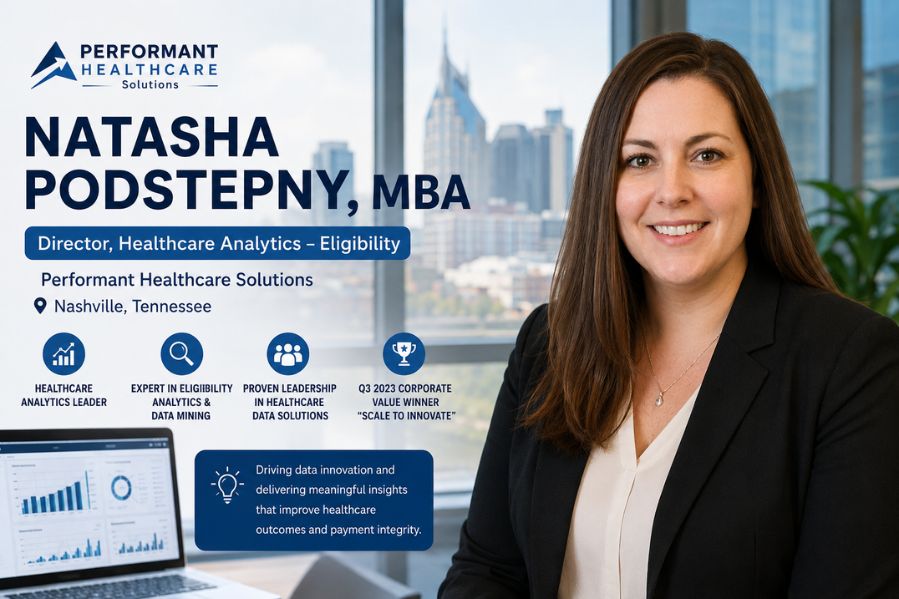
Natasha Podstepny LinkedIn Performant Healthcare Nashville: Inside Her Professional Journey

John Minoli: The Private Life and Career of Sheena Easton’s Fourth Husband

Jeroen Dik: How He Built a Powerful Legacy in Performance Tuning and Motorsport

Lihnk Explained: The Mysterious Search Term, Possible Meanings, and What Users Should Know

Colitre Explained: The Powerful Story Behind a Rare Name and Its Modern Identity

Nigora Whitehorn: The Inspiring Life, Marriage, and Story Behind Duncan Bannatyne’s Wife

Kemberly Blackledge LinkedIn Nashville General Hospital Chief Revenue Officer: How She Built a Powerful Healthcare Finance Career

Quartz Events Sponsor Matching Companies: What the B2B Matchmaking Model Really Offers
Pasonet Explained: Why This Digital Name Is More Complicated Than It First Appears
1upHealth Revenue Cycle Automation Partnerships: What’s Real, What’s Emerging, and Why 2027 Changes the Stakes
Kögel Trailer GmbH Manufacturing or Wholesale? The Business Model Behind the German Trailer Company
Paul Smalley Studied at University: The Education Behind His Global Football Career
Fawn Radmanich Marketing Strategy Experience: Why Her 25-Year A/E/C Career Centers on Winning Complex Work
Emily Seitz Pawlak at TriHealth: The Revenue Cycle Executive Who Pushed Automation Beyond Billing
Jadene Elden, AI Automation and RCM at Southcoast Health: What the Public Record Actually Shows
Tina Esposito Advocate Health Bio: The Data Executive Shaping Analytics, AI and Patient Care
Michael Roe Operating Partner NexPhase: The Verified Record Behind the Name — and the michaelroe.net Question
Briana Biagi Banner Health Fallon NV Staff Directory: What Current Records Actually Show
-
 Celebrity4 months ago
Michael Scott Ryan: The Private Writer Known for His Connection to Jennifer Ehle
-
 Celebrity4 months ago
Daniel Guerard, The Private French Salon Owner Behind Lorraine Bracco’s Early Life Story
-
 Celebrity5 months ago
Caroline Hickman: The Private Life and Public Attention Around Steve Coogan’s Former Wife
-
 Celebrity3 months ago
Benn George, The Private British Businessman Behind a Powerful Chapter in Tiffany Darwish’s Life