
Technology & Tools
ApostleDx: A Modern Molecular Diagnostics Platform Advancing Clinical Testing and Life Sciences Research

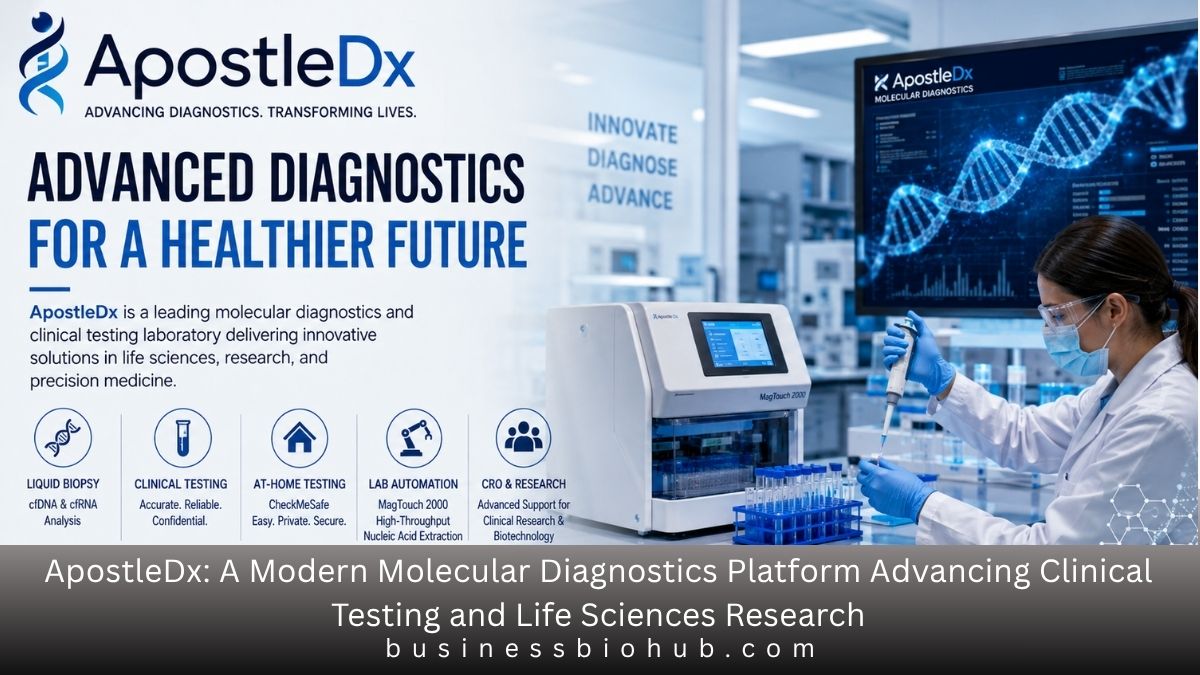
The rapid development of molecular medicine has changed the way laboratories detect diseases, study genetic material, and support clinical research. Among the organizations working in this highly specialized field, ApostleDx has positioned itself as a platform focused on advanced molecular diagnostics, laboratory services, and life sciences technologies. Operating through Apostle Diagnostics and associated with Apostle Bio, ApostleDx brings together clinical laboratory capabilities, nucleic acid extraction technologies, research support, and automated laboratory systems under one broader biotechnology ecosystem. Its work is particularly relevant in areas where accurate DNA and RNA analysis provides valuable information for researchers, healthcare professionals, and diagnostic laboratories. Rather than serving as a general medical website, ApostleDx focuses on highly technical laboratory processes, including cell-free DNA extraction, cell-free RNA analysis, molecular testing, clinical research support, and sample preparation. These technologies are increasingly important as medicine moves toward earlier detection, more personalized treatment strategies, and less invasive diagnostic procedures. Understanding what ApostleDx does, therefore, requires looking at both its clinical testing services and the biotechnology tools that support those services.
What Is ApostleDx?
ApostleDx is the online presence for Apostle Diagnostics, a clinical laboratory operation based in San Jose, California. The organization operates within the broader life sciences and molecular diagnostics sector, providing services that support clinical testing, biotechnology research, and laboratory development. A key characteristic of ApostleDx is its combination of laboratory testing and biotechnology expertise. Instead of focusing solely on processing patient samples, the organization also uses technologies designed to isolate, prepare, and analyze genetic material. This links practical diagnostic testing with the scientific tools needed for sophisticated molecular analysis. The laboratory environment behind ApostleDx operates under recognized clinical laboratory standards, which matters because molecular diagnostic results require careful quality control, validated procedures, trained laboratory professionals, and reliable equipment. These standards help ensure laboratory processes remain consistent and that testing occurs within an appropriate professional framework.
ApostleDx and Molecular Diagnostics
Molecular diagnostics is central to ApostleDx. Unlike traditional laboratory methods that may focus on visible cells, proteins, or biochemical markers, molecular diagnostics examines genetic material such as DNA and RNA. These molecules can reveal information about inherited conditions, infectious diseases, cancer-related mutations, and other biological processes. Modern molecular testing has become increasingly valuable because extremely small quantities of genetic material can sometimes provide clinically meaningful information. This is especially important when obtaining a traditional tissue sample is difficult or invasive. ApostleDx operates within this advanced diagnostic environment by supporting technologies that enable scientists and laboratories to isolate and examine nucleic acids efficiently. The increasing use of molecular diagnostics across oncology, reproductive health, infectious disease testing, and precision medicine has created demand for highly sensitive laboratory methods. Organizations such as ApostleDx therefore occupy an important position between biotechnology development and real-world clinical laboratory applications.
Liquid Biopsy Technology and Cell-Free DNA
One of the most notable scientific areas connected with ApostleDx is liquid biopsy technology. A liquid biopsy is a method of studying biological information from bodily fluids, most commonly blood, rather than removing tissue through a traditional surgical biopsy. Blood contains extremely small fragments of genetic material known as cell-free DNA, often abbreviated as cfDNA. Cells release these fragments into circulation as they break down naturally. In certain medical situations, researchers may analyze cfDNA to search for genetic changes associated with disease. The scientific challenge is that cell-free DNA can exist in very low concentrations, so laboratories need highly effective extraction and purification methods. Apostle-associated technologies have focused on improving the recovery of these molecules, enabling laboratories to obtain useful genetic material from biological samples. Efficient cfDNA extraction is valuable for applications in cancer research, prenatal testing, transplantation studies, and other areas of molecular medicine. Because liquid biopsy methods can potentially reduce reliance on invasive procedures, they continue to attract considerable interest throughout the biotechnology industry.
Cell-Free RNA and Advanced Genetic Analysis
While DNA often receives the most attention in molecular diagnostics, cell-free RNA (cfRNA) can also provide important biological information. RNA reflects active biological processes because it plays a major role in translating genetic instructions into cellular activity. Analyzing circulating RNA can therefore help researchers better understand gene expression in the body. ApostleDx operates within the broader field of nucleic acid analysis by supporting technologies that isolate and prepare DNA and RNA from biological samples. Working with RNA can be especially challenging because RNA molecules are generally less stable than DNA and may degrade quickly when samples are not handled properly. Effective extraction chemistry, controlled laboratory procedures, and efficient processing equipment are therefore essential. By combining molecular extraction techniques with laboratory automation, ApostleDx-related technologies can help researchers process samples more consistently while reducing some of the manual steps traditionally involved in nucleic acid preparation.
Clinical Testing Services at ApostleDx
Another important part of ApostleDx is its role as a clinical testing laboratory. Molecular laboratories became especially visible during major infectious disease outbreaks because PCR and other nucleic acid-based tests were widely used to identify pathogens. ApostleDx offers molecular testing services for various public health and diagnostic applications, including specialized infectious disease testing. Clinical laboratory testing requires more than simply owning advanced equipment. Laboratories must also maintain documented procedures, quality assurance systems, sample tracking processes, qualified personnel, and appropriate validation methods. These safeguards are particularly important when test results may influence medical decisions. ApostleDx operates within this regulated environment while combining diagnostic testing with biotechnology expertise. The organization has also been associated with consumer-oriented testing services, including testing programs designed to make sample collection or laboratory access more convenient. These services reflect a broader healthcare trend toward decentralized diagnostics, where patients can increasingly access certain laboratory tests without relying exclusively on traditional hospital-based systems.
CheckMeSafe and At-Home Testing
The growth of at-home testing has transformed how some consumers interact with diagnostic laboratories. ApostleDx has been associated with CheckMeSafe, a testing approach that provides convenient access to selected screening services. At-home diagnostic testing can help reduce barriers for individuals who may be uncomfortable visiting a clinic or who prefer greater privacy when seeking certain types of screening. However, the reliability of these services depends heavily on proper sample collection, transportation, laboratory processing, and clear communication of results. The laboratory remains critical to the process even when the initial sample is collected outside a medical facility. For organizations such as ApostleDx, consumer testing therefore extends professional laboratory services rather than replacing them. The model combines digital access, sample logistics, molecular testing technologies, and laboratory reporting to create a more convenient diagnostic experience.
MagTouch 2000 and Laboratory Automation
Laboratory automation is another important area connected with ApostleDx and Apostle Bio technologies. Modern molecular laboratories frequently process large numbers of samples, making manual extraction methods increasingly inefficient. Automated systems improve consistency, reduce repetitive lab work, and let technicians process multiple samples in a controlled workflow. One example in this technology ecosystem is the MagTouch 2000, an automated nucleic acid extraction platform that uses magnetic bead-based purification. Magnetic beads can bind to DNA or RNA under specific chemical conditions, allowing genetic material to be separated from unwanted biological substances. Automated instruments can then perform washing, purification, and transfer steps with minimal manual intervention. This type of technology is particularly useful in laboratories that require reliable sample preparation before PCR, sequencing, or other molecular analyses. Automation also helps laboratories standardize procedures because the same programmed workflow can be applied repeatedly across different sample batches.
ApostleDx as a Contract Research Organization
Beyond routine diagnostic testing, ApostleDx also operates in the Contract Research Organization (CRO) environment. Biotechnology companies, pharmaceutical developers, universities, and medical researchers often need specialized laboratory support but may not have the infrastructure to perform every experiment internally. A CRO can provide technical expertise, laboratory equipment, sample processing, assay development, and other scientific services for external organizations. ApostleDx’s connection with molecular biology and nucleic acid technologies makes it particularly relevant for research projects involving genetic biomarkers, liquid biopsy methods, molecular assays, and diagnostic development. CRO support can also help biotechnology companies move more efficiently from early research toward validation and clinical application. Instead of building an entire laboratory operation from the beginning, companies can work with specialized organizations that already have equipment, trained personnel, and established testing workflows.
Importance of Quality Standards in Molecular Laboratories
Quality control is essential in every laboratory, but it matters most in molecular diagnostics because even tiny sample differences can affect results. ApostleDx operates in an industry where laboratories must follow strict procedures for sample identification, contamination prevention, equipment calibration, documentation, and result verification. Molecular laboratories must carefully separate testing stages to reduce cross-contamination risk. Reagents must be stored correctly, instruments must be maintained, and laboratory personnel must follow established protocols. Accreditation and certification frameworks provide additional oversight by requiring laboratories to demonstrate that appropriate quality systems are in place. For patients, researchers, and biotechnology companies, these standards provide confidence that testing is conducted in a structured, professionally monitored environment.
Why ApostleDx Matters in Modern Biotechnology
ApostleDx’s broader importance comes from the convergence of several major trends in modern healthcare. Medicine is becoming more data-driven, molecular, automated, and personalized. Instead of relying exclusively on symptoms or imaging, clinicians increasingly use molecular biomarkers to understand what is happening inside the body at the genetic level. Researchers are also developing more sensitive methods to detect diseases earlier and monitor biological changes over time. Liquid biopsies, automated nucleic acid extraction, advanced molecular testing, and decentralized diagnostic services are all part of this transition. ApostleDx participates in this evolving landscape by combining laboratory testing with biotechnology tools and research services. Its position between clinical diagnostics and life sciences technology allows it to support both immediate testing needs and longer-term scientific development.
The Future Potential of ApostleDx Technologies
The technologies associated with ApostleDx may continue to become increasingly relevant as precision medicine expands. Researchers are exploring ways to use circulating DNA and RNA for earlier disease detection, treatment monitoring, prenatal screening, and personalized therapeutic decisions. At the same time, laboratories are becoming more automated as artificial intelligence, robotics, and high-throughput molecular platforms improve laboratory efficiency. Companies working in sample preparation and molecular diagnostics may therefore play an important role in the future of healthcare infrastructure. Reliable extraction of genetic material remains a fundamental step in many advanced diagnostic technologies. Even the most sophisticated sequencing or molecular analysis platform cannot produce useful results without high-quality sample preparation. ApostleDx’s focus on molecular extraction, laboratory testing, and automated workflows places it within this essential part of the diagnostic process.
Conclusion
ApostleDx combines clinical laboratory services, molecular diagnostics, biotechnology research, and laboratory automation. Its work in cell-free DNA, cell-free RNA, liquid biopsy technologies, infectious disease testing, automated nucleic acid extraction, and CRO services reflects many of the most important developments shaping modern laboratory medicine. By supporting both clinical testing and research applications, ApostleDx operates at the intersection of healthcare and biotechnology, where scientific discoveries must ultimately be translated into reliable laboratory procedures. Technologies such as automated magnetic bead extraction systems and advanced nucleic acid purification methods can help laboratories process increasingly complex molecular samples with greater consistency and efficiency. As personalized medicine, liquid biopsy research, and molecular diagnostics continue to expand, organizations working in these areas are likely to remain important contributors to the future of healthcare. ApostleDx therefore stands out not simply as a diagnostic website or testing service, but as part of a broader biotechnology ecosystem focused on making advanced molecular analysis more practical, scalable, and accessible.

Telehealth Psychiatric & Mental Health Care: Accessible Support for a Healthier Mind

West Palm Beach Detox: A Safe and Supportive Start to Lasting Recovery

Drug & Alcohol Rehab in West Palm Beach, FL: Start Your Journey to a Healthier Life

Drug & Alcohol Detox in South Carolina: A Complete Guide to Safe Recovery

Drug and Alcohol Detox Kentucky: Your Guide to Safe Recovery at Paducah Detox Center

Addiction Treatment in Plymouth: Understanding Addiction & Mental Health Treatment

Ohio Center for Adolescent Wellness: Your Guide to Teen Mental Health Services in Ohio

Massachusetts Center for Adolescent Wellness: Your Guide to Teen Mental Health & Addiction Treatment in MA

Foundation Diploma Singapore: A Practical Route Towards Higher Education

How to Stay Safe and Private While Using Public Wi-Fi

Paul Smalley Studied at University: The Education Behind His Global Football Career

Diamo Jewels Under the Lens: What Buyers Should Know Before Ordering in 2026

Billie Henry: Inside the Private Life Dawn French Fought to Keep Out of the Spotlight

Tina Esposito Advocate Health Bio: The Data Executive Shaping Analytics, AI and Patient Care

Kögel Trailer GmbH Manufacturing or Wholesale? The Business Model Behind the German Trailer Company

iPhone 17 Pro Max Phone Case: Best Protection Choices That Actually Matter in 2026

Pasonet Explained: Why This Digital Name Is More Complicated Than It First Appears

1upHealth Revenue Cycle Automation Partnerships: What’s Real, What’s Emerging, and Why 2027 Changes the Stakes

Industrial Entrepreneurs Memorandum: The 2026 IEM Rules Every Large Manufacturer Should Understand

EliseAI Head of Partnerships 2024–2026: The Leadership Shift Behind Its Expanding AI Partner Network
Telehealth Psychiatric & Mental Health Care: Accessible Support for a Healthier Mind
West Palm Beach Detox: A Safe and Supportive Start to Lasting Recovery
Drug & Alcohol Rehab in West Palm Beach, FL: Start Your Journey to a Healthier Life
Drug & Alcohol Detox in South Carolina: A Complete Guide to Safe Recovery
Drug and Alcohol Detox Kentucky: Your Guide to Safe Recovery at Paducah Detox Center
Addiction Treatment in Plymouth: Understanding Addiction & Mental Health Treatment
Ohio Center for Adolescent Wellness: Your Guide to Teen Mental Health Services in Ohio
Massachusetts Center for Adolescent Wellness: Your Guide to Teen Mental Health & Addiction Treatment in MA
Foundation Diploma Singapore: A Practical Route Towards Higher Education
How to Stay Safe and Private While Using Public Wi-Fi
-
 Celebrity4 months ago
Michael Scott Ryan: The Private Writer Known for His Connection to Jennifer Ehle
-
 Celebrity4 months ago
Benn George, The Private British Businessman Behind a Powerful Chapter in Tiffany Darwish’s Life
-
 Celebrity5 months ago
Daniel Guerard, The Private French Salon Owner Behind Lorraine Bracco’s Early Life Story
-
 Celebrity6 months ago
Caroline Hickman: The Private Life and Public Attention Around Steve Coogan’s Former Wife