
Business
Hiring Simplified: The Smarter Hiring Model Cutting Through AI Noise Without Lowering Standards

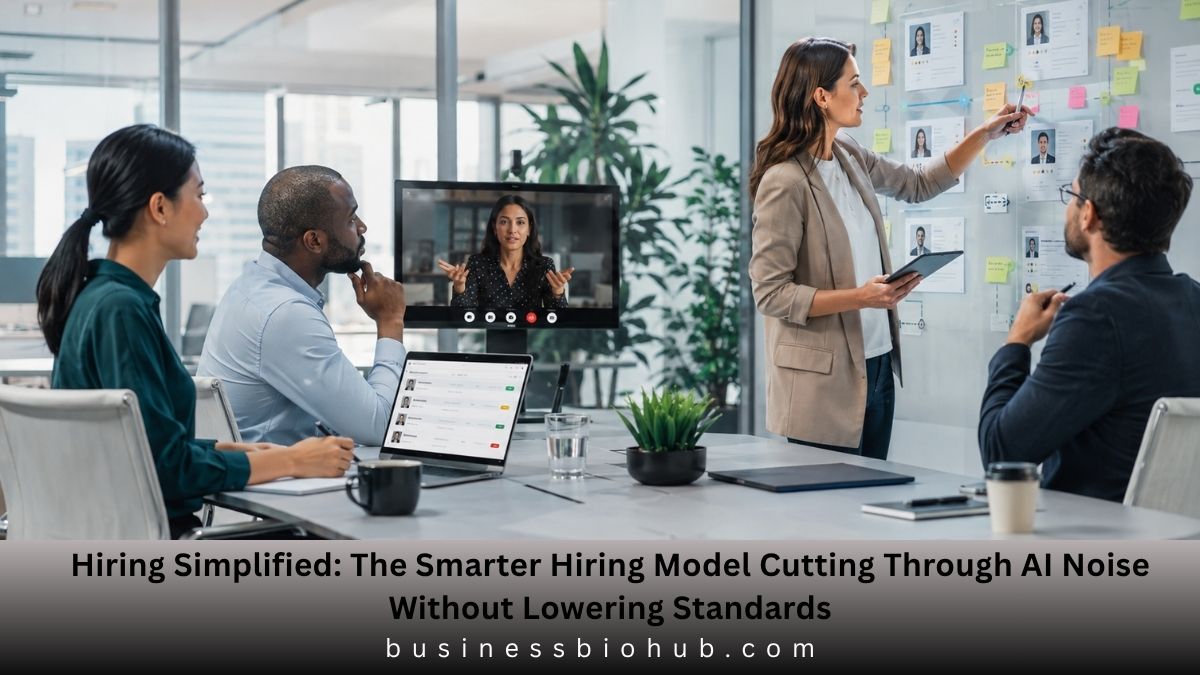
Hiring used to have a straightforward bottleneck: attracting enough qualified applicants. That problem has changed. AI-assisted applications, one-click submissions and automated job-search tools can now push enormous numbers of candidates into recruitment funnels within hours.
Greenhouse reported that recruiters were handling an average of 822 applicants per month in August 2025, almost twice the 433 recorded four years earlier. Its data also showed applications per vacancy rising from roughly 28 in 2021 to 95 in 2025, a 239% increase.
That makes hiring simplified more relevant than a catchy HR phrase. Employers need a process that removes administrative friction while preserving the steps that genuinely predict whether someone can perform the job.
BLUF: Hiring simplified is a structured recruitment model that removes low-value steps, defines job-critical skills before sourcing, uses consistent screening and interviews, automates administration, and keeps humans accountable for final decisions. The goal is not fewer standards; it is fewer delays, clearer evidence, stronger candidate trust and better hires.
The New Hiring Problem Is Too Much Noise, Not Too Little Talent
AI has created an unusual recruitment contradiction.
Candidates can produce tailored CVs faster. Employers can automate sourcing and screening faster. Applicant tracking systems can process larger pools. Yet identifying genuinely qualified people can still become harder.
LinkedIn reported in July 2026 that two-thirds of recruiters said finding qualified talent had become harder than a year earlier. Its analysis argues that recruiting teams increasingly need better-quality signals rather than simply faster processing.
Greenhouse has observed a similar pattern. Its 2025 workforce research found recruiters managing nearly three times as many applications per role as in 2021, while AI-assisted submissions, duplicates, spam and questionable candidate information complicated screening.
That changes what simplification should mean.
A company should not simplify hiring by automatically rejecting 90% of applicants with increasingly aggressive filters. It should simplify hiring by identifying exactly which information predicts success and removing everything that does not contribute meaningful evidence.
Editorial view: The strongest simplified hiring process is not the one with the fewest stages. It is the one in which every remaining stage has a clear reason to exist.
Start With the Job, Not the Job Advertisement
Many recruitment problems begin before a vacancy goes public.
One manager wants “five years of experience.” Another adds a university degree. A department head requests familiarity with six platforms. HR copies responsibilities from an older vacancy. Eventually the job description becomes a wish list rather than an explanation of what successful performance actually requires.
Hiring simplified reverses that sequence.
Define the outcomes first
Before sourcing candidates, the hiring team should identify:
- The three to five outcomes expected during the first year
- Essential technical capabilities
- Important behavioural or communication skills
- Requirements that are legally or operationally unavoidable
- Skills that can realistically be learned after joining
- Evidence candidates can provide to demonstrate competence
The distinction between must-have and trainable requirements can dramatically widen the useful talent pool.
The World Economic Forum’s Future of Jobs Report 2025 found that 63% of surveyed employers considered skills gaps a major barrier to business transformation. It also found that 48% expected to use skills assessments when evaluating candidates, while work experience remained the most common assessment mechanism at 81%.
The implication is important: companies increasingly need evidence of capability, not just impressive CV formatting.
Where Automation Helps—and Where Humans Still Matter
Automation is most valuable when it removes repetitive work rather than responsibility.
AI can assist with scheduling, candidate discovery, administrative messages, résumé organization, interview preparation and matching information against predefined requirements.
LinkedIn’s 2025 Future of Recruiting research found that talent acquisition professionals already experimenting with or integrating generative AI reported saving an average of 20% of their workweek. The same study found 93% of talent professionals considered accurate skills assessment crucial to improving quality of hire.
By July 2026, LinkedIn was reporting that organizations using its Hiring Assistant averaged 11% more “quality hires” and 18% more high-demand talent hires than organizations using traditional LinkedIn recruiting methods. Those numbers are LinkedIn’s own platform measurements rather than independent industry benchmarks, but they illustrate where recruitment technology is heading.
The best operating model therefore looks less like “AI replaces recruiters” and more like:
AI handles repetition → recruiters investigate evidence → hiring managers evaluate capability → humans remain accountable for the employment decision.
The Four-Stage Funnel That Removes Most Recruitment Waste
A simplified process does not require dozens of workflows.
1. Qualification
Establish whether the applicant meets the few requirements genuinely necessary to perform or legally hold the position.
Avoid turning preferences into automatic rejection criteria.
2. Evidence
Ask candidates to demonstrate the capabilities most closely connected to the role.
For a developer, that could mean reviewing code. For a salesperson, it could involve a realistic discovery-call exercise. For an editor, it might involve analysing or improving a short piece of content.
Assessments should remain proportionate. Asking candidates to complete hours of unpaid speculative work creates another type of friction.
3. Structured conversation
Interviewers should evaluate predefined competencies using consistent questions and independent scorecards.
The objective is not to eliminate judgment. It is to give judgment reliable evidence.
4. Fast decision
Once sufficient evidence exists, make the decision.
Adding another interview because nobody feels comfortable deciding usually signals that earlier stages were poorly designed.
| Traditional Friction | Hiring Simplified Alternative |
|---|---|
| Long application forms | Essential information only |
| Generic CV keyword filtering | Job-specific criteria |
| Repeated interviews | Defined interview purpose |
| Unstructured questioning | Competency-based scorecard |
| Manual scheduling | Automated coordination |
| Weeks without updates | Candidate communication checkpoints |
| “Culture fit” intuition | Defined behavioural evidence |
| More applicants as success metric | Quality and conversion metrics |
Candidate Trust Has Become a Business Metric
Simplification should also make recruitment clearer for applicants.
Greenhouse’s 2026 research reported that 46% of job seekers said their trust in the hiring process had declined during the previous year, with many connecting the decline to growing AI and automation use.
Employers can counter that distrust with remarkably basic practices: publish accurate responsibilities, explain the interview stages, disclose relevant assessment expectations, give realistic timelines and tell candidates when decisions have been made.
A simplified application should also avoid asking someone to upload a résumé and then manually re-enter the exact same employment history. Greenhouse specifically identifies eliminating this kind of duplication as part of creating a stronger candidate experience.
Efficiency and humanity are therefore not opposites. Poorly designed automation makes hiring impersonal; well-designed automation gives recruiters more time for meaningful conversations.
Simplification Cannot Mean Ignoring AI Risk
Recruitment technology also creates compliance responsibilities.
The U.S. Equal Employment Opportunity Commission has repeatedly emphasized that anti-discrimination laws continue to apply when employers use algorithms, software or AI for employment decisions. It has warned that automated tools may create discriminatory barriers or screen out qualified people, including applicants with disabilities.
European regulation is moving in the same direction. Under the EU AI Act framework, AI used for areas such as analysing applications, filtering candidates and evaluating people for employment can fall within high-risk AI classifications. Following the 2026 implementation changes, relevant high-risk employment-system requirements are scheduled to apply from 2 December 2027.
The safest principle is simple: automate administration aggressively; automate consequential judgment cautiously.
What Should Companies Measure?
Hiring simplified needs measurable outcomes.
Instead of celebrating applicant volume, monitor:
- Time to first candidate response
- Time spent in each recruitment stage
- Qualified-candidate rate
- Interview-to-offer ratio
- Offer acceptance rate
- Candidate withdrawal rate
- Source quality
- Quality of hire
- Early retention
- Candidate experience feedback
These numbers expose whether simplification is genuinely improving recruitment or merely moving candidates through a broken funnel faster.
FAQs
What does hiring simplified mean?
Hiring simplified is a recruitment approach that removes unnecessary steps while preserving evidence-based selection. Employers define essential skills, reduce application friction, structure interviews, automate administrative work and make decisions using relevant candidate evidence rather than adding interviews or requirements that provide little predictive value.
Does simplified hiring mean lowering recruitment standards?
Simplified hiring is not lower-standard hiring. The objective is to remove redundant activity rather than meaningful evaluation. A company might eliminate two repetitive interviews while introducing one better structured skills assessment, creating a shorter process that actually produces stronger evidence about candidate capability.
Can AI simplify the hiring process?
AI can simplify hiring when it handles repetitive and information-heavy tasks. It can assist sourcing, scheduling, communication, data organization and candidate matching. Employers should maintain meaningful human oversight when automated systems influence screening or employment decisions, particularly because discrimination and accessibility obligations can still apply.
What is the biggest mistake companies make when simplifying hiring?
The biggest mistake is confusing speed with quality. Automatically rejecting candidates faster does not necessarily produce better hires. Effective simplification starts by defining what successful performance requires and then designing every screening, assessment and interview stage around collecting evidence connected to those requirements.
How many interviews should a simplified hiring process include?
There is no universally correct interview count. Each interview should answer a defined hiring question. If three structured conversations provide enough evidence for a senior position, a fourth meeting should not exist merely because it is traditional. Lower-complexity roles may require considerably fewer stages.
The Real Advantage Is Better Signal
The future of recruitment will probably contain more AI, more applications and more automation—not less.
That makes hiring simplified a discipline rather than a software feature.
Organizations that win will not necessarily operate the largest recruiting funnels. They will know which skills matter, gather credible evidence quickly, communicate clearly with applicants and remove steps that do nothing except consume time.
The goal is straightforward: less hiring theatre, more hiring evidence.
Editorial Disclaimer
This article explains recruitment strategy and publicly reported hiring trends using information available as of September 4, 2026. Vendor-reported performance figures should not be treated as independent guarantees, and employment, discrimination, privacy and AI regulations differ by jurisdiction. Organizations should verify applicable legal requirements before deploying automated hiring or candidate-screening systems.

Pasonet Explained: Why This Digital Name Is More Complicated Than It First Appears

1upHealth Revenue Cycle Automation Partnerships: What’s Real, What’s Emerging, and Why 2027 Changes the Stakes

Kögel Trailer GmbH Manufacturing or Wholesale? The Business Model Behind the German Trailer Company

Paul Smalley Studied at University: The Education Behind His Global Football Career

Fawn Radmanich Marketing Strategy Experience: Why Her 25-Year A/E/C Career Centers on Winning Complex Work

Emily Seitz Pawlak at TriHealth: The Revenue Cycle Executive Who Pushed Automation Beyond Billing

Jadene Elden, AI Automation and RCM at Southcoast Health: What the Public Record Actually Shows

Tina Esposito Advocate Health Bio: The Data Executive Shaping Analytics, AI and Patient Care

Michael Roe Operating Partner NexPhase: The Verified Record Behind the Name — and the michaelroe.net Question

Briana Biagi Banner Health Fallon NV Staff Directory: What Current Records Actually Show

Astrid Hannah: The Inspiring Story of John Hannah’s Daughter and Her Life Beyond Competitive Swimming

Best Pasticho Venezuelan Lasagna Near Me: A Complete Guide to Finding This Rich Latin Comfort Food
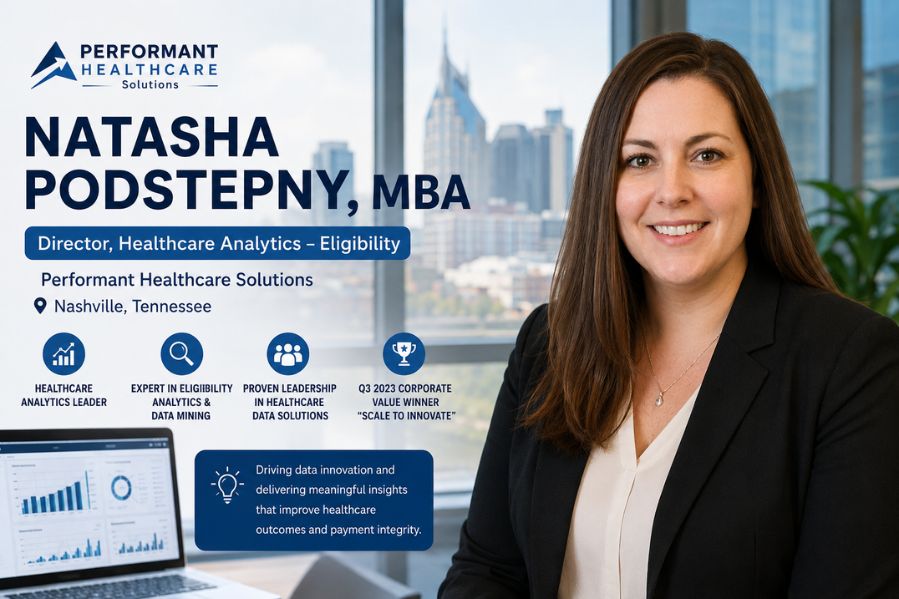
Natasha Podstepny LinkedIn Performant Healthcare Nashville: Inside Her Professional Journey

John Minoli: The Private Life and Career of Sheena Easton’s Fourth Husband

Jeroen Dik: How He Built a Powerful Legacy in Performance Tuning and Motorsport
Lihnk Explained: The Mysterious Search Term, Possible Meanings, and What Users Should Know
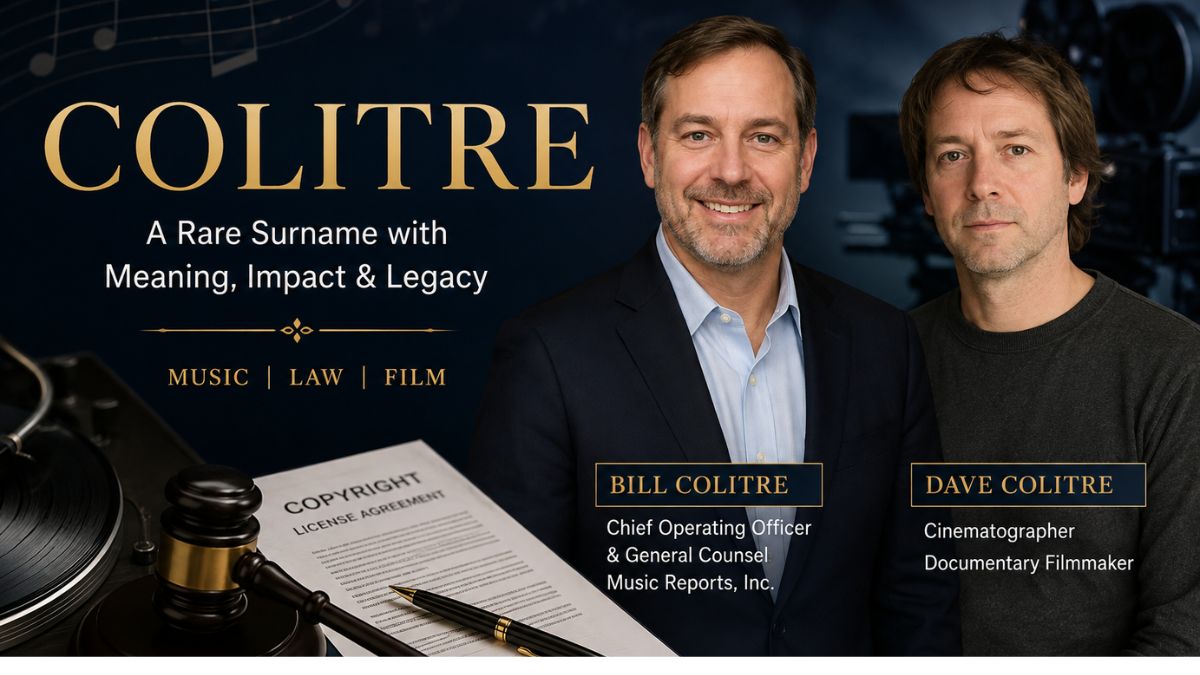
Colitre Explained: The Powerful Story Behind a Rare Name and Its Modern Identity

Nigora Whitehorn: The Inspiring Life, Marriage, and Story Behind Duncan Bannatyne’s Wife

Kemberly Blackledge LinkedIn Nashville General Hospital Chief Revenue Officer: How She Built a Powerful Healthcare Finance Career

Elegant Florals Emily Davis Business Description: A Refined Look at Floral Art, Event Design, and Botanical Creativity
Pasonet Explained: Why This Digital Name Is More Complicated Than It First Appears
1upHealth Revenue Cycle Automation Partnerships: What’s Real, What’s Emerging, and Why 2027 Changes the Stakes
Kögel Trailer GmbH Manufacturing or Wholesale? The Business Model Behind the German Trailer Company
Paul Smalley Studied at University: The Education Behind His Global Football Career
Fawn Radmanich Marketing Strategy Experience: Why Her 25-Year A/E/C Career Centers on Winning Complex Work
Emily Seitz Pawlak at TriHealth: The Revenue Cycle Executive Who Pushed Automation Beyond Billing
Jadene Elden, AI Automation and RCM at Southcoast Health: What the Public Record Actually Shows
Tina Esposito Advocate Health Bio: The Data Executive Shaping Analytics, AI and Patient Care
Michael Roe Operating Partner NexPhase: The Verified Record Behind the Name — and the michaelroe.net Question
Briana Biagi Banner Health Fallon NV Staff Directory: What Current Records Actually Show
-
 Celebrity4 months ago
Michael Scott Ryan: The Private Writer Known for His Connection to Jennifer Ehle
-
 Celebrity4 months ago
Daniel Guerard, The Private French Salon Owner Behind Lorraine Bracco’s Early Life Story
-
 Celebrity5 months ago
Caroline Hickman: The Private Life and Public Attention Around Steve Coogan’s Former Wife
-
 Celebrity3 months ago
Benn George, The Private British Businessman Behind a Powerful Chapter in Tiffany Darwish’s Life