
Technology
Leslie Boles AI and Coding Updates 2025: Why Human Oversight Became the Real AI Compliance Story

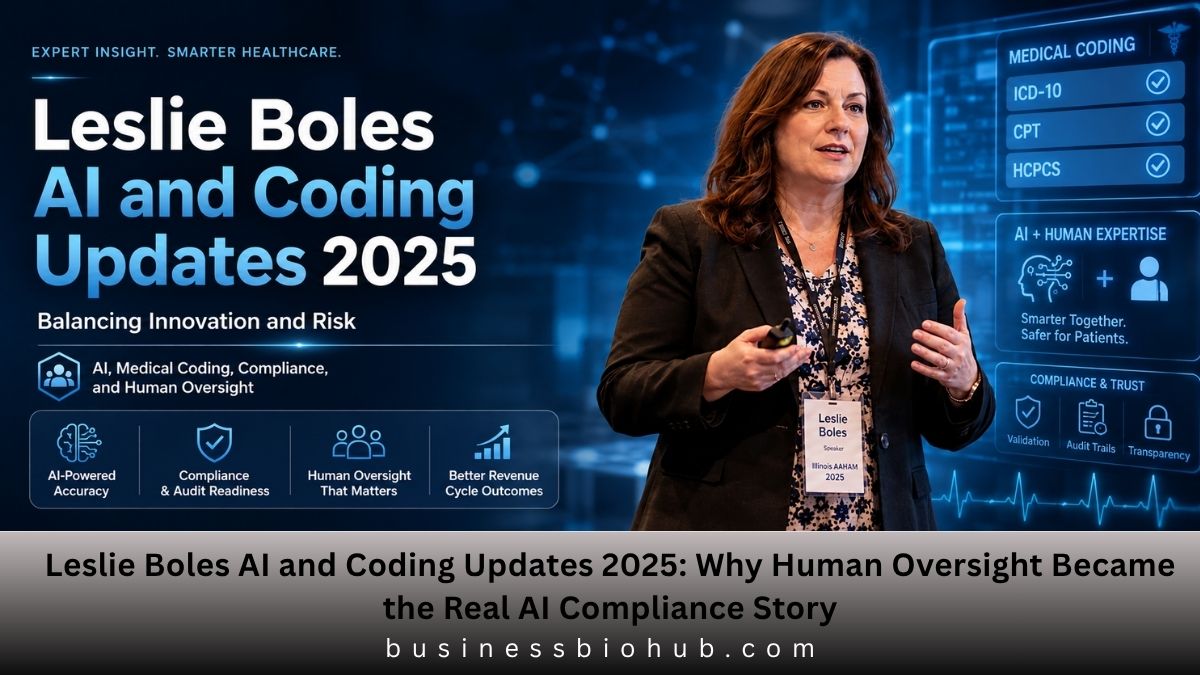
The phrase “Leslie Boles AI and Coding Updates 2025” points to a specific healthcare compliance presentation rather than a general update about computer programming. Leslie Boles presented “AI and Coding Updates 2025: Balancing Innovation and Risk” at the Illinois AAHAM 2025 Annual State Institute, where artificial intelligence was a central theme of the revenue-cycle program.
That distinction matters. Hospitals and physician groups are increasingly using natural language processing, machine learning, computer-assisted coding and automated workflows to turn clinical documentation into billable codes. Faster processing can improve productivity, but a coding error produced repeatedly by automation can also become a compliance problem at scale.
The presentation therefore focused less on whether healthcare organizations can automate coding and more on how they can prove that automated coding remains accurate, explainable and appropriately reviewed by humans.
BLUF: Leslie Boles’ 2025 position is clear: AI can materially assist medical coding and revenue-cycle workflows, but healthcare organizations should not treat automated output as inherently correct. Sustainable adoption requires human validation, documented audit trails, vendor transparency, compliance involvement, continuous performance monitoring and escalation controls for higher-risk coding decisions.
The Leslie Boles 2025 Session at a Glance
| Detail | Verified information | Context |
|---|---|---|
| Presenter | Leslie Boles | Healthcare coding, auditing and compliance professional |
| Presentation | AI and Coding Updates 2025: Balancing Innovation and Risk | Official presentation deck |
| Conference | Illinois AAHAM 2025 Annual State Institute | Healthcare revenue-cycle event |
| Session date | November 13, 2025 | Main conference Day 1 |
| Session time | 11:00 a.m.–12:00 p.m. | Listed as Session 1 |
| Location | East Peoria, Illinois | Annual State Institute |
| Primary focus | AI-assisted medical coding and compliance | Not software-development coding |
| Central message | AI augments human expertise | Governance and validation remain essential |
Illinois AAHAM’s event listing spells the session presenter as “Leslie Bowles,” but the accompanying biography identifies Leslie Boles, and the official presentation itself is explicitly credited to Leslie Boles. That source-level spelling discrepancy is worth noting for readers encountering both versions in search results.
What AI Was Actually Changing Inside Medical Coding
Boles organized the technology discussion around several capabilities already affecting revenue-cycle operations: natural language processing, machine-learning models, predictive analytics and robotic process automation. These technologies can examine physician notes and other clinical documentation, identify coding-relevant details, flag possible gaps and automate repetitive administrative processes.
The presentation describes AI-assisted systems suggesting ICD-10, CPT and HCPCS codes, interpreting unstructured clinical narratives and recognizing patterns across large numbers of cases. It also illustrates real-time documentation assistance—for example, prompting a clinician to specify the type of diabetes and whether complications are present before coding occurs.
This shift also fits the broader direction of the CPT system. The American Medical Association reported 420 changes to the 2025 CPT code set: 270 new codes, 112 deletions and 38 revisions. Seven Category III codes were created for AI-augmentative data analysis involving areas such as electrocardiogram measurements, medical chest imaging and image-guided prostate biopsy.
In other words, AI was becoming relevant to healthcare coding in two different ways: AI tools were helping produce or review coding decisions, while AI-enabled clinical services themselves were increasingly being represented within the coding system.
The Four Risks Boles Put Ahead of Automation Speed
The strongest part of the 2025 presentation is its emphasis on what happens when automation fails repeatedly rather than occasionally.
Algorithmic bias and inconsistent results
Training data can contain historical disparities or incomplete patterns. Boles warns that this can lead to unequal accuracy or systematic differences in coding outcomes across cases and patient populations.
Bad source documentation becoming automated error
AI does not repair every weakness in the clinical record. If documentation is incomplete or inaccurate, automated systems can propagate those problems through downstream coding and billing processes.
The black-box problem
An organization may struggle during an audit if it cannot reconstruct why an AI system recommended a particular code, DRG or modifier. The presentation specifically identifies missing decision logic and inadequate audit trails as compliance vulnerabilities.
Automation without enough human skepticism
The deck warns that excessive reliance on systems can weaken human review and allow nuanced clinical circumstances to escape attention.
“AI augments, not replaces, human expertise.”
That principle is also consistent with NIST’s AI Risk Management Framework, which emphasizes trustworthy AI characteristics including reliability, accountability, transparency, explainability, privacy and management of harmful bias.
Four Scenarios That Turn an AI Tool Into a Compliance Problem
Boles used concrete scenarios to make the risk easier to understand.
One example involves an AI system repeatedly assigning E/M code 99215 to complex patients based on documented time while failing to adequately account for medical-necessity requirements. Another describes an automated system processing 2,000 claims overnight without coder validation and producing modifier errors.
A third scenario concerns a vendor unwilling or unable to explain how its system reaches DRG assignments, creating problems when an organization must defend the coding decision during an audit.
The fourth involves AI changing codes after review without preserving the original selection, rationale or approval history.
These examples illustrate the broader compliance issue: automation can multiply a control failure faster than a traditional coder-by-coder error pattern.
Boles’ Governance Formula Was More Specific Than “Keep a Human Involved”
The presentation proposes practical controls rather than a vague requirement for supervision.
| Control | Boles’ proposed approach |
|---|---|
| Limited deployment | Pilot AI on roughly 10% of volume |
| Early validation | 100% review during the first 90 days |
| Compliance involvement | Require compliance sign-off |
| Monitoring | Conduct weekly performance reviews |
| Documentation | Preserve audit-ready AI and override records |
| Staff development | Quarterly AI-literacy training |
| Coding assurance | Perform quarterly AI coding audits |
| High-risk decisions | Require human checkpoints and escalation |
These figures are implementation recommendations contained in Boles’ presentation, not universal regulatory mandates.
Her five-step operational workflow adds AI-specific policies, role-based staff training, vendor-transparency requirements, periodic coding audits and human-in-the-loop validation before claims submission—particularly for complex, high-dollar or lower-confidence cases.
That approach closely resembles the broader logic behind federal compliance guidance. HHS Office of Inspector General guidance emphasizes effective risk assessment, auditing, monitoring and functioning compliance infrastructure, while NIST recommends risk management throughout an AI system’s lifecycle.
Why Privacy and Vendor Contracts Cannot Be Separated From Coding AI
An AI coding platform may process clinical narratives containing protected health information (PHI). That makes privacy, security, access controls and third-party responsibilities part of the implementation question—not merely technical details.
HHS guidance recognizes that third-party AI vendors can fall within HIPAA business-associate arrangements when their services involve PHI. HIPAA-regulated organizations therefore need to evaluate how relevant vendors create, receive, maintain or transmit protected information.
This reinforces Boles’ vendor-transparency message. Organizations need more than an attractive accuracy claim; they need to understand data handling, auditability, algorithm changes, error escalation and responsibility when automated recommendations affect submitted claims.
Leslie Boles’ 2025 AI-Coding Timeline
- 1990s: Rule-based automation assists basic coding and claims processing.
- 2000s: Computer-assisted coding expands through pattern matching.
- 2010s: Natural language processing and machine learning become more capable of analyzing clinical data.
- 2020s: Generative AI and increasingly sophisticated models begin interpreting context and assisting more complex workflows.
- 2025: Boles frames the central challenge as balancing greater automation with governance, explainability and human judgment.
FAQs
Readers Are Asking About Leslie Boles AI and Coding Updates 2025
What was Leslie Boles’ AI and Coding Updates 2025 presentation about?
Leslie Boles’ AI and Coding Updates 2025 presentation was about artificial intelligence in healthcare medical coding and compliance. It examined AI-assisted coding capabilities, automation risks, auditability, algorithmic bias, vendor transparency, staff training, human validation and governance rather than computer-programming languages or software-development techniques.
Did Leslie Boles say AI should replace medical coders?
No. Leslie Boles presented AI as an augmentation tool rather than a complete replacement for coding expertise. Her presentation repeatedly emphasizes validation, exception handling, human checkpoints and continued monitoring because automated systems may misunderstand context, create systematic errors or produce decisions that are difficult to defend during audits.
What are the biggest risks of AI-assisted medical coding?
The primary risks identified by Boles are algorithmic bias, poor source-data quality, inadequate audit trails, black-box decisions and over-reliance on automation. These problems can become particularly serious when incorrect outputs are repeated across large claim volumes before a human reviewer identifies the pattern.
What changed in CPT coding around AI in 2025?
The 2025 CPT code set contained 420 total changes, including 270 additions. The AMA also established seven Category III codes involving augmentative AI data analysis in specific clinical applications, reflecting the growing presence of AI-enabled medical services in formal coding terminology.
What should healthcare organizations do before deploying AI coding tools?
Healthcare organizations should establish governance before scaling automation. Boles recommends controlled pilots, extensive early review, compliance participation, vendor-transparency requirements, staff education, measurable performance indicators, periodic coding audits and mandatory human intervention for complex or higher-risk cases.
The Real 2025 Update Was Accountability, Not Automation
The most useful takeaway from Leslie Boles AI and Coding Updates 2025 is that healthcare AI should be evaluated as a compliance system, not merely a productivity product.
A tool that saves coding time but cannot explain decisions, preserve an audit trail or reliably handle exceptions can create new exposure instead of eliminating administrative burden. Boles’ framework places responsibility back on the healthcare organization: test before scaling, validate before billing, document decisions and retain human judgment where the consequences matter most.
That principle may outlast any individual AI model or coding platform.
Editorial Disclaimer
This article distinguishes verified regulatory requirements from recommendations, examples and projections contained in conference materials. Numerical performance claims or implementation targets originating solely from the presentation should not be interpreted as universal industry benchmarks, guaranteed outcomes or binding government requirements. Healthcare organizations should validate current payer, CPT, CMS, HIPAA and compliance requirements before operational use.

Pasonet Explained: Why This Digital Name Is More Complicated Than It First Appears

1upHealth Revenue Cycle Automation Partnerships: What’s Real, What’s Emerging, and Why 2027 Changes the Stakes

Kögel Trailer GmbH Manufacturing or Wholesale? The Business Model Behind the German Trailer Company

Paul Smalley Studied at University: The Education Behind His Global Football Career

Fawn Radmanich Marketing Strategy Experience: Why Her 25-Year A/E/C Career Centers on Winning Complex Work

Emily Seitz Pawlak at TriHealth: The Revenue Cycle Executive Who Pushed Automation Beyond Billing

Jadene Elden, AI Automation and RCM at Southcoast Health: What the Public Record Actually Shows

Tina Esposito Advocate Health Bio: The Data Executive Shaping Analytics, AI and Patient Care

Michael Roe Operating Partner NexPhase: The Verified Record Behind the Name — and the michaelroe.net Question

Briana Biagi Banner Health Fallon NV Staff Directory: What Current Records Actually Show

Astrid Hannah: The Inspiring Story of John Hannah’s Daughter and Her Life Beyond Competitive Swimming

Best Pasticho Venezuelan Lasagna Near Me: A Complete Guide to Finding This Rich Latin Comfort Food
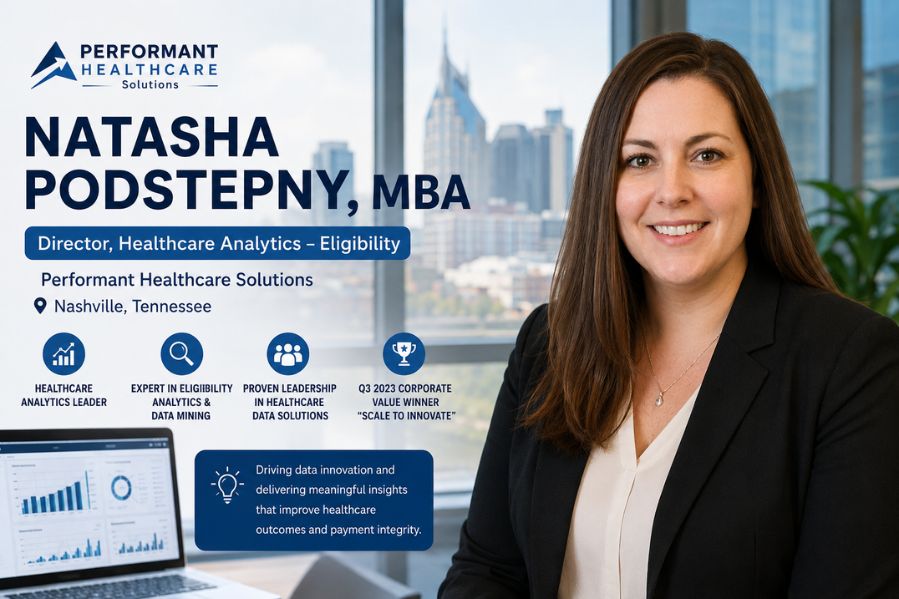
Natasha Podstepny LinkedIn Performant Healthcare Nashville: Inside Her Professional Journey

John Minoli: The Private Life and Career of Sheena Easton’s Fourth Husband

Jeroen Dik: How He Built a Powerful Legacy in Performance Tuning and Motorsport
Lihnk Explained: The Mysterious Search Term, Possible Meanings, and What Users Should Know
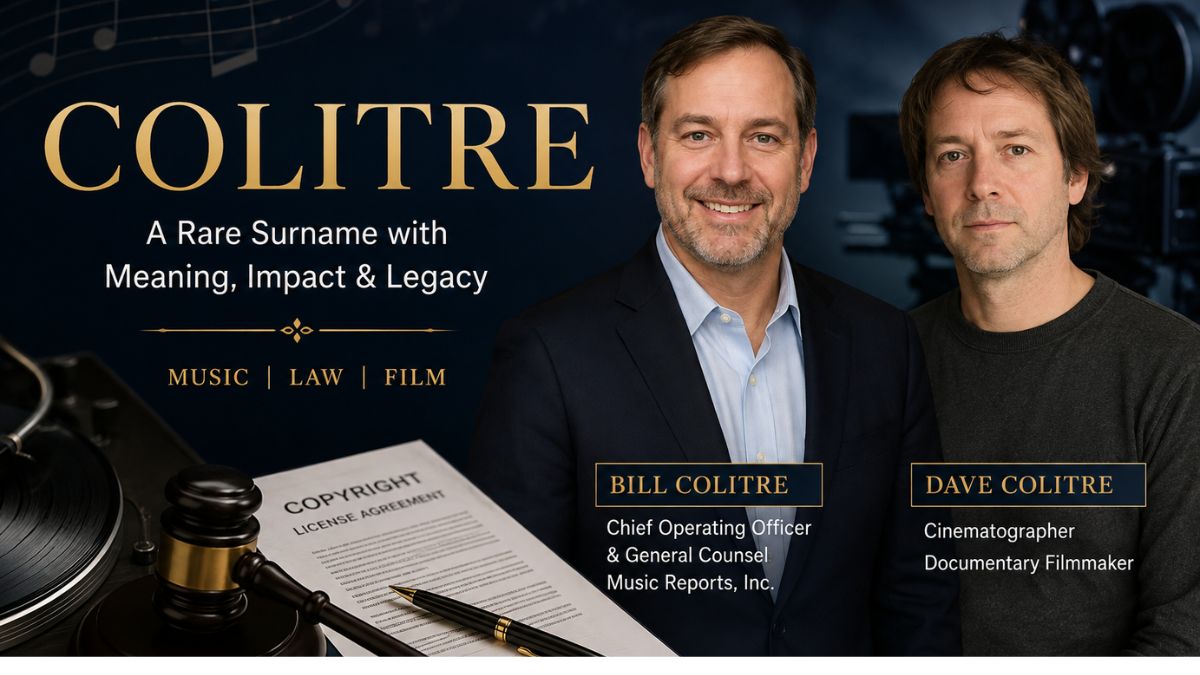
Colitre Explained: The Powerful Story Behind a Rare Name and Its Modern Identity

Nigora Whitehorn: The Inspiring Life, Marriage, and Story Behind Duncan Bannatyne’s Wife
Kemberly Blackledge LinkedIn Nashville General Hospital Chief Revenue Officer: How She Built a Powerful Healthcare Finance Career

Elegant Florals Emily Davis Business Description: A Refined Look at Floral Art, Event Design, and Botanical Creativity
Pasonet Explained: Why This Digital Name Is More Complicated Than It First Appears
1upHealth Revenue Cycle Automation Partnerships: What’s Real, What’s Emerging, and Why 2027 Changes the Stakes
Kögel Trailer GmbH Manufacturing or Wholesale? The Business Model Behind the German Trailer Company
Paul Smalley Studied at University: The Education Behind His Global Football Career
Fawn Radmanich Marketing Strategy Experience: Why Her 25-Year A/E/C Career Centers on Winning Complex Work
Emily Seitz Pawlak at TriHealth: The Revenue Cycle Executive Who Pushed Automation Beyond Billing
Jadene Elden, AI Automation and RCM at Southcoast Health: What the Public Record Actually Shows
Tina Esposito Advocate Health Bio: The Data Executive Shaping Analytics, AI and Patient Care
Michael Roe Operating Partner NexPhase: The Verified Record Behind the Name — and the michaelroe.net Question
Briana Biagi Banner Health Fallon NV Staff Directory: What Current Records Actually Show
-
 Celebrity4 months ago
Michael Scott Ryan: The Private Writer Known for His Connection to Jennifer Ehle
-
 Celebrity4 months ago
Daniel Guerard, The Private French Salon Owner Behind Lorraine Bracco’s Early Life Story
-
 Celebrity5 months ago
Caroline Hickman: The Private Life and Public Attention Around Steve Coogan’s Former Wife
-
 Celebrity3 months ago
Benn George, The Private British Businessman Behind a Powerful Chapter in Tiffany Darwish’s Life