
Technology
FinWhale Pool Chlorine Dispenser News 2026: Smart Pool Care Moves Toward Automatic Dosing

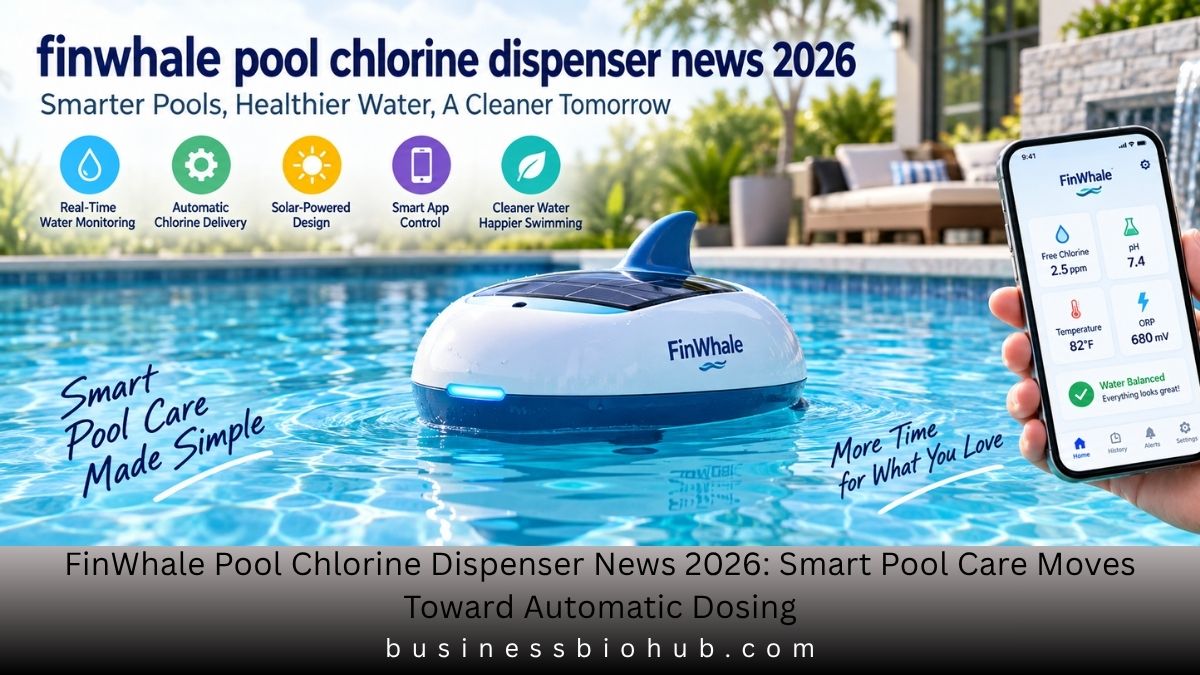
Swimming pool technology is becoming increasingly automated, and one of the more notable developments this year is the arrival of the FinWhale Smart Chlorine Dispenser. The latest FinWhale pool chlorine dispenser news 2026 centres on a device designed to go beyond the traditional floating tablet holder by actively monitoring pool conditions and adjusting chlorine delivery.
Developed by SunnyWhale, FinWhale is designed as a floating smart pool-care system. Instead of simply allowing chlorine tablets to dissolve continuously, it uses built-in sensors to monitor important water conditions. The system then responds by controlling chlorine delivery according to what the water appears to need.
The concept could appeal to homeowners who want clearer information about their pool chemistry without installing complicated equipment into existing plumbing.
This article explains the latest FinWhale pool chlorine dispenser news for 2026, including how the technology works, the water conditions it monitors, its smart features, current compatibility information, recent industry developments and what pool owners should understand before considering automated chlorine management.
What Is the FinWhale Smart Chlorine Dispenser?
FinWhale is an automatic pool chlorine dispenser developed to combine chemical monitoring and chlorine dosing within one floating device.
Traditional floating chlorine dispensers are relatively simple. Pool owners place chlorine tablets inside, adjust an opening and allow water to gradually dissolve the tablets. Their output does not normally change because of direct measurements of current water conditions.
FinWhale takes a different approach.
The device measures pool water and uses those readings to determine when chlorine delivery should be adjusted. SunnyWhale states that the unit monitors free chlorine, pH, oxidation-reduction potential, commonly called ORP, and water temperature.
These measurements provide more information than a basic floating dispenser can offer.
Real-Time Pool Water Monitoring
One of FinWhale’s most important features is frequent water testing. The manufacturer says the system takes readings every 20 minutes.
That allows the dispenser to observe changing conditions throughout the day rather than relying entirely on a fixed chlorine-release setting.
Pool chemistry can change because of sunlight, temperature, rain and the number of people using the pool. A system capable of regularly checking the water may therefore provide pool owners with greater visibility into those changes.
Automatic Chlorine Delivery
Monitoring is only one part of the FinWhale concept.
The device is designed to respond to its readings by adjusting chlorine delivery. It contains a motorised dispensing system that controls how chlorine is introduced into the water when additional sanitiser is required.
This distinction is important because many connected pool monitors can display water information without physically changing chemical delivery.
FinWhale is intended to combine measurement and response within the same floating product.
FinWhale Pool Chlorine Dispenser News 2026 and Recent Developments
FinWhale attracted increasing attention during 2026 as SunnyWhale moved the product from launch announcements toward wider commercial availability.
In March 2026, SunnyWhale announced plans for a summer launch of the smart dispenser. The company presented the technology as an attempt to make automated pool-water management easier to access without permanent equipment installation.
Industry attention followed.
AQUA Magazine featured the FinWhale Smart Chlorine Dispenser in May 2026, highlighting its combination of free-chlorine monitoring, pH readings, ORP monitoring, temperature measurement and automated chlorine dosing.
The product also appeared in updated 2026 pool-technology coverage from WIRED during August.
Another development arrived in September 2026 when SunnyWhale announced The Grit Game as its U.S. national manufacturer representative and B2B channel marketing partner for FinWhale. That move suggests the company is also targeting pool retailers, dealers and professional service channels rather than relying only on direct consumer sales.
Solar-Powered Pool Technology
Power management is another notable part of the FinWhale design.
The device includes a solar panel that helps recharge its internal battery while it floats in the pool. SunnyWhale states that the rechargeable battery can operate for up to four weeks without sunlight under suitable conditions, although actual battery performance will naturally depend on use and environmental factors.
A backup charging option is also available.
Solar-assisted operation makes sense for floating pool technology because constantly removing a device for charging could reduce the convenience offered by automated monitoring.
Smart App Monitoring and Alerts
FinWhale also connects with the SunnyWhale mobile app.
The app is designed to show current pool information and provide notifications when conditions require attention. Pool owners can monitor chlorine readings, pH, ORP and temperature while also receiving alerts relating to water conditions, chlorine tablets and device status.
This means FinWhale functions partly as an automatic chlorine dispenser and partly as a connected pool-water monitoring system.
Historical information may also help owners understand how their pool changes during different weather conditions or periods of heavier use.
Chlorine Tablets and Pool Compatibility
FinWhale supports standard chlorine tablets, including common one-inch and three-inch sizes. The unit can hold multiple tablets, reducing the need to refill the dispenser every day.
However, automatic dispensing does not mean pool owners can completely ignore water chemistry.
SunnyWhale advises users to begin with properly balanced water. Important factors such as cyanuric acid and total dissolved solids may still require testing and correction separately.
The dispenser is therefore better understood as a pool-maintenance tool rather than a solution for every possible water-quality problem.
Which Pools Can Use FinWhale?
Current product information identifies FinWhale primarily for residential in-ground and above-ground swimming pools of up to approximately 25,000 gallons.
It can be used with common pool construction types including vinyl-lined, fibreglass and concrete pools.
There is, however, some inconsistency in SunnyWhale’s published compatibility information. Its main product information currently describes FinWhale as intended for chlorine pools and indicates that salt-pool support is planned, while another company information page mentions salt-water compatibility.
Until those details are fully aligned, owners of salt-water systems should confirm current compatibility before purchasing or installing the device.
No Major Plumbing Installation
One potential advantage is that FinWhale does not require major changes to the pool’s plumbing system.
Because the dispenser floats directly in the water, the basic setup is considerably different from installing an inline chemical feeder or permanently fitted automation system.
For homeowners who do not want extensive equipment modifications, the drop-in format may be one of the product’s most attractive characteristics.
Why Smart Chlorine Dispensers Are Receiving Attention
The broader significance of FinWhale is connected to the growing trend toward smart pool automation.
Consumers already use connected devices for robotic cleaning, heating, lighting and water monitoring. Automated chemical management represents another stage in the development of connected swimming pools.
An intelligent chlorine dispenser could potentially reduce some of the repetitive work involved in checking and adjusting sanitiser levels.
However, technology should complement sensible pool maintenance rather than encourage owners to ignore their water completely.
FinWhale Versus Traditional Floating Dispensers
The biggest difference between FinWhale and a conventional chlorine floater is awareness.
A basic dispenser releases chlorine without directly knowing the water’s current free-chlorine level. FinWhale attempts to measure conditions first and then alter chlorine output accordingly.
That creates a more responsive form of chlorine management.
The trade-off is complexity and cost. A traditional floating dispenser is extremely simple, whereas a smart dispenser contains sensors, electronics, connectivity, batteries and mechanical components that require ongoing care.
Sensor Maintenance Still Matters
FinWhale’s sensors are essential to its automated operation.
SunnyWhale currently recommends replacing the sensor probe periodically, with product specifications indicating an expected replacement interval of around 12 months for accurate measurements.
This is important because any automated chemical-management system depends heavily on reliable sensor information.
Pool owners should therefore consider sensor maintenance, chlorine tablet replacement and occasional independent water testing as part of responsible long-term use.
What FinWhale Could Mean for Pool Maintenance in 2026
The latest FinWhale pool chlorine dispenser news 2026 reflects a wider movement toward connected and increasingly automated swimming-pool equipment.
FinWhale brings together several technologies that were previously more commonly found in separate products: real-time pool water monitoring, app connectivity, solar-assisted charging and automatic chlorine dosing.
Its biggest attraction is convenience. Rather than turning the familiar floating chlorine dispenser into an entirely different installation, SunnyWhale has attempted to make the floater itself smarter.
Whether this approach becomes widely adopted will depend on long-term reliability, sensor accuracy, maintenance costs and real-world owner experiences.
Conclusion
The FinWhale pool chlorine dispenser news 2026 highlights an interesting development in smart swimming pool technology. FinWhale is designed to monitor free chlorine, pH, ORP and temperature while automatically controlling chlorine delivery based on changing water conditions.
Its floating design, mobile app, solar-assisted power system and automatic dosing capabilities distinguish it from traditional chlorine dispensers.
At the same time, pool owners should remember that automation does not eliminate every aspect of water maintenance. Correct starting chemistry, sensor care, tablet refilling and periodic verification remain important.
FinWhale ultimately represents a shift from passive chlorine dispensing toward responsive pool-water management. For the growing smart-pool market, that combination of sensing, automation and remote monitoring could make intelligent chemical control an increasingly visible part of residential pool care.

Telehealth Psychiatric & Mental Health Care: Accessible Support for a Healthier Mind

West Palm Beach Detox: A Safe and Supportive Start to Lasting Recovery

Drug & Alcohol Rehab in West Palm Beach, FL: Start Your Journey to a Healthier Life

Drug & Alcohol Detox in South Carolina: A Complete Guide to Safe Recovery

Drug and Alcohol Detox Kentucky: Your Guide to Safe Recovery at Paducah Detox Center

Addiction Treatment in Plymouth: Understanding Addiction & Mental Health Treatment

Ohio Center for Adolescent Wellness: Your Guide to Teen Mental Health Services in Ohio

Massachusetts Center for Adolescent Wellness: Your Guide to Teen Mental Health & Addiction Treatment in MA

Foundation Diploma Singapore: A Practical Route Towards Higher Education

How to Stay Safe and Private While Using Public Wi-Fi

Paul Smalley Studied at University: The Education Behind His Global Football Career

Diamo Jewels Under the Lens: What Buyers Should Know Before Ordering in 2026

Billie Henry: Inside the Private Life Dawn French Fought to Keep Out of the Spotlight

Tina Esposito Advocate Health Bio: The Data Executive Shaping Analytics, AI and Patient Care

Kögel Trailer GmbH Manufacturing or Wholesale? The Business Model Behind the German Trailer Company

iPhone 17 Pro Max Phone Case: Best Protection Choices That Actually Matter in 2026

Pasonet Explained: Why This Digital Name Is More Complicated Than It First Appears

1upHealth Revenue Cycle Automation Partnerships: What’s Real, What’s Emerging, and Why 2027 Changes the Stakes

EliseAI Head of Partnerships 2024–2026: The Leadership Shift Behind Its Expanding AI Partner Network

Industrial Entrepreneurs Memorandum: The 2026 IEM Rules Every Large Manufacturer Should Understand
Telehealth Psychiatric & Mental Health Care: Accessible Support for a Healthier Mind
West Palm Beach Detox: A Safe and Supportive Start to Lasting Recovery
Drug & Alcohol Rehab in West Palm Beach, FL: Start Your Journey to a Healthier Life
Drug & Alcohol Detox in South Carolina: A Complete Guide to Safe Recovery
Drug and Alcohol Detox Kentucky: Your Guide to Safe Recovery at Paducah Detox Center
Addiction Treatment in Plymouth: Understanding Addiction & Mental Health Treatment
Ohio Center for Adolescent Wellness: Your Guide to Teen Mental Health Services in Ohio
Massachusetts Center for Adolescent Wellness: Your Guide to Teen Mental Health & Addiction Treatment in MA
Foundation Diploma Singapore: A Practical Route Towards Higher Education
How to Stay Safe and Private While Using Public Wi-Fi
-
 Celebrity4 months ago
Michael Scott Ryan: The Private Writer Known for His Connection to Jennifer Ehle
-
 Celebrity4 months ago
Benn George, The Private British Businessman Behind a Powerful Chapter in Tiffany Darwish’s Life
-
 Celebrity5 months ago
Daniel Guerard, The Private French Salon Owner Behind Lorraine Bracco’s Early Life Story
-
 Celebrity6 months ago
Caroline Hickman: The Private Life and Public Attention Around Steve Coogan’s Former Wife