
Business & Leadership
Mike Lorenz, Director of Revenue Cycle at INTEGRIS Health: The Revenue-Cycle Strategy Behind a $1 Million Collection Surprise

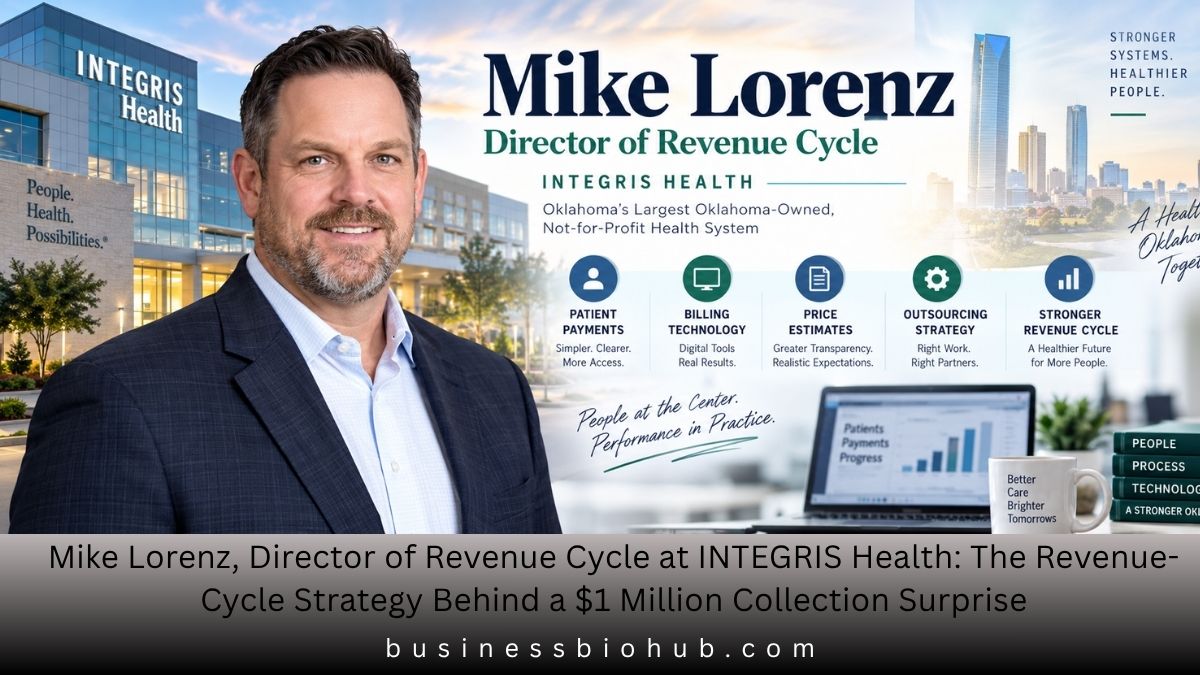
Healthcare revenue cycle work rarely attracts the same attention as new hospitals, clinical breakthroughs or major technology launches. Yet the systems behind estimates, billing, insurance claims and patient payments can determine whether healthcare organizations convert delivered care into sustainable revenue.
That makes the work associated with Mike Lorenz, Director of Revenue Cycle at INTEGRIS Health, particularly relevant. HealthLeaders has identified Lorenz in that role while featuring his views on patient payments, price transparency and revenue-cycle technology. His approach became especially visible after an INTEGRIS billing change surfaced old balances and produced an unexpectedly large collection result.
His professional visibility has also expanded beyond INTEGRIS. For the 2026–2027 term, the Healthcare Financial Management Association lists Mike Lorenz as President of the Oklahoma HFMA Chapter, while also identifying him with INTEGRIS on the chapter’s leadership roster.
Mike Lorenz is a healthcare revenue-cycle executive identified by HealthLeaders as Director of Revenue Cycle at INTEGRIS Health. His public work centers on patient-payment technology, price-estimate accuracy and disciplined outsourcing, while his 2026–2027 Oklahoma HFMA presidency extends his professional involvement beyond one health system.
The $1 Million Result That Made a Routine Billing Change Much More Interesting
One of the clearest examples of Lorenz’s revenue-cycle philosophy came from INTEGRIS Health’s implementation of full MyChart billing within its Epic environment.
When the system went live, older balances were automatically made visible to patients using the portal. That relatively straightforward change had an outsized result.
According to HealthLeaders, INTEGRIS collected more than $1 million within the first month from accounts that were more than two years old. The collections happened before a dedicated marketing push around the new functionality. Patients simply encountered past-due balances while using the digital system and had an accessible way to pay them.
The episode matters because it reframes a familiar revenue-cycle problem. Aged receivables are often treated primarily as a collection challenge requiring more calls, notices or outside collection activity. The INTEGRIS example suggests that some unpaid balances can also be an access and visibility problem.
If patients cannot easily see what they owe, understand the balance and complete payment through a familiar digital channel, additional collection pressure may not solve the underlying friction.
HealthLeaders summarized the lesson around simplicity, transparency and easier payment. That fits a broader trend discussed during its May 2025 patient-payment panel, where Lorenz joined executives from UW Health, Moffitt Cancer Center and Waystar to examine changing patient financial responsibility and payment technology.
Why Lorenz Says a Medical Estimate Cannot Always Behave Like a Repair Quote
Patient payments begin well before the bill reaches a portal.
Hospitals increasingly face expectations that patients should know what a procedure will cost before receiving care. HealthLeaders examined that tension with Lorenz in August 2025, identifying him as INTEGRIS Health’s Revenue Cycle Director.
The fundamental difficulty is clinical uncertainty.
A car repair can often be scoped around a known mechanical problem. Healthcare procedures can change after treatment begins. Additional services, supplies, clinical findings or interventions may become necessary, meaning a pre-service estimate cannot always predict the final combination of charges and insurance responsibility.
Lorenz’s discussion did not argue against better estimates. Instead, it highlighted why an estimate and a guaranteed final price are different things.
HealthLeaders noted that health systems are using front-end technology, automated eligibility checks, historical claims information and analytics to improve estimate reliability. Patient education remains necessary because even a sophisticated model cannot eliminate every clinical variable.
For revenue-cycle departments, that creates a dual responsibility: improve the data behind estimates while communicating clearly about what an estimate can and cannot guarantee.
Outsourcing Strategy: Know the Cost Before Sending Work Outside
Lorenz has also publicly addressed one of the recurring management questions in healthcare finance: what should remain in-house and what should be outsourced?
His position, documented in a September 2023 Knowtion Health interview, begins with economics but does not end there.
“The primary factor in determining in-house or outsourcing is your internal cost versus your external cost.”
Lorenz then pointed to expertise as another deciding factor. Specialized claim categories such as workers’ compensation, third-party liability and Veterans Affairs-related work may justify external support when a vendor possesses capabilities that are difficult or inefficient to maintain internally.
That is notably different from viewing outsourcing as an all-or-nothing decision.
A health system might efficiently manage one part of its revenue cycle internally while using outside expertise for a narrower, technically demanding segment. Lorenz also cautioned against automatically choosing the cheapest provider or expecting one vendor to excel across every service category.
The operating logic behind that approach
A practical reading of Lorenz’s documented comments produces four questions for an RCM team:
- What does this function actually cost when performed internally?
- What would a qualified external vendor charge?
- Does the internal team possess the necessary specialty expertise?
- Is a particular vendor demonstrably stronger in the exact service being outsourced?
This is less about maximizing outsourcing and more about allocating work according to cost, capability and specialization.
The Scale of INTEGRIS Makes Revenue-Cycle Decisions Material
Lorenz’s work takes place inside a sizable healthcare organization.
INTEGRIS Health describes itself as the state’s largest not-for-profit, Oklahoma-owned health system. Its published 2025 year-end report said the organization had 13,099 caregivers, including 996 providers, and served patients through 20 hospitals, 655 clinics, six urgent-care facilities and 16 AllSet urgent-care clinics. INTEGRIS reported caring for 3,164,178 patients during 2025.
Those numbers help explain why seemingly small workflow decisions can become financially significant.
A portal notification that improves payment behavior by only a fraction of patients can matter when applied across a large patient population. The same is true for estimate accuracy, eligibility automation, vendor fees and account-routing decisions.
Earlier INTEGRIS documentation also described the organization as a multi-billion-dollar integrated delivery system with hospitals, rehabilitation operations, physician clinics, virtual care, mental-health services and home-health agencies.
Revenue-cycle management at that scale is therefore not merely a billing-office function. It connects patient access, technology, finance, payer relationships and patient experience.
Oklahoma HFMA Gives Lorenz a Wider Professional Platform
Lorenz’s role in the Healthcare Financial Management Association adds another dimension to his professional profile.
HFMA’s Oklahoma Chapter lists him as its 2026–2027 president. The chapter also names Mike Lorenz of INTEGRIS as chair of its programs activities and lists him within sponsorship leadership.
His presidential message emphasizes member participation, professional development, networking, certification and greater use of technology—including artificial intelligence—to support chapter activities.
That position places Lorenz within a professional network extending beyond the operations of INTEGRIS itself. HFMA brings together healthcare finance professionals working across providers, insurers, consulting organizations, technology firms and other areas of the sector.
For readers searching for Mike Lorenz Director Revenue Cycle INTEGRIS Health, his HFMA presidency is therefore an important current data point: his documented professional footprint now includes both operational revenue-cycle work and statewide healthcare-finance association leadership.
What Lorenz’s Public Record Says About Modern Revenue Cycle Leadership
The most useful thread connecting Mike Lorenz’s documented work is not a single technology or collection tactic. It is the idea that revenue-cycle performance increasingly depends on removing friction while making disciplined operational choices.
INTEGRIS’s aged-account experience showed what can happen when payment is made visible and convenient. His price-estimate commentary acknowledges that better consumer information is necessary without pretending healthcare can always produce perfectly fixed advance prices. His outsourcing guidance applies the same pragmatic thinking to vendor relationships: measure cost, identify expertise gaps and use outside resources selectively.
That combination explains why the Mike Lorenz Director Revenue Cycle INTEGRIS Health search entity extends beyond a job title. His published commentary offers concrete examples of how patient experience, technology and financial operations increasingly intersect inside healthcare—and his 2026–2027 HFMA presidency gives those ideas a broader professional forum.
FAQs
Who is Mike Lorenz at INTEGRIS Health?
Mike Lorenz is a healthcare revenue-cycle executive publicly identified by HealthLeaders as Director of Revenue Cycle at INTEGRIS Health. His documented industry commentary covers patient collections, MyChart billing, healthcare price estimates and decisions about whether revenue-cycle functions should be handled internally or outsourced.
What is Mike Lorenz known for in revenue cycle management?
Mike Lorenz is known publicly for practical commentary on patient-payment technology and revenue-cycle operations. A prominent example involved INTEGRIS Health collecting more than $1 million in one month from accounts older than two years after old balances became visible through its MyChart billing implementation.
How did INTEGRIS Health collect more than $1 million from aged accounts?
INTEGRIS Health collected the money after full MyChart billing made older balances visible and easier for patients to pay. HealthLeaders reported that more than $1 million was collected during the first month from accounts over two years old, even before a dedicated marketing campaign began.
What has Lorenz said about healthcare price estimates?
Lorenz’s position is that accurate healthcare estimates are difficult because clinical care can change unexpectedly after a procedure begins. HealthLeaders reported that he contrasted healthcare with more predictable consumer services, while emphasizing the growing demand for better estimates and the role of technology, data and patient education.
What is Mike Lorenz’s approach to revenue-cycle outsourcing?
Lorenz favors a selective, cost-and-expertise-based outsourcing strategy. He has said health systems should compare internal and external costs, identify where specialist expertise is missing and choose vendors according to particular capabilities rather than simply selecting the lowest-cost provider or assigning everything to a single company.
What is Mike Lorenz’s role with HFMA?
Mike Lorenz is President of the Oklahoma HFMA Chapter for the 2026–2027 leadership year. HFMA’s current chapter materials also associate him with INTEGRIS and show his participation in program and sponsorship activities.
Editorial Disclaimer
This profile is based on publicly available organizational records, professional-association information and published interviews available at the time of verification. Private biographical details, compensation, personal assets and other information without reliable authoritative sourcing have intentionally been excluded. Professional titles and organizational responsibilities can change, so future publication updates should be checked against current INTEGRIS Health and HFMA records.

Telehealth Psychiatric & Mental Health Care: Accessible Support for a Healthier Mind

West Palm Beach Detox: A Safe and Supportive Start to Lasting Recovery

Drug & Alcohol Rehab in West Palm Beach, FL: Start Your Journey to a Healthier Life

Drug & Alcohol Detox in South Carolina: A Complete Guide to Safe Recovery

Drug and Alcohol Detox Kentucky: Your Guide to Safe Recovery at Paducah Detox Center

Addiction Treatment in Plymouth: Understanding Addiction & Mental Health Treatment

Ohio Center for Adolescent Wellness: Your Guide to Teen Mental Health Services in Ohio

Massachusetts Center for Adolescent Wellness: Your Guide to Teen Mental Health & Addiction Treatment in MA

Foundation Diploma Singapore: A Practical Route Towards Higher Education

How to Stay Safe and Private While Using Public Wi-Fi

Paul Smalley Studied at University: The Education Behind His Global Football Career

Diamo Jewels Under the Lens: What Buyers Should Know Before Ordering in 2026

Billie Henry: Inside the Private Life Dawn French Fought to Keep Out of the Spotlight

Tina Esposito Advocate Health Bio: The Data Executive Shaping Analytics, AI and Patient Care

Kögel Trailer GmbH Manufacturing or Wholesale? The Business Model Behind the German Trailer Company

iPhone 17 Pro Max Phone Case: Best Protection Choices That Actually Matter in 2026

Pasonet Explained: Why This Digital Name Is More Complicated Than It First Appears

1upHealth Revenue Cycle Automation Partnerships: What’s Real, What’s Emerging, and Why 2027 Changes the Stakes

Industrial Entrepreneurs Memorandum: The 2026 IEM Rules Every Large Manufacturer Should Understand

EliseAI Head of Partnerships 2024–2026: The Leadership Shift Behind Its Expanding AI Partner Network
Telehealth Psychiatric & Mental Health Care: Accessible Support for a Healthier Mind
West Palm Beach Detox: A Safe and Supportive Start to Lasting Recovery
Drug & Alcohol Rehab in West Palm Beach, FL: Start Your Journey to a Healthier Life
Drug & Alcohol Detox in South Carolina: A Complete Guide to Safe Recovery
Drug and Alcohol Detox Kentucky: Your Guide to Safe Recovery at Paducah Detox Center
Addiction Treatment in Plymouth: Understanding Addiction & Mental Health Treatment
Ohio Center for Adolescent Wellness: Your Guide to Teen Mental Health Services in Ohio
Massachusetts Center for Adolescent Wellness: Your Guide to Teen Mental Health & Addiction Treatment in MA
Foundation Diploma Singapore: A Practical Route Towards Higher Education
How to Stay Safe and Private While Using Public Wi-Fi
-
 Celebrity4 months ago
Michael Scott Ryan: The Private Writer Known for His Connection to Jennifer Ehle
-
 Celebrity4 months ago
Benn George, The Private British Businessman Behind a Powerful Chapter in Tiffany Darwish’s Life
-
 Celebrity5 months ago
Daniel Guerard, The Private French Salon Owner Behind Lorraine Bracco’s Early Life Story
-
 Celebrity6 months ago
Caroline Hickman: The Private Life and Public Attention Around Steve Coogan’s Former Wife