
Business
Jeroen Dik: How He Built a Powerful Legacy in Performance Tuning and Motorsport

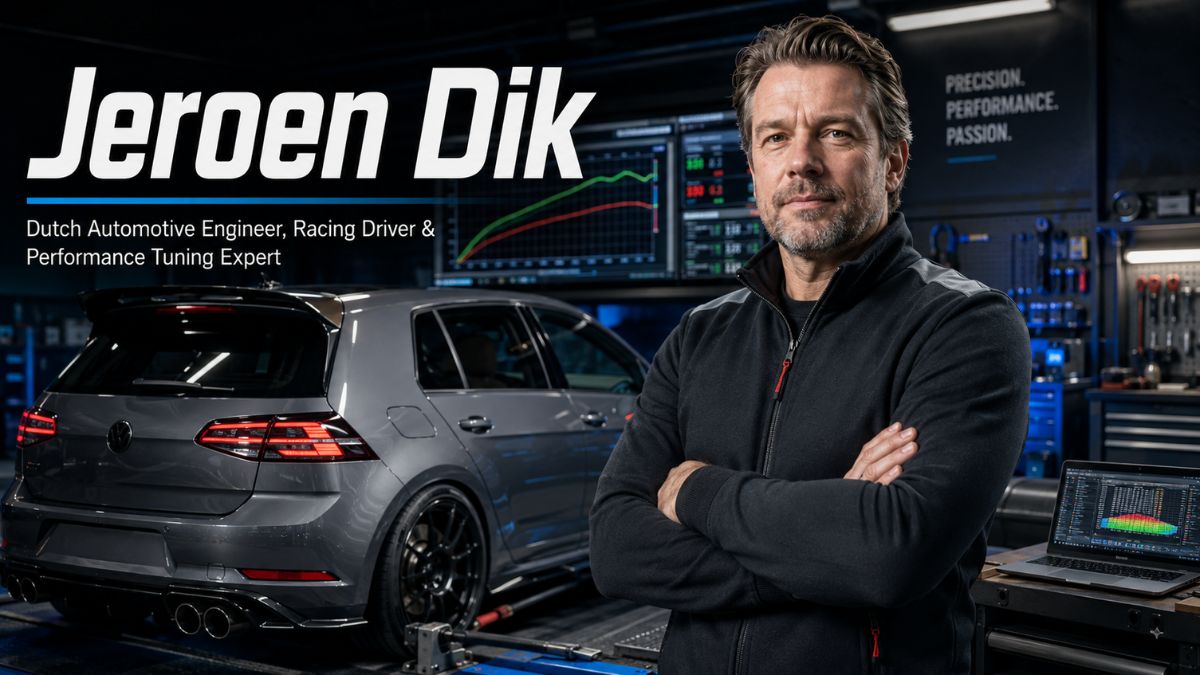
Jeroen Dik is a Dutch automotive engineer, racing driver, and entrepreneur whose name has become closely associated with high-performance tuning, particularly within the Volkswagen Audi Group community. Best known as the founder of JD Engineering, he has spent decades developing engine software, refining performance systems and demonstrating how carefully engineered tuning can improve power without sacrificing drivability. His work has attracted attention from performance-car enthusiasts because he approaches tuning as an engineering discipline rather than simply chasing the largest possible horsepower figure. Over the years, Dik has worked extensively with Volkswagen, Audi, SEAT, Škoda and other VAG-related vehicles, while also using motorsport as a demanding testing environment for his technical ideas. His combination of practical mechanical knowledge, electronic calibration experience and competitive racing helped establish his reputation among European tuning enthusiasts. From early experiments with modified engines to championship-level diesel racing, his career reflects a long-term fascination with extracting usable performance through intelligent engineering.
Who Is Jeroen Dik?
Jeroen Dik is primarily known for his work in automotive performance engineering and for developing JD Engineering in the Netherlands. His professional identity combines several closely connected roles: engineer, software calibrator, workshop founder, entrepreneur and racing driver. Rather than separating mechanical tuning from electronic control, Dik became known for treating the engine as a complete system in which hardware, fuel delivery, boost pressure, ignition, airflow, and software must work together. This approach became increasingly important as modern cars shifted from relatively simple mechanical systems to highly sophisticated electronically controlled powertrains. His experience let him adapt to those changes while staying focused on the VAG ecosystem. Among enthusiasts, he has occasionally been nicknamed the “Tuning Yoda,” a reference to the depth of his knowledge within tuning circles. Such labels are informal, but they illustrate the respect he has earned among drivers who value detailed calibration and real-world performance.
Early Interest in Engines and Performance
Dik’s involvement with automotive engineering reportedly began when he was young, with a strong interest in understanding how engines worked and how to improve their performance. Like many influential tuners, his development appears to have been driven by hands-on experimentation rather than by a purely theoretical interest in cars. Working directly with engines let him see how individual changes affected an entire vehicle. This practical background became especially important as performance tuning evolved rapidly. Earlier generations of enthusiasts often relied heavily on physical engine modifications, but the growing importance of engine management systems meant that software eventually became just as significant as mechanical components. Dik positioned himself at this intersection of mechanical engineering and electronic calibration, developing an approach that would later become central to JD Engineering. His early fascination with performance cars provided the technical foundation for a career that eventually expanded into professional tuning, competition, and business ownership.
The Founding of JD Engineering
One of the most important milestones in Jeroen Dik’s career was founding JD Engineering. Founded in the 1990s, the company developed into a specialist performance business focused heavily on vehicles produced by the Volkswagen Group and Audi. Rather than attempting to service every manufacturer and every type of vehicle, JD Engineering built its identity around technical specialization. This narrower focus allowed the company to develop detailed experience with specific engines, control systems, and drivetrain configurations. Volkswagen, Audi, SEAT, and Škoda became central to its work, while certain Porsche applications also fell within the business’s broader performance expertise. The workshop became known for combining software calibration with mechanical upgrades, creating packages designed around the characteristics of individual engines rather than relying on a simple one-size-fits-all philosophy. For customers, this meant that tuning could involve more than adding peak power; it could also include improving throttle response, torque delivery, drivability, and the relationship between hardware and software.
Why Jeroen Dik Became Known for VAG Tuning
A major reason Jeroen Dik gained recognition was his long-standing specialization in VAG performance tuning. Volkswagen Audi Group vehicles have used a wide variety of turbocharged petrol and diesel engines over the decades, creating a large community of enthusiasts interested in responsible performance improvements. Dik developed considerable familiarity with these platforms, especially as electronic engine management became more advanced. ECU calibration became one of the areas most strongly associated with his work. The engine control unit, or ECU, controls numerous parameters that affect performance, including fuel delivery, ignition timing, turbocharger boost and torque management. Adjusting these systems successfully requires more than simply increasing values; the changes must remain compatible with mechanical limits, temperatures, fuel quality and the vehicle’s intended use. Dik’s reputation grew around the idea that good tuning should deliver strong, predictable performance while staying practical to use. This philosophy helped distinguish his approach from extreme tuning projects built solely around impressive dyno figures.
His Philosophy of Usable Power and Reliability
One defining characteristic of Dik’s engineering style is an emphasis on broad torque delivery and real-world reliability. Performance figures matter in tuning, but a vehicle that produces a dramatic peak number in a narrow part of the rev range may not be enjoyable or effective on public roads or race circuits. Dik’s approach has generally been described as favoring smooth, accessible power that can be used consistently. This philosophy is especially relevant to turbocharged engines, where aggressive calibration can deliver high output but also put extra stress on components such as turbochargers, clutches, gearboxes, and cooling systems. By focusing on the full power curve rather than a single peak measurement, a tuner can create a car that feels faster in everyday conditions without making it unnecessarily difficult to drive. This balance between performance and durability became central to JD Engineering’s reputation and remains one reason enthusiasts continue to associate Dik with technically minded tuning.
The Famous Volkswagen Golf Mk1 16V G60 Project
Among the cars linked to Jeroen Dik’s reputation, one of the most notable is a highly modified Volkswagen Golf Mk1 16V G60. The project became well known within European Volkswagen performance culture and reportedly produced around 300 bhp, an exceptional figure for a lightweight Golf of that generation. The car helped demonstrate how engineering, forced induction and careful calibration could transform an older Volkswagen platform into a serious performance machine. During the era when the build attracted attention, G60 engines already enjoyed a strong following among Volkswagen enthusiasts for their distinctive supercharger technology. Combining that concept with a 16-valve engine and more ambitious tuning created a particularly memorable package. The Golf was associated with sprint and drag-style competition, where acceleration, traction and engine response matter just as much as headline horsepower. Projects such as this helped establish Dik’s name beyond the workshop by providing visible evidence of his ability to translate engineering knowledge into competitive results.
Motorsport as a Real-World Testing Ground
Jeroen Dik’s involvement in motorsport played an important role in developing his professional reputation. Racing subjects an engine to conditions that are difficult to reproduce during normal road use, including sustained high load, repeated acceleration, elevated temperatures, and intense stress on drivetrain components. For an engineer, this makes competition an extremely valuable testing environment. Dik used racing not merely as a promotional activity but also as an opportunity to evaluate software calibration and mechanical performance under demanding conditions. If a tuning strategy works successfully over an extended race distance, it provides useful evidence about temperature control, fuel delivery, torque management and engine durability. This relationship between racing and engineering strengthened the connection between JD Engineering’s road-car tuning philosophy and actual competitive experience. Instead of relying exclusively on dyno testing, motorsport offered Dik another way to observe how vehicles behaved when pushed close to their limits.
Winning the 2011 Toerwagen Diesel Cup
One of the most significant achievements in Jeroen Dik’s racing career came in 2011, when he won the Toerwagen Diesel Cup championship. He competed in a Volkswagen Golf VI TDI that embodied the same technical principles as his tuning work. Diesel-powered touring cars require a different approach from petrol race cars because of their distinctive torque delivery, turbocharger characteristics and engine-management requirements. The championship victory, therefore, represented more than a driving achievement; it also bolstered Dik’s reputation for understanding diesel performance at a technical level. Competitive racing requires consistency across an entire season, meaning a successful car must combine outright speed with reliability and predictable handling. Winning the title showed that carefully calibrated diesel technology could survive sustained motorsport use while remaining competitive. It also reinforced the idea that his engineering expertise was grounded in practical testing rather than purely theoretical claims.
Experience With Diesel Racing Projects
Beyond championship-winning Golf, Dik also worked on other high-performance diesel racing projects, including a SEAT Ibiza. These vehicles provided opportunities to explore the performance potential of diesel engines at a time when turbo-diesel technology was becoming increasingly sophisticated. Diesel engines are naturally suited to producing strong low- and mid-range torque, but extracting competitive power while controlling exhaust temperatures, boost pressure and engine stress requires careful calibration. Motorsport allowed Dik to study these factors in an environment where small weaknesses could quickly become serious problems. His diesel racing experience therefore broadened his understanding of performance software and engine management. It also helped challenge the traditional idea that diesel vehicles were suited only to economy-focused road transport. Within racing and enthusiast circles, carefully developed diesel projects demonstrated that these engines could deliver impressive speed when their hardware and software were properly matched.
ECU Remapping and Bespoke Software Development
Perhaps the technical field most closely connected with Jeroen Dik is ECU remapping. Modern engines rely on sophisticated computer systems that continuously manage operating parameters using sensor data from throughout the vehicle. A professional calibration must account for countless interactions rather than change a single isolated setting. Boost pressure, air-fuel ratios, ignition timing, torque limits, exhaust temperatures, and gearbox behavior may all influence the final result. Dik’s reputation is built on bespoke calibration rather than generic software applied indiscriminately to large numbers of vehicles. A customized approach allows the tuner to consider a particular engine’s hardware, modifications, fuel requirements and intended use. This can be especially valuable for heavily modified vehicles, where factory software is no longer designed around the components fitted to the engine. Through JD Engineering, Dik became strongly associated with this detailed approach to performance software, helping make ECU development a central part of his professional identity.
Jeroen Dik as an Entrepreneur
Although engineering receives much of the attention, Jeroen Dik is also an entrepreneur who transformed his technical knowledge into a specialist automotive business. Running a successful tuning company requires skills beyond engine calibration. A workshop must manage customer expectations, evolving technology, specialist equipment, staff expertise, and the financial realities of operating in a competitive automotive market. JD Engineering’s longevity suggests that specialization can be an important business advantage, particularly in a technical field where reputation depends heavily on consistent results. By focusing on VAG platforms, Dik built a recognizable niche rather than competing as a general automotive repair business. His entrepreneurial journey shows how specialist knowledge can form the foundation of a long-term brand when supported by practical experience and a clear technical identity.
Adapting to Hybrid and Electric Vehicle Technology
The automotive industry is now changing rapidly as manufacturers invest more heavily in hybrid and electric powertrains. This transition creates new challenges for traditional performance engineers because electric vehicles rely less on conventional engine tuning and more on battery systems, electronic control, thermal management, and power-delivery software. Dik’s background in calibration and electronic vehicle management provides skills that can remain relevant as the industry evolves. While combustion engines continue to play a major role in performance-car culture, future tuning increasingly involves understanding how electrical systems distribute and control power. The analytical thinking required for ECU development can therefore overlap with the software-focused nature of hybrid and electric vehicle engineering. For specialists like Dik, adapting to new technology isn’t simply about abandoning traditional tuning; it means applying decades of knowledge about performance, reliability, and control systems to a new generation of vehicles.
Why Jeroen Dik Matters to Performance-Car Enthusiasts
The lasting appeal of Jeroen Dik lies in the combination of engineering knowledge, racing experience and business specialization that defines his career. Many tuners can add horsepower, but fewer build a reputation on decades of testing, competition, and close familiarity with a particular vehicle group. Dik’s work has resonated especially strongly with Volkswagen and Audi enthusiasts who value technical tuning over cosmetic modification alone. His projects show that meaningful performance gains depend on the interaction among software, hardware, and the car’s intended purpose. Whether preparing a road vehicle for greater acceleration or developing a race car capable of withstanding competitive conditions, the goal remains the same: to produce power in a way that can actually be used. That principle has helped make his name recognizable within European VAG tuning culture.
Conclusion
Jeroen Dik has built a distinctive career at the intersection of automotive engineering, software calibration, motorsport and entrepreneurship. As the founder of JD Engineering, he became closely associated with Volkswagen Audi Group performance vehicles and developed a reputation for detailed ECU remapping, mechanical optimization and dependable power delivery. His well-known Volkswagen projects, diesel racing experience, and 2011 Toerwagen Diesel Cup championship strengthened his standing among automotive enthusiasts, while his preference for broad torque and practical reliability helped define the philosophy behind his tuning work. As cars continue to move toward hybrid and electric technologies, the tools of performance engineering are changing. Still, the fundamental principles of efficient power management, precise software control, and mechanical understanding remain important. Dik’s career shows how deep technical specialization, combined with real-world competition and long-term business experience, can create a lasting influence in automotive performance culture.

Telehealth Psychiatric & Mental Health Care: Accessible Support for a Healthier Mind

West Palm Beach Detox: A Safe and Supportive Start to Lasting Recovery

Drug & Alcohol Rehab in West Palm Beach, FL: Start Your Journey to a Healthier Life

Drug & Alcohol Detox in South Carolina: A Complete Guide to Safe Recovery

Drug and Alcohol Detox Kentucky: Your Guide to Safe Recovery at Paducah Detox Center

Addiction Treatment in Plymouth: Understanding Addiction & Mental Health Treatment

Ohio Center for Adolescent Wellness: Your Guide to Teen Mental Health Services in Ohio

Massachusetts Center for Adolescent Wellness: Your Guide to Teen Mental Health & Addiction Treatment in MA

Foundation Diploma Singapore: A Practical Route Towards Higher Education

How to Stay Safe and Private While Using Public Wi-Fi

Paul Smalley Studied at University: The Education Behind His Global Football Career

Diamo Jewels Under the Lens: What Buyers Should Know Before Ordering in 2026

Billie Henry: Inside the Private Life Dawn French Fought to Keep Out of the Spotlight

Tina Esposito Advocate Health Bio: The Data Executive Shaping Analytics, AI and Patient Care

Kögel Trailer GmbH Manufacturing or Wholesale? The Business Model Behind the German Trailer Company

iPhone 17 Pro Max Phone Case: Best Protection Choices That Actually Matter in 2026

Pasonet Explained: Why This Digital Name Is More Complicated Than It First Appears

1upHealth Revenue Cycle Automation Partnerships: What’s Real, What’s Emerging, and Why 2027 Changes the Stakes

Industrial Entrepreneurs Memorandum: The 2026 IEM Rules Every Large Manufacturer Should Understand

EliseAI Head of Partnerships 2024–2026: The Leadership Shift Behind Its Expanding AI Partner Network
Telehealth Psychiatric & Mental Health Care: Accessible Support for a Healthier Mind
West Palm Beach Detox: A Safe and Supportive Start to Lasting Recovery
Drug & Alcohol Rehab in West Palm Beach, FL: Start Your Journey to a Healthier Life
Drug & Alcohol Detox in South Carolina: A Complete Guide to Safe Recovery
Drug and Alcohol Detox Kentucky: Your Guide to Safe Recovery at Paducah Detox Center
Addiction Treatment in Plymouth: Understanding Addiction & Mental Health Treatment
Ohio Center for Adolescent Wellness: Your Guide to Teen Mental Health Services in Ohio
Massachusetts Center for Adolescent Wellness: Your Guide to Teen Mental Health & Addiction Treatment in MA
Foundation Diploma Singapore: A Practical Route Towards Higher Education
How to Stay Safe and Private While Using Public Wi-Fi
-
 Celebrity4 months ago
Michael Scott Ryan: The Private Writer Known for His Connection to Jennifer Ehle
-
 Celebrity4 months ago
Benn George, The Private British Businessman Behind a Powerful Chapter in Tiffany Darwish’s Life
-
 Celebrity5 months ago
Daniel Guerard, The Private French Salon Owner Behind Lorraine Bracco’s Early Life Story
-
 Celebrity6 months ago
Caroline Hickman: The Private Life and Public Attention Around Steve Coogan’s Former Wife